Best Towing Method for Luxury Cars Explained
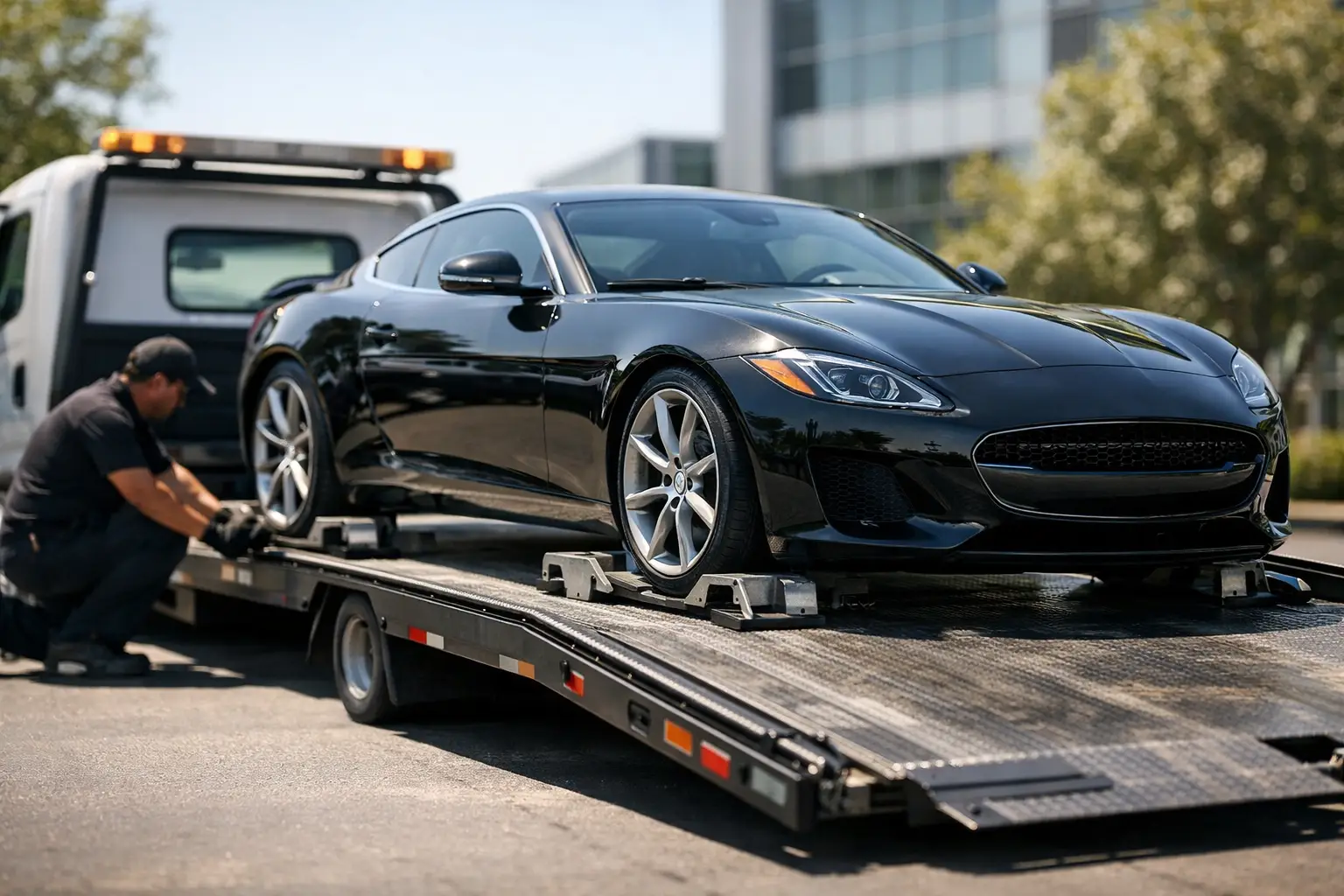
A luxury vehicle can be damaged before it ever leaves the shoulder. Low front bumpers, air suspension, all-wheel drive systems, electronic parking brakes, and expensive wheels all change how a car should be loaded. The best towing method for luxury cars is usually a properly equipped flatbed tow, but the operator, loading angle, and securement process matter just as much as the truck itself.
If your vehicle is disabled in Kenner or New Orleans, tell dispatch the make, model, drivetrain, and whether the car can roll. That information helps send the right equipment the first time and avoids unsafe shortcuts when the tow truck arrives.
Why Flatbed Towing Is Best for Luxury Cars
A flatbed carries all four tires off the road. Instead of pulling the vehicle with two wheels rolling behind the tow truck, the operator loads it onto a level deck and secures it for transport. That is the preferred approach for most luxury sedans, performance cars, exotic vehicles, EVs, and all-wheel-drive SUVs.
This matters because many luxury vehicles have complex drivetrains. Towing an AWD car with only the front or rear wheels lifted can force components to rotate in a way the manufacturer did not intend. The result can be drivetrain damage, transmission problems, or costly repairs that are not obvious at the roadside.
Flatbed towing also reduces exposure to road debris, potholes, and tire damage during the trip. It is especially valuable after a collision, when a wheel may be bent, a tire may be flat, or the vehicle may not track straight. For planned transport, it provides the same basic advantage: your vehicle stays fully supported from pickup to delivery.
The Best Towing Method for Luxury Cars Depends on the Vehicle
Flatbed service is the safest default, but a professional operator still needs to evaluate the vehicle in front of them. A luxury car with a very low front splitter requires a different loading approach than a full-size luxury SUV. An electric vehicle may have designated lifting points and special requirements for a depleted battery. A vehicle locked in park may need skates, dollies, or a winch procedure that keeps force off vulnerable components.
The right tow begins with accurate details. When requesting service, be ready to share whether your vehicle is front-wheel drive, rear-wheel drive, or all-wheel drive if you know it. Mention air suspension, an aftermarket body kit, oversized wheels, a damaged wheel, a flat tire, or a key that is unavailable. These details are not minor. They determine how the vehicle is approached, loaded, and secured.
A trained operator will also confirm whether the car can be placed in neutral and whether the parking brake can be released. Modern vehicles may require a specific electronic procedure to enter tow mode or neutral. Guessing can create problems. If you have the owner’s manual available, it can help confirm manufacturer instructions, but the vehicle should never be moved against its operating limits simply to make loading faster.
Low Clearance Requires the Right Loading Angle
Many luxury and performance vehicles sit close to the ground. A standard loading angle can scrape a front bumper, lower lip, undertray, exhaust component, or suspension part. That risk increases on uneven pavement, steep driveways, and parking garage ramps common around the metro area.
A careful flatbed operator manages the angle before the car starts moving. Depending on the situation, that can mean positioning the truck on level ground, using loading ramps, extending the deck, or adjusting the setup to create more clearance. The goal is controlled loading without contact between the vehicle’s underside and the bed.
Winching is often safer than driving a damaged or low-clearance vehicle onto a flatbed. It allows the operator to control the movement gradually, particularly when the car has collision damage, a flat tire, or an inoperative engine. A professional should use the appropriate recovery point or manufacturer-approved attachment method, not hook onto a suspension arm, bumper cover, or other part that was not designed for towing force.
Proper Securement Protects the Wheels and Suspension
Getting a luxury car onto the flatbed is only half the job. Securement keeps it stable throughout the trip, including during braking, turns, uneven road surfaces, and highway travel.
For many vehicles, wheel straps or tire baskets are the preferred method because they secure the tires without placing unnecessary pressure on the body or suspension. The straps should be positioned correctly, tightened evenly, and checked again after the vehicle is loaded. Where direct tie-down points are needed, the operator should use approved locations and the correct equipment.
Avoid operators who appear ready to rush the process, attach chains to unknown components, or drag the vehicle with locked wheels. A tow that starts with poor securement can lead to wheel damage, alignment issues, body damage, or a vehicle shifting on the deck. The few extra minutes needed to inspect and secure a high-value vehicle are worth it.
When Wheel-Lift Towing May Be Acceptable
Wheel-lift towing has a place, but it is not the first choice for most luxury vehicles. It may be appropriate for certain two-wheel-drive cars when the manufacturer allows it, the correct wheels are lifted, the vehicle can roll freely, and the tow distance is short. In some cases, tow dollies can keep the non-lifted wheels off the pavement.
Still, this approach has more variables. It can be difficult with low bumpers, damaged wheels, locked steering, electronic parking brakes, or vehicles with limited ground clearance. It also may not be suitable for AWD, four-wheel-drive, hybrid, or electric vehicles. If there is any doubt, request a flatbed rather than choosing the quickest-looking option.
A professional towing company should explain the method being used and why it fits your vehicle. You do not need to be a mechanical expert to ask a simple question: “Will all four wheels be off the ground?” For many luxury-car owners, that answer should be yes.
What to Tell Dispatch Before the Tow Truck Arrives
Clear information helps prevent delays and protects your vehicle. Start with the exact location, including whether the car is in a garage, driveway, parking lot, busy roadway, or tight apartment complex. Then provide the year, make, model, and condition of the vehicle.
Also mention whether the car is blocked by another vehicle, has a dead battery, has a flat tire, is stuck in park, or has been in an accident. If the vehicle is in a garage, provide the clearance height. A flatbed may be the best choice for the vehicle, but access conditions can affect where the truck can safely position and load it.
Remove personal items, keep the key available if possible, and take a few photos of the vehicle before transport. Photos are useful documentation, especially after an accident or when the vehicle has existing body damage. You can also ask the operator to confirm the destination before loading begins.
Choose a Tow Provider That Treats the Vehicle Like It Matters
Luxury towing is not just about having a flatbed in the fleet. It requires trained operators, appropriate equipment, insurance coverage, and the judgment to slow down when the situation calls for it. Fast dispatch matters when you are stranded, but speed should never replace safe loading and secure transport.
Zain Towing LLC provides 24/7 towing and roadside assistance for drivers across Kenner and the New Orleans area, with professional operators prepared to assess the vehicle and send the appropriate truck. Whether your car has a dead battery, collision damage, a flat tire, or needs scheduled transport, explain the vehicle’s needs when you request service.
When your luxury vehicle cannot move, do not let urgency push you toward an unsuitable tow. Request a flatbed, share the details that affect loading, and give the operator room to protect the car correctly from the first pull to final delivery.
Need help right now?
Zain Towing runs 24/7 in Kenner, New Orleans, Metairie, Harahan and Gretna. Call (504) 666-9099 or see our towing service, roadside assistance and New Orleans pages.