
Can a Tow Company Get Your Car Open Safely?
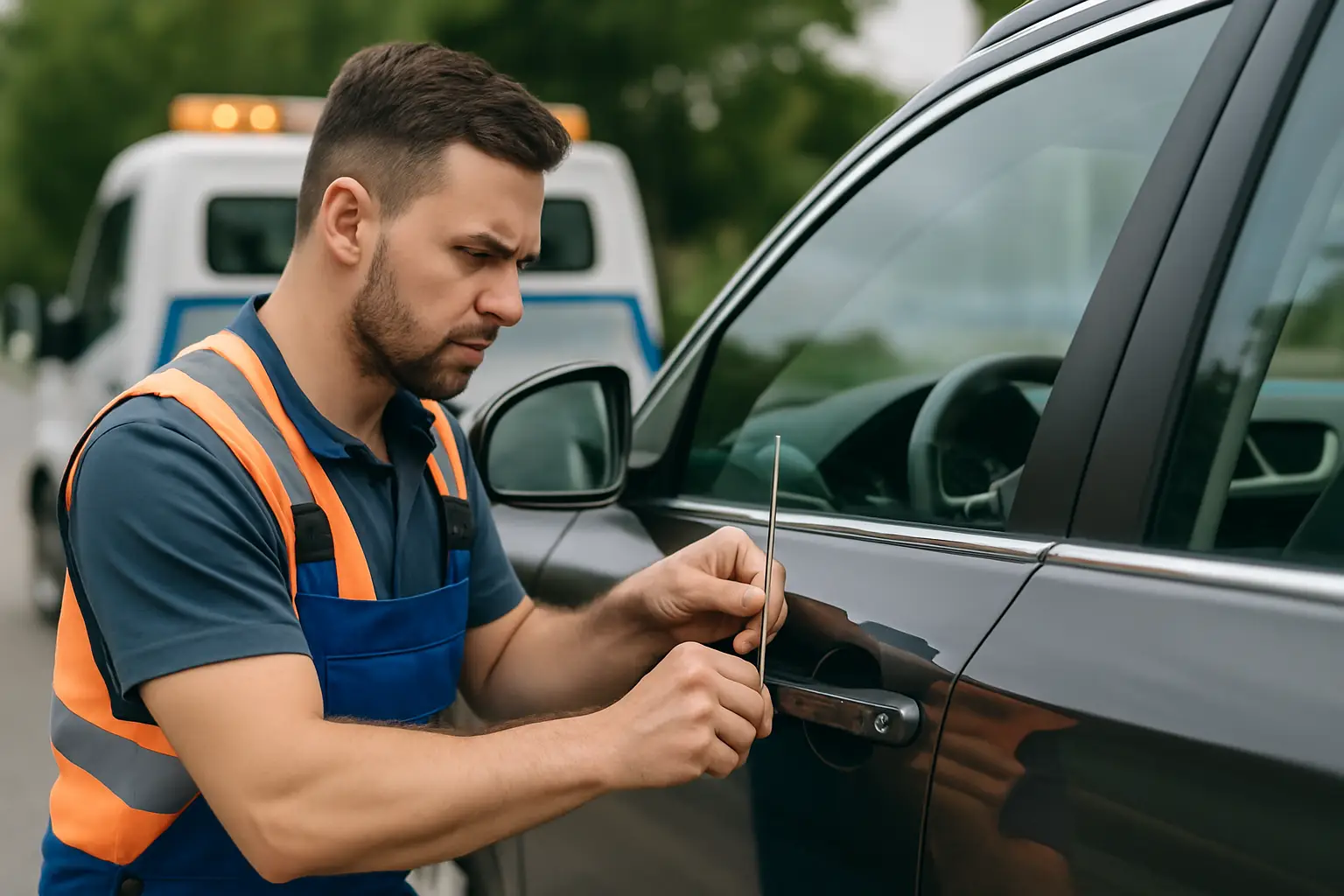
Your keys are sitting on the driver’s seat, the doors are locked, and you’re staring at the clock because you’re late. The big question hits fast - can a towing company unlock my car safely, or is this about to turn into a broken window and an expensive repair?
Most of the time, a professional towing and roadside team can get you back into your vehicle without damage. The key is the word professional. Tools, training, and the right process make the difference between a clean entry and scratched paint, bent trim, or a torn weather seal.
Can towing company unlock my car safely?
Yes - in many cases, a trained towing and roadside operator can open a locked vehicle safely without breaking glass. Lockout service is a standard roadside call, right up there with jump-starts and tire changes.
But it depends on the vehicle and the situation. Newer cars have tighter door seals, more complex lock designs, and electronics that can complicate entry. Some high-end models and certain trucks are simply more sensitive to “quick fixes.” A safe outcome comes from using the right method for that exact make, model, and lock type, then stopping if the risk of damage rises.
If someone shows up and immediately talks about prying hard, forcing the handle, or “we’ll just pop it,” that’s your sign to pause. Safe entry is controlled and careful, not aggressive.
What “safe” looks like during a lockout
A safe lockout is not just getting the door open. It also means keeping your car in the same condition it was in before you called.
A professional operator is trying to avoid three common problems: paint and clearcoat scuffs around the door frame, bent window trim or door edges, and damaged weather stripping that later causes wind noise or water leaks. Done correctly, you should be able to close the door and drive away without any new rattles, warning lights, or gaps.
You’ll also notice a safe operator works with a calm rhythm. They check the door seam, choose a contact point that reduces stress on the frame, protect surfaces, and make small adjustments instead of forcing the issue. If they can’t do it safely, they should tell you and recommend the next best option.
How tow operators typically open locked cars
There are a few common approaches. The “right” one depends on your car’s design, the lock style, and how much access is available.
The most common professional method uses an air wedge and a long-reach tool. The air wedge creates a small, temporary gap at the top corner of the door. Then a long-reach tool is used to press the unlock button, pull the lock knob, or operate an interior handle. When done correctly, this is controlled and avoids bending the frame.
Some vehicles allow safe access through specific openings or with manufacturer-approved techniques, but many modern cars are designed to resist exactly that. A trained operator will know when a method that worked on an older sedan is a bad idea on a newer SUV.
There are also situations where the best solution is not forcing entry at all. If the lockout is tied to a dead battery, a jump-start first can restore power so you can use a key fob or electronic release. That can be cleaner than attempting a mechanical entry on a vehicle that doesn’t like it.
Modern cars, smart keys, and why lockouts are trickier now
If you drive a newer vehicle, your locks are part of a bigger system. The car might have an immobilizer, proximity sensors, or anti-theft logic that doesn’t respond well to random button pushes.
This doesn’t mean a towing company can’t help. It means the operator needs to be careful and realistic. For example, some cars have interior deadlocks, and some won’t respond to certain interior controls if the vehicle thinks it’s being tampered with. Others have side curtain airbags running close to the door frame, which is one reason improper tool placement is a bad idea.
If you’re locked out of a push-to-start vehicle, also consider this scenario: your fob battery is dead and the car won’t recognize it. You might need a simple fob battery replacement, a jump-start, or guidance on using the hidden mechanical key inside the fob. A good roadside operator will ask a couple quick questions to narrow this down before they start.
When a lockout can turn risky
Even with professional tools, there are situations where “safe” becomes “possible, but not worth it.” That’s not a sales pitch - it’s reality.
If the window trim is already loose, the door has previous damage, or the weather seal is brittle from age and sun, the chance of cosmetic damage goes up. The same is true during heavy rain or at night on a tight shoulder, where the priority may be getting you to a safer spot first.
Also, if a child or pet is locked inside, the risk calculation changes. Time matters, and you should call 911 immediately if there’s any sign of heat distress or danger. A towing company can still help, but emergency services may be the fastest, safest response in a life-threatening situation.
What you should do before the truck arrives
You can help the process go faster and reduce the risk of damage.
First, confirm you’re in a safe location. If you’re on the side of I-10, a narrow bridge, or anywhere with fast traffic, step away from the vehicle and wait behind a barrier if possible. If you’re in a parking lot, choose a visible spot and keep hazard lights on if you have any way to activate them.
Next, verify the simplest solutions. If you have a spare key available nearby, arrange for someone to bring it. If your car has an app-based remote unlock, try it. If the issue is a dead fob, look up whether your model has a hidden key blade and a manual key slot on the door handle. Some do, some don’t.
Finally, when you call, be ready with the make, model, and year, plus your exact location. Tell dispatch if the car is a two-door, if windows are tinted (harder to see interior locks), and whether the keys are visible inside. That information helps send the right operator and tools.
How to spot a professional lockout service
If you’re stressed and stranded, you don’t want to guess whether you called the right people. Here’s what professionalism looks like in real life.
They should ask basic verification questions. They should confirm the vehicle and your identity or connection to it. They should give you a clear idea of ETA and pricing expectations before anyone starts working. And when they arrive, they should explain what they’re going to do and what the risks are, especially on vehicles that are known to be finicky.
Also, a legit provider is licensed and insured, and they treat your car like it’s going on a flatbed - carefully and with control. Lockouts are roadside service, but the standards should be the same as towing standards: protect the vehicle, avoid damage, and don’t take shortcuts.
If you’re in Kenner or the New Orleans area and need 24/7 roadside lockout help, you can contact Zain Towing LLC for fast dispatch and professional handling.
“Should I just use a coat hanger?” Real talk
People try DIY methods because they’re frustrated, not because they’re careless. But most modern cars are not coat-hanger friendly, and the chance of damage is high.
Prying the top of the door with a random object can bend the frame enough to create permanent wind noise. Fishing around near the window can scratch tint, tear a vapor barrier inside the door, or snag wiring. Even if you “win,” you can end up paying later when water starts leaking into the cabin.
If you’re driving an older vehicle with a simple vertical lock knob, you might get lucky. But if you’re not 100 percent sure, the safer move is to call for roadside help and keep your car intact.
What to expect during the service
A standard lockout call is usually quick once the operator is on scene, but timing depends on the vehicle and conditions.
You’ll typically be asked to stand where you can see the process but are not in the operator’s way. The operator may ask you to confirm where the unlock button is, whether the car has a manual lock knob, or whether the keys are in the ignition or cup holder. They may protect the door frame with a guard, then use tools designed for controlled entry.
If the vehicle refuses to cooperate or the risk of damage rises, a good operator will tell you. Sometimes the best next step is contacting the dealership, a locksmith with specialized access for that model, or arranging a tow to a safer location where the situation can be handled without traffic pressure.
Avoiding the next lockout
Lockouts happen to careful people. The goal is to make the next one less likely.
If you only have one key, consider getting a spare made before you need it. If your fob is acting weak, replace the battery now instead of after it dies in a grocery store parking lot. If you use a keyless system, learn where the hidden key blade is and how the door handle key slot works on your specific car. Two minutes of practice at home can save you a midnight emergency call later.
If you’re a rideshare driver or you’re constantly in and out of the car, be extra careful with “auto-lock” settings. Some vehicles lock automatically when you walk away, even if the fob is left inside in certain edge cases. If your car has done something odd once, don’t ignore it - it usually repeats.
A lockout is stressful, but it doesn’t have to turn into damage or a long ordeal. The safest move is simple: get help from someone who treats lockouts like a professional service, not a gamble, then get back to your day with your door, trim, and glass exactly as they should be.
Need help right now?
Zain Towing runs 24/7 in Kenner, New Orleans, Metairie, Harahan and Gretna. Call (504) 666-9099 or see our towing service, roadside assistance and New Orleans pages.