
Can a Tow Truck Tow SUVs? What Drivers Need
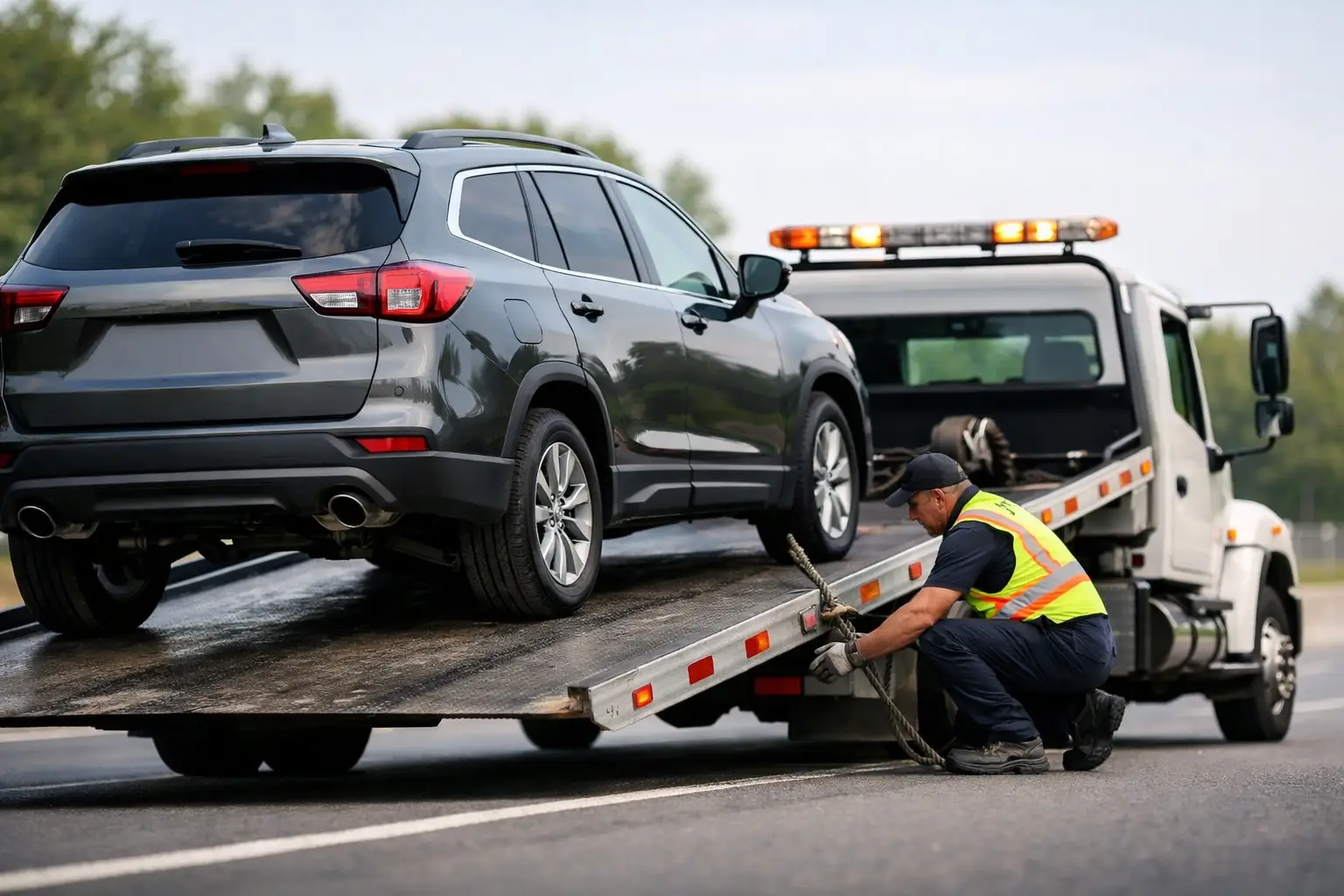
An SUV can look too large for a standard tow truck, especially when it is loaded with passengers, cargo, or heavy aftermarket equipment. So, can a tow truck tow SUVs? Yes. Most SUVs can be towed safely when the dispatcher sends the right truck, the operator uses the right equipment, and the towing method matches the vehicle's drivetrain and condition.
For drivers in Kenner and New Orleans, the key is not simply finding any available tow. It is getting a trained operator who knows whether your SUV needs a wheel-lift, flatbed, recovery setup, or another approach that protects the tires, transmission, suspension, and body panels.
Can a Tow Truck Tow SUVs of Every Size?
Light- and medium-duty tow trucks handle the majority of SUVs on the road. That includes compact crossovers, midsize family SUVs, full-size SUVs, and many luxury models. A properly equipped flatbed can also transport an SUV after a collision, mechanical failure, flat tire, or long-distance move.
The answer depends on more than the word SUV. Vehicle weight, wheelbase, ground clearance, drivetrain, and the reason for the tow all affect what equipment should be dispatched. A compact crossover may be straightforward to load, while a large SUV with three rows, oversized tires, or a trailer hitch may require a different setup and more careful loading.
Heavy-duty equipment may be needed for exceptionally large vehicles, heavily modified SUVs, or SUVs involved in a difficult recovery. If the vehicle is in a ditch, stuck in mud, or blocked by accident damage, the job is no longer a basic transport. The operator needs to assess the scene before moving it.
Why the Towing Method Matters for Your SUV
The wrong towing method can turn a breakdown into an expensive repair. This is especially true for all-wheel-drive and four-wheel-drive SUVs. If the vehicle's driven wheels remain on the pavement while it is pulled, drivetrain components can be damaged unless the manufacturer specifically permits that method.
A flatbed tow is often the safest choice for many SUVs because all four wheels ride off the ground. The vehicle is loaded, secured at proper points, and transported without its tires rolling on the road. This method is commonly preferred for all-wheel-drive vehicles, luxury SUVs, accident-damaged vehicles, and SUVs with low clearance.
A wheel-lift tow can work for certain front-wheel-drive or rear-wheel-drive SUVs when the non-driven wheels are handled correctly. Tow dollies may also be used in appropriate situations. However, these methods require accurate information about the drivetrain. Guessing is not good enough when a transfer case, transmission, or differential could be at risk.
When you call for service, tell dispatch whether your SUV is front-wheel drive, rear-wheel drive, all-wheel drive, or four-wheel drive if you know it. If you do not know, provide the year, make, and model. A professional towing company can use that information to plan for safe transport.
What Tow Operators Check Before Loading an SUV
A trained tow operator does not hook up an SUV and leave. Before loading, the operator checks the vehicle's position, visible damage, tire condition, clearance, and whether the wheels can roll or turn. Those details determine the safest way to secure and move it.
For example, an SUV with a locked steering wheel, a broken suspension component, or a wheel pushed inward after a crash cannot be handled exactly like a vehicle that simply will not start. A vehicle stuck in park may need a different loading process than one that can be placed in neutral. If airbags have deployed or fluids are leaking, the operator also needs to account for additional safety concerns.
Securement matters just as much as loading. Proper straps, wheel restraints, and attachment points help prevent movement during transport. An SUV's size and higher center of gravity make careful positioning important, particularly on busy New Orleans-area roads, uneven shoulders, and wet pavement after heavy rain.
SUV Features That Should Be Mentioned During Dispatch
The more accurate information you give dispatch, the faster the right truck can be sent. You do not need to diagnose the problem. Just share what you can see and what happened.
Mention these details when they apply:
- Your SUV's year, make, model, and drivetrain, if known
- Whether it is stock height, lifted, lowered, or equipped with oversized tires
- Whether it has a roof rack, cargo box, trailer, or heavy items inside
- Whether it was in an accident, is stuck, has a flat tire, or will not shift into neutral
- Your exact location, including parking garage limits, traffic hazards, or difficult access
These details help prevent delays. A lifted off-road SUV may need a different approach from a compact crossover in a downtown parking lot. A full-size SUV carrying a family, luggage, and work equipment may weigh more than expected. Clear information allows the operator to arrive prepared rather than having to request another truck.
When a Flatbed Is the Better Choice
Flatbed towing is a strong option when you want the most controlled transport available for your SUV. It is particularly useful after an accident, when the drivetrain is all-wheel drive or four-wheel drive, or when the SUV has damage that makes rolling it unsafe.
It is also a smart choice for planned transportation. If you are moving, selling a vehicle, taking an SUV to a repair shop, or transporting it a longer distance, a flatbed keeps all four wheels off the road. That reduces wear and avoids concerns about whether the vehicle is approved for two-wheel towing.
There are situations where loading onto a flatbed takes more time than a quick wheel-lift hookup. Tight parking spaces, blocked wheels, or severe damage can add time. But when protecting the vehicle is the priority, the extra care is often worth it.
What Not to Do While Waiting for an SUV Tow
Do not attempt to pull your SUV with a chain, rope, or another personal vehicle. SUVs are heavy, and improvised towing can cause collisions, damage bumpers and suspension parts, or injure someone nearby. It can also create a dangerous situation on a busy roadway.
If your SUV is disabled in traffic, move it to a safe location only if it can be done without further damage or risk. Turn on hazard lights, keep passengers away from moving traffic when possible, and avoid standing between your SUV and the road. If the vehicle is on a shoulder at night or in bad weather, visibility is a major concern.
Do not assume you can leave the SUV in neutral or engage four-wheel-drive settings without checking the owner's manual. Some vehicles have specific procedures for towing. If you are unsure, tell the tow operator. That is far safer than changing settings based on a guess.
Fast SUV Towing in Kenner and New Orleans
A breakdown near home, on the interstate, or outside a busy event should not leave you wondering whether your SUV is too large to tow. Zain Towing LLC provides 24/7 towing and roadside dispatch for SUVs and other light- and medium-duty vehicles across the Kenner and New Orleans area. Our trained operators use appropriate equipment and secure handling practices to help get your vehicle where it needs to go.
When you request a tow, have your location, vehicle details, destination, and a quick description of the problem ready. If your SUV is all-wheel drive, four-wheel drive, damaged, or modified, say so right away. That one conversation can make the difference between a delayed response and a tow truck arriving ready for the job.
If your SUV cannot safely continue, do not risk driving it farther or accepting a towing method that does not fit the vehicle. Call for professional help, stay in a safe location, and let the right truck handle the transport.
Need help right now?
Zain Towing runs 24/7 in Kenner, New Orleans, Metairie, Harahan and Gretna. Call (504) 666-9099 or see our towing service, roadside assistance and New Orleans pages.