
Can Roadside Assistance Change Tires Safely?
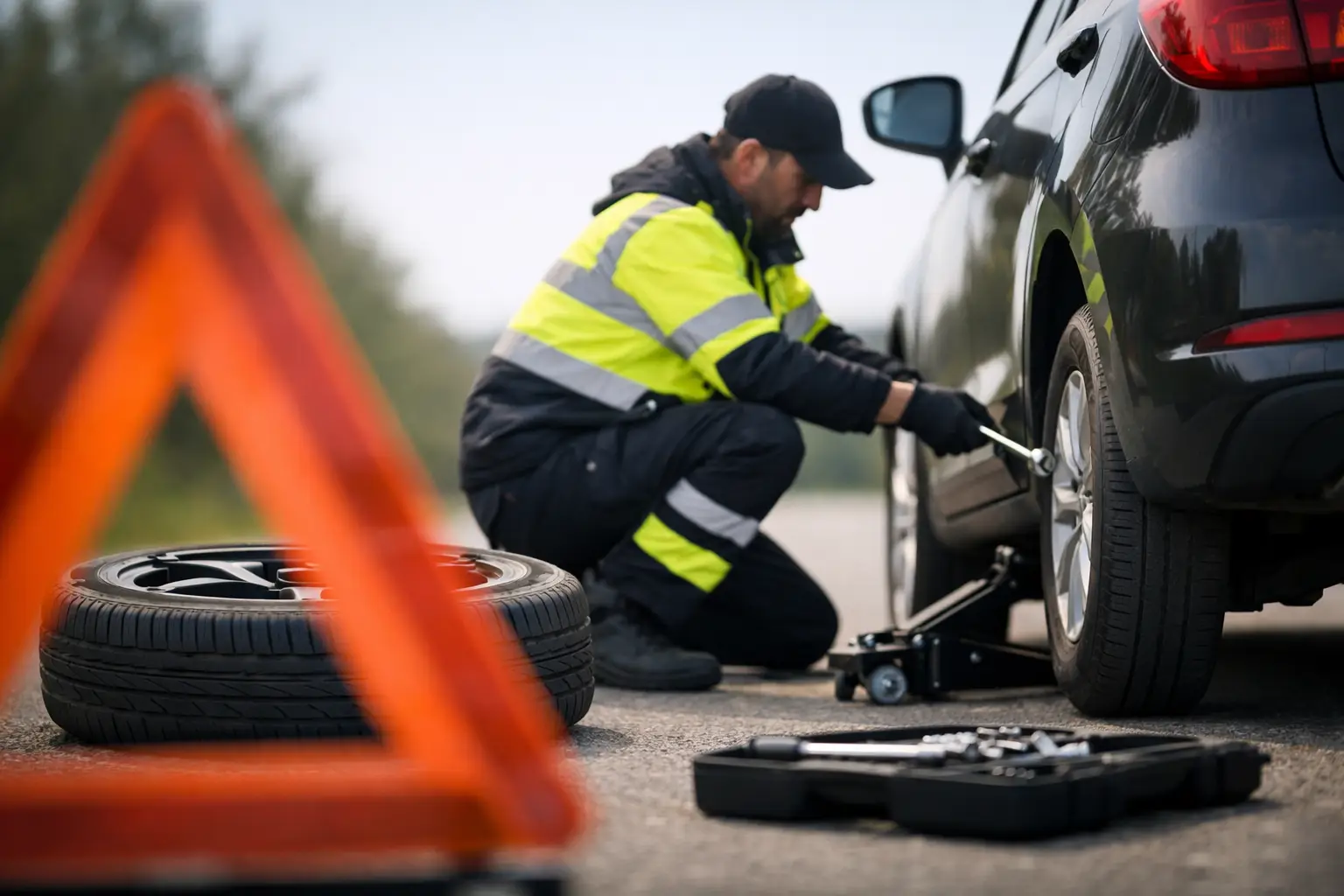
A flat tire on I-10, a dark parking lot, or a rainy New Orleans side street can turn a normal drive into a stressful stop fast. Can roadside assistance change tires? In many cases, yes. A trained roadside operator can install your usable spare tire and help you get moving again without asking you to work beside traffic, struggle with a seized lug nut, or guess where to place the jack.
That said, tire help is not always as simple as swapping one wheel for another. The condition of your spare, your vehicle's location, the damage to the tire, and the condition of the wheel all matter. Knowing what roadside tire service can handle helps you make the safest call when you are stranded.
What Roadside Tire Assistance Usually Covers
Roadside assistance commonly includes changing a flat tire when your vehicle has an inflated, roadworthy spare. The operator secures the vehicle, removes the damaged wheel, installs the spare, tightens the lug nuts correctly, and checks that the vehicle is safe to drive away.
This is especially useful when you do not have the tools, physical ability, or safe space to do the job yourself. It also takes pressure off drivers who have never changed a tire or who are dealing with a flat in bad weather, heavy traffic, or an unfamiliar area.
A professional operator can also assess obvious concerns before proceeding. For example, they may spot a damaged wheel, missing locking-wheel key, broken lug studs, or a spare that cannot safely be installed. That quick assessment can prevent a small roadside issue from becoming vehicle damage or an unsafe drive.
Can Roadside Assistance Change Tires Without a Spare?
Usually, no. Roadside assistance can change a tire, but it cannot create a replacement tire at the roadside. If your vehicle does not have a spare, the spare is flat or damaged, or the vehicle uses run-flat tires that have failed, towing is often the right next step.
Many newer cars do not include a traditional spare. Instead, they may have a tire inflator kit, a tire sealant kit, or nothing at all. Sealant only works for certain small punctures in the tread area. It will not repair a sidewall tear, a blowout, a bent wheel, or a tire that has come apart on the road.
Do not assume a compact spare solves every problem, either. A temporary spare is intended for limited, low-speed driving to a repair facility. It may have a lower speed limit and should not be used for long trips, extended highway travel, or heavy loads. A roadside operator can install it safely, but you still need a tire repair or replacement as soon as possible.
When a Tow Is the Safer Choice
A tow is often safer than a tire change when the vehicle is positioned too close to moving traffic, stopped on a narrow shoulder, or sitting on soft ground where jacking it could be unstable. The same applies if you are on an elevated roadway, bridge, blind curve, flooded street, or other location where drivers may not see you in time.
Towing is also the better answer if more than one tire is flat, the wheel is cracked or bent, lug nuts will not come off, or the suspension appears damaged after hitting a pothole or curb. In these situations, forcing a tire change can damage the vehicle further or leave you driving on a problem that needs a shop inspection.
For drivers in Kenner and the New Orleans area, road conditions matter. Deep potholes, construction zones, storm debris, and sudden heavy rain can cause more than a simple puncture. If there is any question about whether the car is safe to drive, request a tow rather than taking a chance.
What to Do While You Wait for Tire Help
Your first job is not changing the tire. It is protecting yourself and everyone in the vehicle. Pull as far from traffic as conditions allow, turn on your hazard lights, and set the parking brake once you are stopped. If you can exit safely away from traffic, move to a protected location. On a busy highway, staying inside with seat belts fastened may be safer than standing near the vehicle.
If you are calling for roadside service, have your location ready. A nearby cross street, highway mile marker, business name, parking-lot section, or GPS pin helps dispatch send the right operator quickly. Tell the dispatcher your vehicle make, model, tire issue, whether you have a spare, and whether the vehicle is in a hazardous position.
Avoid repeatedly driving on a flat tire to reach a better spot unless you must move out of immediate danger. Even a short distance on a fully flat tire can destroy the tire sidewall, damage the wheel, and turn a repairable puncture into a replacement expense.
Do not crawl under the vehicle, place your hands near the wheel while it is raised, or attempt a roadside tire change on an unstable shoulder. If you have wheel locks, locate the locking lug key and let the operator know where it is. This small detail can save time.
Common Tire Problems Roadside Service Cannot Fix on the Spot
A tire change gets you back on the road only when there is a usable replacement wheel available. It does not replace the work of a tire shop. Roadside operators generally cannot mount a new tire onto a wheel, balance a tire, repair internal tire damage, align the vehicle, or straighten a bent rim at the roadside.
A puncture may look minor but still require a professional inspection. A nail in the center tread can sometimes be repaired, while a puncture near the shoulder or sidewall normally means the tire needs replacement. A tire that was driven while flat may have hidden internal damage even if it holds air afterward.
If your tire pressure light came on before the flat, mention that too. A slow leak, damaged valve stem, faulty sensor, or wheel corrosion can cause repeated pressure loss. Changing the tire solves the immediate stop, but identifying the cause prevents another roadside call later.
Why Professional Tire Help Is Worth Calling For
Changing a tire is possible for many drivers, but roadside conditions change the risk. A tire swap in a dry driveway is different from doing it beside fast-moving traffic at night. Professional tire assistance brings trained handling, proper equipment, and a clear decision point: install the spare when it is safe, or arrange transport when it is not.
It also helps protect your vehicle. Incorrect jack placement can bend body panels or damage undercarriage components. Over-tightened or unevenly tightened lug nuts can create problems later. An experienced operator knows how to approach the job with vehicle safety in mind.
Zain Towing LLC provides 24/7 roadside tire help, towing, and recovery for drivers in Kenner and New Orleans. When you call, give the dispatcher the clearest location and vehicle details possible so the appropriate truck and trained operator can be sent to you. The goal is fast, friendly service and safe handling from the roadside to your destination if a tow is needed.
Before You Drive Away on the Spare
Once the spare is installed, ask about any limitations you should follow. Check the spare's sidewall for its maximum speed rating, and avoid hard braking, sharp turns, and high-speed travel. Drive directly to a tire shop when possible instead of treating a temporary spare like a full replacement.
Keep the damaged tire in your vehicle for inspection, and do not forget to have the original wheel checked if you hit a pothole or curb. If the steering wheel shakes, the vehicle pulls, you hear rubbing, or another warning light appears after the tire change, stop driving and arrange a tow.
A flat tire is frustrating, but it does not have to leave you stranded or put you at risk. Move to the safest available spot, provide accurate details when requesting help, and let the condition of the spare and the road decide whether a tire change or a tow is the right move.
Need help right now?
Zain Towing runs 24/7 in Kenner, New Orleans, Metairie, Harahan and Gretna. Call (504) 666-9099 or see our towing service, roadside assistance and New Orleans pages.