
Can Towing Damage Automatic Transmission?
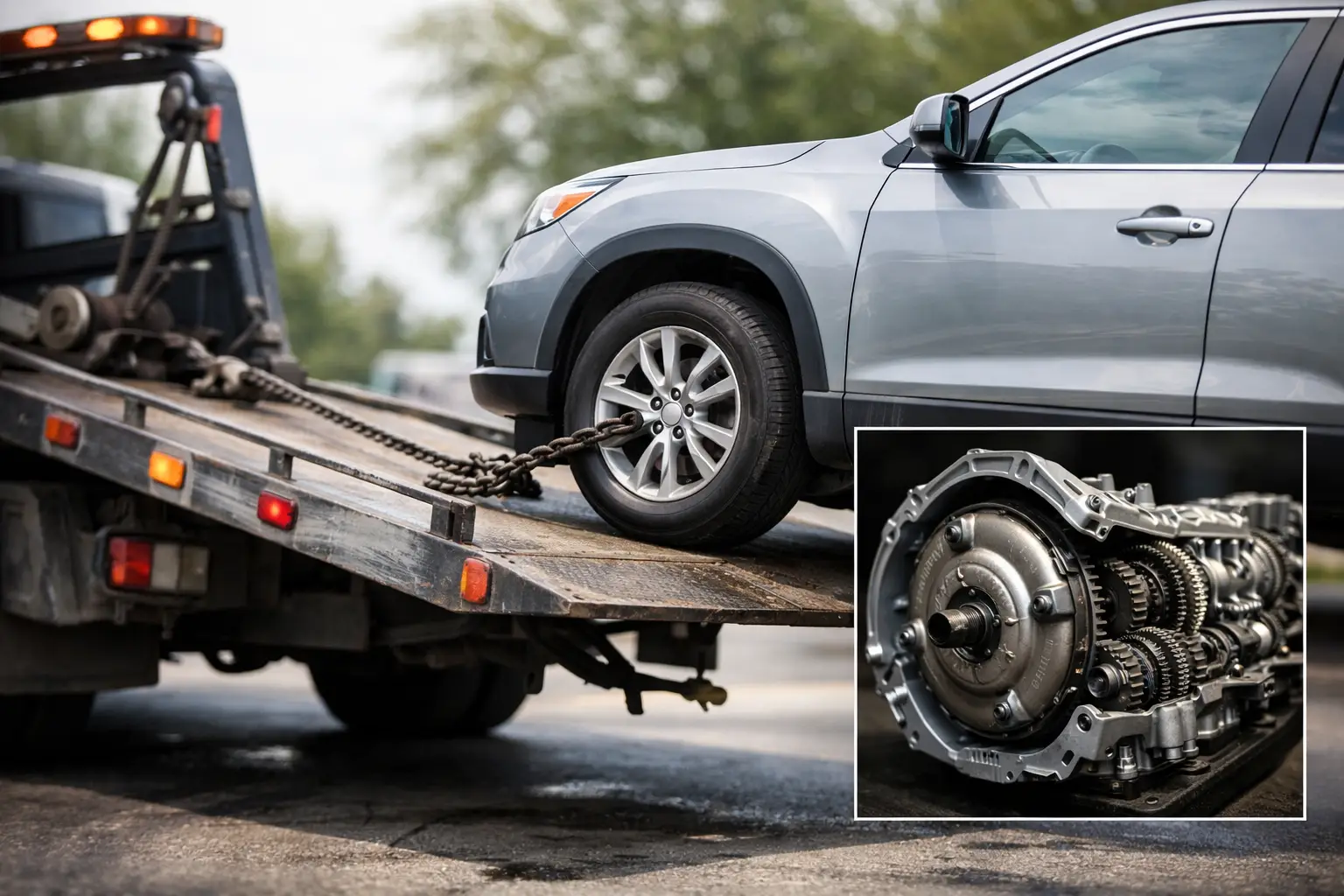
A lot of transmission damage starts with one bad decision made in a hurry - pulling an automatic car the wrong way for just a few miles. If you're asking, can towing damage automatic transmission components, the short answer is yes. It can happen fast, and the repair bill can be far worse than the cost of calling a professional tow truck in the first place.
That matters because most drivers don't think about how their transmission works until the vehicle won't move, won't shift, or starts slipping after a tow. In many cases, the problem is not the breakdown itself. It's how the vehicle was towed after the breakdown.
Can towing damage automatic transmission systems?
Yes, but it depends on the vehicle, the towing method, and the distance. Some automatic vehicles can be transported safely under specific conditions. Others should never be towed with the drive wheels on the ground.
The risk comes from how automatic transmissions are lubricated. In many vehicles, the transmission fluid is circulated by an internal pump that runs when the engine is on. When the engine is off and the car is being pulled down the road, parts inside the transmission may still be turning without proper lubrication. That creates heat, friction, and wear where you do not want it.
This is why a vehicle can seem fine during the tow and then show transmission trouble later. Damage may not be obvious right away. You might notice delayed shifting, grinding, slipping, warning lights, or complete transmission failure after the fact.
Why flatbed towing is usually the safest option
If you want the lowest-risk answer, it's simple: keep all four wheels off the road. A flatbed tow truck removes the uncertainty that comes with dragging a vehicle by two wheels, especially when you're dealing with an automatic transmission, all-wheel drive system, low-clearance car, or unknown mechanical issue.
Flatbed towing protects the transmission because the drivetrain is not forced to rotate while the engine is off. It also reduces the chance of tire wear, suspension stress, and underbody scraping. For many modern vehicles, especially SUVs, luxury models, and AWD cars, this is the safest choice.
That is why professional dispatch matters. The right truck for the right vehicle is not a small detail. It is the difference between safe transport and avoidable damage.
When towing an automatic becomes risky
The biggest problem is towing with the drive wheels on the ground when the transmission is not designed for it. On a front-wheel-drive car, the front wheels usually power the vehicle, so lifting only the rear can be a problem. On a rear-wheel-drive vehicle, the opposite may be true. With all-wheel drive, the risk goes up even more because multiple drivetrain components can stay engaged.
Distance matters too. A very short repositioning move is not the same as a highway tow across town or out of state. Speed also matters. The faster the wheels turn, the faster internal parts may rotate without proper lubrication.
Then there is the condition of the vehicle itself. If the car has already lost transmission fluid, has a broken axle, or has drivetrain damage from a crash, even a towing method that might normally be acceptable can become unsafe.
What your owner's manual usually tells you
Every manufacturer handles this a little differently. Some vehicles can be towed in neutral for limited distances and at low speeds. Some require the driveshaft to be disconnected. Some are approved only for flatbed transport. Others include special procedures involving transfer cases, fuse removal, or transmission modes.
That is why blanket advice online can get drivers in trouble. One person's sedan from ten years ago is not the same as your newer crossover, truck, or hybrid. If the manual says flatbed only, that instruction is there for a reason.
If you do not have the manual handy and the vehicle is disabled, the safest move is not to guess. Call a licensed and insured towing company that knows how to identify the correct method before loading the vehicle.
Can a tow dolly damage an automatic transmission?
It can. A tow dolly lifts two wheels and leaves two on the ground, so whether it is safe depends on which wheels are driven and what the manufacturer allows. On some front-wheel-drive vehicles, a tow dolly may work if the front wheels are lifted properly. On many rear-wheel-drive and AWD vehicles, it may create serious transmission or drivetrain risk.
The issue is not just the transmission itself. Differentials, transfer cases, wheel bearings, and electronic drivetrain systems can also be affected if the wrong wheels stay on the road. Modern vehicles are less forgiving than many drivers expect.
For roadside situations, a dolly is not always the best answer just because it seems cheaper or faster. The wrong setup can cost far more than a proper tow.
Warning signs of transmission damage after towing
Sometimes a vehicle is towed incorrectly and the damage does not show up until later. If your automatic starts acting differently after a tow, take it seriously.
Common signs include hard shifting, hesitation when changing gears, slipping between gears, unusual whining or grinding, fluid leaks, a burning smell, or a check engine or transmission warning light. You may also notice the vehicle refuses to go into gear or suddenly loses power while driving.
At that point, continuing to drive can make things worse. If the transmission has been overheated or run without proper lubrication, extra miles may turn a repairable issue into a full replacement.
How professional tow operators prevent damage
A trained tow operator does more than hook up and go. They identify whether your vehicle is front-wheel drive, rear-wheel drive, four-wheel drive, or all-wheel drive. They check for accident damage, low ground clearance, tire condition, and whether the car can safely roll. Then they choose the right equipment.
That may mean a flatbed, wheel-lift with skates, dollies, or another controlled loading method. Securement also matters. A vehicle that is strapped down incorrectly can shift in transit, scrape, or put stress on suspension and steering components.
This is one reason drivers in a stressful roadside situation should avoid improvised towing. A chain and a friend with a pickup may seem like the fastest option, but it is often the riskiest one.
What to do if your automatic vehicle breaks down
First, get to a safe location if you can. Turn on your hazard lights and avoid trying to force the vehicle to move if the transmission is slipping, grinding, or refusing to engage. If you suspect drivetrain trouble, do not let someone casually pull the vehicle with the drive wheels on the ground just to "get it home."
Tell the towing company exactly what is happening. Mention whether the vehicle is front-wheel drive, rear-wheel drive, or AWD if you know it. Let them know if the car was in an accident, if it is stuck in park, if a wheel is damaged, or if it is leaking fluid. Those details help dispatch send the correct truck.
In the Kenner and New Orleans area, that kind of fast, correct response matters. Zain Towing LLC handles emergency towing with trained operators, proper equipment, and safe loading practices designed to prevent extra damage when your vehicle is already in a bad spot.
The real answer for drivers under stress
So, can towing damage automatic transmission parts? Absolutely - when the wrong towing method is used, when the vehicle's drivetrain is ignored, or when someone treats a disabled car like it can be dragged any which way. But towing does not have to cause damage. The right equipment and the right operator make all the difference.
When you're stranded, the goal is not just moving the vehicle. The goal is getting it transported safely so today's breakdown does not turn into tomorrow's transmission replacement. If you're ever unsure, play it safe and have the vehicle loaded the right way the first time.
Need help right now?
Zain Towing runs 24/7 in Kenner, New Orleans, Metairie, Harahan and Gretna. Call (504) 666-9099 or see our towing service, roadside assistance and New Orleans pages.