
Car Battery Jumpstart: What to Do Fast
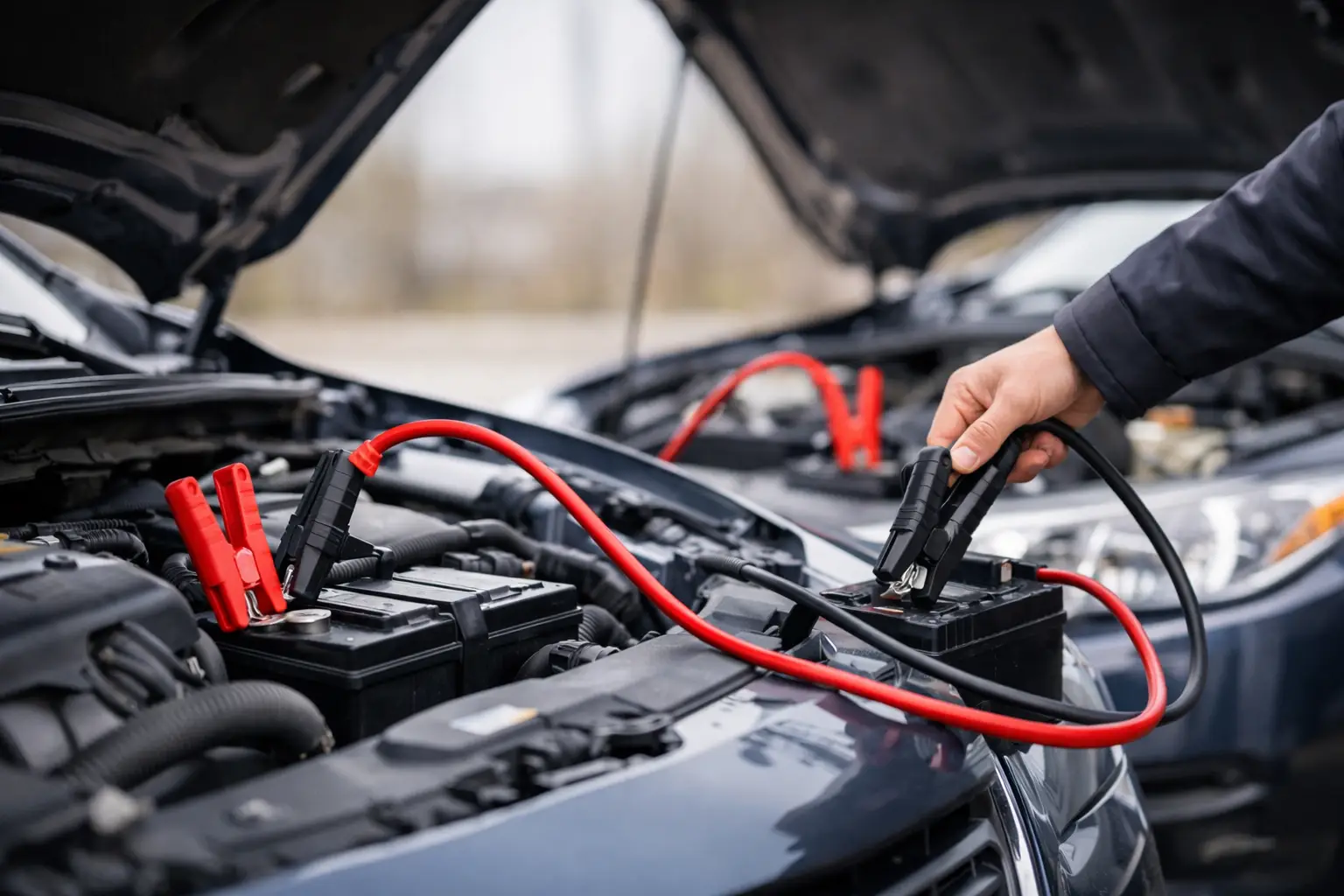
That dead-click sound usually hits at the worst time - before work, after a late shift, in a parking lot, or on the shoulder when you just need to get moving. A car battery jumpstart can get you back on the road quickly, but only if it is done the right way. The wrong connection, the wrong timing, or the wrong assumption about the real problem can leave you stranded longer or create a safety risk.
If your vehicle will not start, the first job is simple: stay calm, get to a safe spot if possible, and figure out whether the battery is actually the issue. Headlights that are dim, a rapid clicking sound, weak power to the dash, or no crank at all often point to a low battery. If the engine turns over normally but still does not start, a jump-start may not solve it.
When a car battery jumpstart makes sense
A jump-start is usually the right move when the battery has enough life to accept a charge boost and the rest of the starting system is working. This often happens after lights were left on, a door was not fully closed, the car sat unused too long, or cold or hot weather stressed an already weak battery.
In southeast Louisiana, heat is hard on batteries. Many drivers expect cold weather to be the main problem, but long stretches of high heat can shorten battery life and wear internal components faster. If your battery is older and your car suddenly struggles to start after sitting in the sun or after short trips around town, that is a common warning sign.
A jump-start is less likely to help if the battery case is swollen, leaking, cracked, or giving off a strong odor. It also may not help if the alternator has failed, the starter is bad, or there is an electrical issue draining the battery over and over. In those cases, the vehicle might start briefly after a boost and die again soon after.
How to do a car battery jumpstart safely
If you have jumper cables and another working vehicle, safety comes first. Put both vehicles in park, turn them off, set the parking brakes, and keep metal tools or loose items away from the battery area. Do not smoke or create sparks near the battery.
Open the hoods and identify the positive and negative terminals. Positive is usually marked with a plus sign and often has a red cover. Negative is marked with a minus sign. If the terminals are badly corroded or hard to identify, do not guess.
Connect the red clamp to the dead battery's positive terminal first. Connect the other red clamp to the good battery's positive terminal. Then connect the black clamp to the good battery's negative terminal. The last black clamp should go to an unpainted metal ground on the disabled vehicle, not directly to the dead battery's negative terminal if the owner manual calls for a grounding point. That final step helps reduce spark risk around the battery.
Start the working vehicle and let it run for a few minutes. Then try to start the disabled vehicle. If it starts, let it run and remove the cables in reverse order, carefully and without letting the clamps touch. If it does not start after a few tries, stop there. Repeated attempts can overheat components and point to a larger issue than a weak battery.
Common mistakes that cause bigger problems
The biggest mistake is connecting cables in the wrong order or to the wrong terminals. That can damage electronics, blow fuses, or create sparks where you do not want them. Modern vehicles have sensitive electrical systems, and a rushed jump-start can turn a simple roadside call into a much more expensive repair.
Another common mistake is assuming every no-start problem is battery-related. If you hear one solid click, if the dashboard lights work but the engine will not crank, or if the vehicle starts and stalls right away, the issue may be with the starter, charging system, ignition, or fuel delivery.
People also get into trouble by using old, thin jumper cables that do not carry enough current. Cheap cables may not provide enough power for larger vehicles, especially SUVs and trucks. Corroded terminals, loose connections, and worn battery clamps can also prevent a successful jump even when the battery is the main problem.
When not to try a jump-start yourself
Sometimes the smartest move is to call for roadside assistance right away. If you are stuck in traffic, on a narrow shoulder, in a dark area, in severe weather, or in an unfamiliar part of town, your safety matters more than trying to handle it alone.
You should also avoid a DIY jump-start if the battery is visibly damaged, if you drive a vehicle with hard-to-access battery terminals, or if you are simply not confident about the connection points. There is no benefit in taking a risk with a modern vehicle's electrical system when trained help can come to you with the right equipment.
For many drivers, especially families, commuters, rideshare drivers, and travelers, speed matters just as much as the fix itself. A professional roadside operator can confirm whether you need a jump-start, battery replacement, or a tow to a repair shop. That saves time and cuts down on guesswork.
Signs your battery problem is getting worse
A jump-start may get the engine running, but it does not always mean the issue is solved. If your battery dies again soon after, there is likely an underlying problem. Slow cranking in the morning, flickering interior lights, power windows moving sluggishly, and needing multiple jump-starts in a short period all point to a battery or charging system that should be tested.
Battery age matters too. Most car batteries do not last forever, and hot climates can shorten their service life. If your battery is around three years old or more and has started showing intermittent trouble, replacement may be more reliable than waiting for another roadside failure.
Pay attention to patterns. If the car only struggles after sitting overnight, the battery may be weak. If it dies while driving or shortly after starting, the alternator may not be charging properly. If the battery keeps going dead after being replaced, there may be a parasitic drain from another electrical component.
Why fast roadside help can be the better call
A lot of drivers do not need a long explanation when the car will not start. They need help now, a clear answer, and confidence that their vehicle will be handled safely. That is where a professional roadside response makes a real difference.
With a proper service call, the operator arrives with commercial-grade equipment, checks the situation, and performs the jump-start safely. If the battery will not hold or the vehicle still will not start, the next step can be handled right away instead of leaving you stranded again. For drivers in Kenner and New Orleans, that kind of response matters when time, traffic, and weather are all working against you.
Licensed and insured roadside assistance also adds peace of mind. If your vehicle has electrical sensitivity, sits low to the ground, or needs transport instead of a boost, you want trained hands making that call. That is especially true late at night, in busy lots, or after an accident when stress is already high.
Car battery jumpstart service vs. battery replacement
It depends on what failed. If the battery was drained by a light left on and is otherwise healthy, a jump-start may be all you need. Letting the engine run or driving long enough to recharge the battery can solve the immediate issue, though a full battery test is still smart.
If the battery is old, damaged, or repeatedly failing, a jump-start is more like a temporary patch. It may get you moving, but not for long. In that case, replacement is often the more dependable fix. If the alternator is not charging, even a brand-new battery will not stay powered for long, which is why diagnosis matters.
A good roadside provider will not treat every call the same. Sometimes you need a boost. Sometimes you need a tow. Sometimes you need both an answer and a plan for what happens next.
What to do right after the vehicle starts
Once your engine starts, do not shut it off right away. Let it idle for a bit, and if the vehicle seems to be running normally, drive it long enough to give the battery some charge. Keep electrical loads reasonable if possible. If warning lights stay on, the car struggles again, or you notice dim lights or rough starting, have it checked as soon as you can.
If the vehicle will not restart after that first successful jump, stop guessing. Repeated dead-battery events usually mean you are dealing with a failing battery, a charging problem, or another electrical fault that needs attention.
When your car will not start, the fastest solution is not always doing more - it is doing the right next step. If a safe car battery jumpstart gets you moving, great. If not, getting professional roadside help quickly can save time, protect your vehicle, and take the pressure off when the situation is already stressful.
Need help right now?
Zain Towing runs 24/7 in Kenner, New Orleans, Metairie, Harahan and Gretna. Call (504) 666-9099 or see our towing service, roadside assistance and New Orleans pages.