Car Towing in New Orleans When Minutes Matter
If your car quits on I-10 near the split, the problem is not just the car. It is the traffic, the narrow shoulders, the heat, and the fact that a small delay can turn into a bigger hazard fast. In New Orleans, towing is not a “someday” service - it is a right-now decision.
This guide is built for drivers who need clear next steps. It will help you figure out what kind of tow you actually need, how to avoid vehicle damage, and how to move quickly without overpaying or making the situation worse.
Car towing in New Orleans starts with safety
The first win is getting out of danger. If you are on a bridge, a high-speed stretch, or a tight shoulder, stay focused on visibility and distance from moving traffic. Turn on hazards immediately. If you can safely roll to a wider shoulder, an exit, or a nearby lot without damaging the vehicle further, do it.
If you are stuck in an active lane or you cannot safely exit the vehicle, call 911 first. Towing can solve the car problem, but it cannot replace police or emergency response when the scene is dangerous.
When you do call for a tow, be ready to give a precise location. In New Orleans, “near Canal” can mean very different things depending on which side of downtown you are on, and the difference can be minutes. Cross streets, landmarks, and the direction of travel matter.
What kind of tow do you need - and why it matters
Not all towing is the same, and in a city with tight streets and mixed road conditions, the right equipment prevents damage.
Flatbed towing for maximum protection
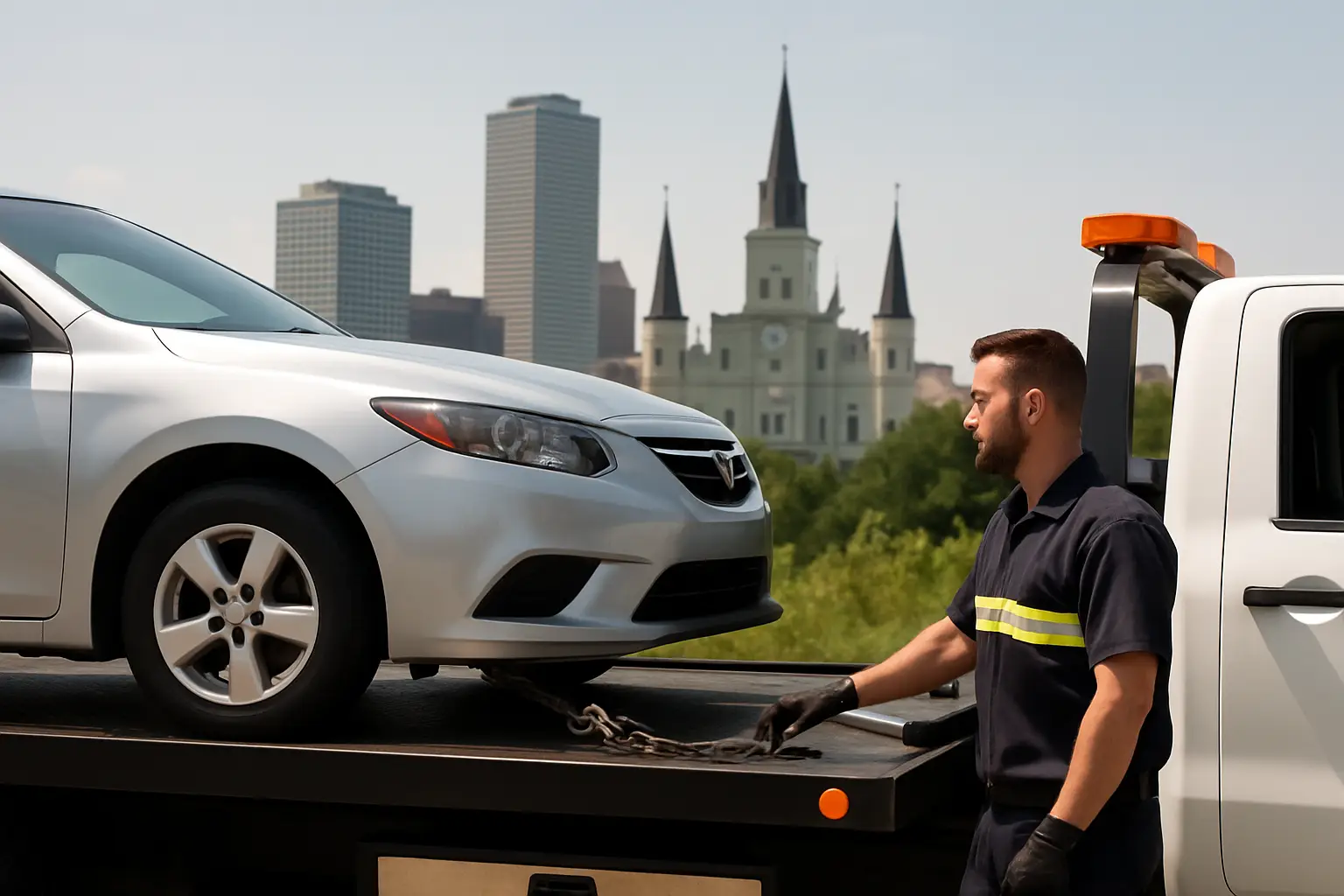
Flatbed towing is often the safest option for many passenger vehicles, especially if the car will not roll, you have all-wheel drive, you have body damage, or you are worried about scraping. With a flatbed, the vehicle rides fully off the ground, which reduces wear and helps protect drivetrains that should not be pulled with wheels turning.
Wheel-lift towing for quick pickups
Wheel-lift towing can be efficient for many front-wheel or rear-wheel drive vehicles when the car can be loaded properly and the tow is straightforward. In dense areas or tight pickup spots, it may also be faster to position. The trade-off is that not every situation is a good fit, and the operator needs to account for clearance, drivetrain, and any existing damage.
Recovery is different from towing
If your car is in a ditch, on a neutral ground that will not support a truck, or wedged after an accident, you may need recovery, not a simple tow. Recovery usually takes more time, more equipment, and more planning. It is still fast help, but it is not the same as hooking up on a clean shoulder.
The simplest way to avoid surprises is to describe what happened plainly when you call: “rear tire is off the rim,” “front end is dragging,” “car will not go into neutral,” or “it is in a parking garage.” Those details change the truck that gets dispatched.
Common New Orleans scenarios that call for a tow
A lot of towing calls look the same at first, but the best solution depends on the situation.
Breakdowns on interstates and ramps are all about fast arrival and safe loading. You want an operator who can position the truck quickly, keep the scene controlled, and get you out of the danger zone without delay.
Flooded streets are a different story. If water has reached the doors or you tried to start the engine after taking on water, it may be smarter to tow the vehicle rather than attempt another start. Starting a water-damaged engine can turn a bad day into a major repair.
Parking garages and tight driveways are also common in the city. Low clearance, tight turns, and height limits can restrict equipment. If your car is stuck in a garage, say so upfront so the correct plan is dispatched.
Accidents add paperwork and stress. If the vehicle is disabled or unsafe to drive, towing is about controlled handling, safe transport, and delivering the car where you need it - body shop, home, or a trusted mechanic.
What towing costs depend on (and what you can control)
Drivers usually want one thing in the moment: “How much is this going to cost?” The honest answer is that it depends, but it is not random.
Price typically changes based on distance, vehicle type, time of day, and difficulty of the pickup. A simple hookup in a clear lot is different from a recovery, and a short local tow is different from long-distance hauling.
You can control some parts of the cost by being specific and prepared. If you know the destination address, share it. If the vehicle has a locked steering wheel, a dead battery, or is stuck in park, say so. If you need to ride with the driver or you need the vehicle dropped in a specific way, mention that before the truck arrives.
If you are using roadside coverage through insurance, a credit card benefit, or a membership plan, ask what they require. Many programs need dispatch authorization or a case number. Getting that squared away early prevents delays when the truck is already there.
How to avoid damage during a tow
Most towing damage comes from mismatched equipment, rushed loading, or missing information about the vehicle.
If you drive an all-wheel drive car, certain EVs, or anything with drivetrain limitations, do not assume a basic tow is fine. The safest move is to tell the dispatcher your make, model, and whether it is AWD/4WD. That helps match you with flatbed towing or the correct method.
Also, remove valuables and take photos if you can do so safely. A few quick pictures of the vehicle and the surrounding area can help if there is confusion later about pre-existing damage.
Finally, think about where you want the car to go. A lot of drivers pick the closest shop out of panic, then regret it later. If you already have a mechanic you trust, towing there first can save time and extra tows.
What to expect when you call for towing
A good dispatch call is short and focused. You should expect basic questions: your location, what vehicle you have, what happened, whether the car rolls, and where it needs to go.
From your side, have these ready:
- Exact pickup location and a callback number
- Vehicle year, make, model, and whether it is AWD/4WD
- What is blocking movement (dead battery, flat tire, accident damage, stuck in park)
- Destination address and any special drop instructions
If you are in an unsafe spot, say that clearly. “I am on the shoulder with cars flying by” is useful information and should change how the response is handled.
Roadside help vs. towing: don’t pay for a tow you don’t need
Sometimes the fastest fix is not towing. If your battery is dead, a jump-start may get you moving. If you have a spare and the lug nuts will come off, tire service can save the time of towing to a tire shop. If your keys are locked inside, a lockout can solve the problem on the spot.
The trade-off is reliability. If the vehicle has been overheating, stalling, or losing power, “just getting it started” might only get you a few blocks before you are stranded again in a worse location. If you are unsure, towing to a trusted shop is often the lower-stress option.
Planning a tow for transport, not an emergency
Car towing in New Orleans is not only for breakdowns. People also tow vehicles for moves, dealership delivery, repairs, and long-distance hauling.
If you are planning transport, you can make it smoother by choosing a pickup time with easier traffic, making sure the vehicle is accessible, and confirming whether the car runs. Non-running vehicles usually take more time to load, and knowing that upfront helps the operator bring the right setup.
If your car is lowered, has a body kit, or has limited ground clearance, say that early. The right approach and equipment can prevent scraping.
A fast way to get help right now
If you are currently stranded and need a truck dispatched, contact a licensed, insured local operator who can respond 24/7, match the right equipment to your vehicle, and prioritize safe loading. Zain Towing LLC serves Kenner and the New Orleans area with towing, recovery, and roadside assistance, with a strong focus on secure handling and rapid response.
Wherever you call, stay focused on two goals: get yourself to a safer position and get the vehicle moved without adding damage. The right tow is the one that ends the stress, not the one that creates the next problem.
Need help right now?
Zain Towing runs 24/7 in Kenner, New Orleans, Metairie, Harahan and Gretna. Call (504) 666-9099 or see our towing service, roadside assistance and New Orleans pages.