
Case Study Roadside Jump Start Response
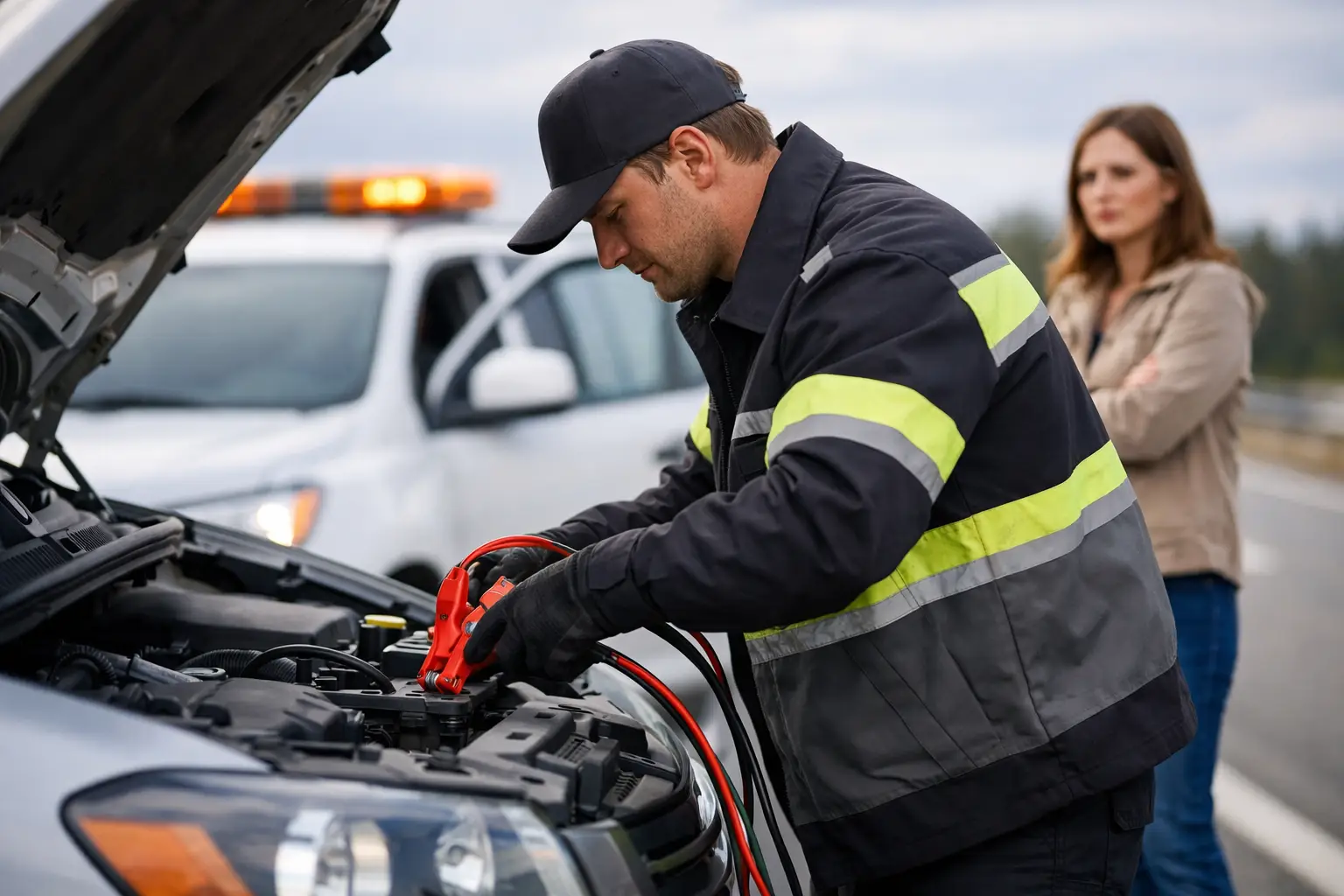
A dead battery rarely happens at a good time. It hits before work, after a late shift, outside the grocery store, or in a parking lot when your phone is low and you just need the car to start. This case study roadside jump start response looks at what actually matters in that moment - how quickly help is dispatched, how safely the service is performed, and what gets the driver moving again without adding more stress.
For drivers in Kenner and New Orleans, jump-start service is not just about bringing cables. It is about response time, trained handling, and making the right call if the battery is too far gone to trust. A fast arrival helps, but speed without the right process can create another problem. That is why roadside battery calls need both urgency and professional judgment.
What happened in this roadside jump start call
In this case, the driver was parked outside an apartment complex near a busy Kenner corridor just after 7:00 a.m. The vehicle would not crank. Dashboard lights came on, but the engine would only click. The customer had already tried once with a friend using a personal vehicle, but the car still would not start.
That detail matters. When a jump-start attempt fails, the issue may still be a weak battery, but it could also point to corroded terminals, a failing alternator, poor cable contact, or a battery that no longer holds charge. For a roadside provider, the next step is not guessing. The next step is dispatching the right operator with the right equipment and checking the system in a safe order.
The driver called for help and gave three key pieces of information: location, vehicle type, and symptoms. That allowed dispatch to treat it as a priority roadside call instead of a possible tow from the start. In a high-traffic morning window, that triage saves time.
Case study roadside jump start response timeline
The strongest measure in any case study roadside jump start response is the timeline. Customers do not judge service by technical language. They judge it by how long they are stranded, how clearly they are updated, and whether the vehicle starts without damage or confusion.
In this scenario, dispatch confirmed the request immediately, verified the exact parking location, and sent an operator equipped for roadside battery service. The arrival target stayed within the company’s normal rapid-response standard, and the operator reached the customer in under 30 minutes.
Once on site, the operator did not rush straight to the battery. First came a quick visual check. The battery terminals showed light corrosion. The operator also confirmed the vehicle was in park, the ignition was off, and there were no visible signs of battery case swelling or damage. That last point is easy for customers to miss, but it matters. If a battery is physically compromised, a jump-start can be the wrong move.
After the safety check, the operator connected professional-grade jump equipment, not improvised cables from another stranded driver. The vehicle started successfully within minutes. That solved the immediate problem, but the call was not treated as finished the second the engine turned over.
The operator checked whether the vehicle held idle properly and advised the customer on the likely cause: the battery was weak and may need replacement soon. The customer was able to leave safely for work instead of waiting for a tow, but with a realistic warning that the issue could return if left unaddressed.
Why this response worked
A lot of roadside calls look simple from the outside. Battery dead, send help, jump car, done. In reality, the quality of the outcome depends on a few operational details.
First, the dispatch process was tight. Getting the caller to describe the exact symptoms helped separate a likely battery issue from a starter or ignition problem. That saves wasted time and reduces the chance of sending the wrong service first.
Second, the operator arrived ready to handle more than one scenario. A professional jump-start call should account for battery failure, terminal corrosion, no-start conditions, and the possibility that the vehicle may still need towing. This is where licensed and insured roadside service makes a difference. The goal is not only to get the engine running. The goal is to avoid damage and keep the customer from being stranded again ten minutes later.
Third, the operator communicated clearly. Customers dealing with a dead battery are usually stressed and trying to get somewhere fast. Clear updates, a calm approach, and a simple explanation of what is happening all reduce friction. Friendly service is not extra. It is part of the response.
What drivers can learn from this jump-start case
This call highlights a point many drivers miss: not every no-start situation should be handled with a casual jump from another car. If the battery has visible damage, if the terminals are heavily corroded, or if repeated jump attempts have already failed, it is safer to call for trained roadside help.
It also shows why speed matters, but not by itself. An ultra-fast arrival means less if the operator lacks the equipment or experience to assess the problem properly. The best roadside response balances urgency with safe procedure.
For commuters, rideshare drivers, and families trying to keep the day on track, that balance is what actually saves time. A rushed but sloppy jump-start can leave you stranded again at the next stoplight or parking lot. A professional response gives you a better read on whether the battery is weak, dead, or part of a larger charging issue.
When a jump-start is enough and when it is not
This is where real-world roadside service depends on the vehicle and the symptoms. Sometimes a jump-start is exactly the right fix. If the battery was drained by lights left on overnight, a successful restart may be all the driver needs to get back on the road and then test or replace the battery later.
Other times, a jump-start is only temporary. If the battery is old, if the alternator is not charging properly, or if the vehicle dies again right after starting, the driver may need battery replacement or towing to a repair facility. That is not a failure of the roadside call. It is the right diagnosis.
A trustworthy provider does not oversell either direction. They should not push a tow if a safe jump-start solves the problem. But they also should not pretend every dead battery call ends with a simple restart. Good roadside service means telling the customer the truth about what the vehicle is doing.
What this means for drivers in Kenner and New Orleans
The local driving environment adds pressure to battery problems. Heat, humidity, stop-and-go traffic, and heavy daily use can all shorten battery life. Add early work commutes, airport traffic, school drop-offs, and late-night travel, and a no-start problem quickly becomes more than an inconvenience.
That is why a local roadside provider needs to be built for fast dispatch, not vague scheduling windows. When a driver is stranded in a parking lot, apartment complex, office lot, roadside shoulder, or hotel area, they need to know help is moving now. They also need confidence that the operator knows how to work safely around modern vehicle electrical systems.
For that reason, companies like Zain Towing LLC position jump-start service as a real emergency response, not a side offering. The difference shows in arrival speed, trained handling, and the ability to shift to towing if the battery problem turns out to be something more serious.
The standard a roadside jump-start response should meet
A good roadside battery call should feel simple to the customer, even though the operation behind it is precise. The customer should be able to call at any hour, explain the issue quickly, get a realistic arrival estimate, and receive service from a trained operator who checks the vehicle before acting.
That standard includes professional equipment, safe battery connection procedures, and honest guidance after the engine starts. It also includes being licensed and insured, because vehicle damage during roadside service is not a small issue. Drivers need to know the company responding is accountable for how the work is done.
The best outcome is not just hearing the engine turn over. It is knowing the problem was handled safely, the next step is clear, and the driver can move forward without second-guessing the service they just received.
Dead batteries will keep catching people at the worst possible times. What matters is having a roadside response that treats urgency and safety with the same level of seriousness.
Need help right now?
Zain Towing runs 24/7 in Kenner, New Orleans, Metairie, Harahan and Gretna. Call (504) 666-9099 or see our towing service, roadside assistance and New Orleans pages.