
Flat Tire Roadside Help That Gets You Moving
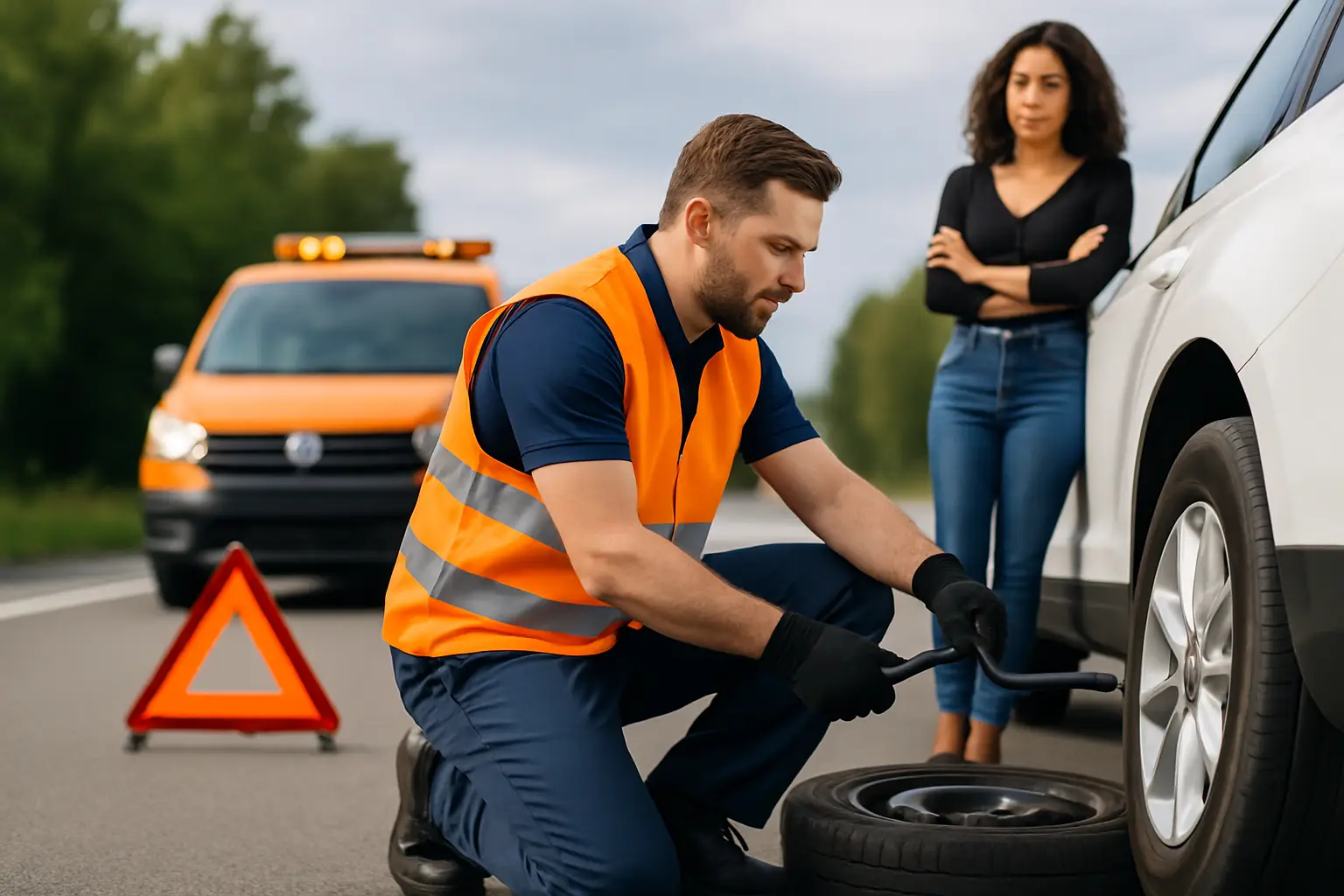
You feel it before you fully hear it - that soft thump-thump that turns into a pull on the steering wheel. Maybe it happens on I-10, maybe on Veterans, maybe in a dark parking lot after a late shift. A flat tire is stressful because it forces a fast decision: keep rolling and risk damage, or stop and figure it out on the shoulder.
This is where flat tire roadside help earns its keep. The right help is not just “a new tire” - it is safety, traffic awareness, proper lifting points, and getting you back on the road without creating a bigger problem.
First priority: get safe before you get busy
The best tire change in the world is not worth it if you are standing in an unsafe spot. As soon as you suspect a flat, ease off the gas and avoid abrupt steering. If the tire is losing air quickly, slow down gradually and aim for the safest stopping area available.
If you can, get well off the travel lane. A wide shoulder, a parking lot entrance, or a nearby side street beats a tight shoulder next to fast-moving traffic. Turn on your hazard lights immediately. At night or in rain, hazards are not optional - they are your first line of protection.
Once you are stopped, keep yourself and passengers out of traffic. If you are on the interstate or a narrow shoulder, it can be safer to stay in the vehicle with seatbelts on while you call for assistance, especially if exiting would put you close to passing cars.
What “flat tire roadside help” actually includes
People picture one thing: swapping the tire. In real life, roadside tire help is a small toolbox of options based on what failed and what you have available.
Sometimes the fix is installing your spare. Other times, the issue is a slow leak and you need air to limp to a nearby shop. If the tire is shredded, the spare is missing, or the lug nuts are seized, the best answer might be towing the vehicle to a tire shop where it can be repaired safely.
The goal is simple: restore safe mobility without risking wheel damage, undercarriage damage, or an accident on the roadside.
Should you change it yourself or call for help?
It depends on three things: location, equipment, and risk tolerance.
If you are in a safe, flat area with good visibility, you have a real spare (not just a can of sealant), and you know how to lift your vehicle correctly, you may be able to handle it.
If you are on a narrow shoulder, in heavy traffic, in a sketchy lighting situation, or the ground is soft or sloped, calling for flat tire roadside help is usually the safer choice. The roadside is unpredictable. Vehicles drift. Weather changes. And jacks slip when the surface is uneven.
Also consider your vehicle. Many newer cars have low-profile tires, locking lug nuts, or limited trunk space. Some do not come with a spare at all. Larger vehicles and loaded SUVs can be tougher to lift and stabilize. If you are in a rideshare shift, traveling with kids, or hauling gear, the “quick swap” often turns into a long, frustrating roadside project.
What to do while you wait for tire assistance
After you are safe and you have called for service, a few small steps can reduce delays.
Know your location. The fastest dispatch happens when you can provide an exact address, a nearby intersection, or a clear landmark. If you are on a highway, note the direction of travel and the nearest exit or mile marker.
Look at the tire. You do not need to be a mechanic, but a quick glance helps you describe what happened. Is it completely flat? Is the sidewall torn? Is it a slow leak that still holds some air? Did you hit a pothole and now the tire looks fine but the wheel is tilted? That last one can mean suspension damage - do not drive it.
Check your spare situation if it is safe to do so. Some vehicles have a compact “donut” spare, some have a full-size spare, and some have no spare at all. If your spare is present but looks low, mention it. A low spare is common, and it changes the plan.
Common flat-tire scenarios that change the game
Not all flats are equal. Here are situations where calling help sooner usually saves time and prevents damage.
The tire is destroyed or the sidewall is torn
If the sidewall is cut or the tread is separating, sealants and quick plugs are not the answer. A spare install or tow is the safe route.
Lug nuts will not budge
Louisiana humidity, road grime, and over-torqued lugs can turn a “simple” change into a stuck-nut situation. Forcing it with the small factory wrench can round the lug or break a stud. If the lug is not moving with reasonable effort, stop before it becomes a bigger repair.
The vehicle is on a slope or soft ground
Jacks need stable, level support. A shoulder that looks solid can crumble at the edge, and wet grass or soft dirt can let the jack sink. That is how vehicles slip.
The spare is missing, flat, or unsafe
A donut spare is a temporary tool. It is meant to get you to a tire shop, not carry you across town at highway speed. If your spare is missing or flat, roadside help may involve bringing air, installing what you have, or towing you where you can get a proper replacement.
You drive an AWD vehicle
All-wheel drive vehicles can be picky about tire circumference. If one tire is significantly different from the others, it can stress the drivetrain. Sometimes you can use the spare just to reach a shop, but it is worth telling the technician what you drive so the advice fits your vehicle.
What a professional does differently on the roadside
A trained operator is thinking about more than the tire.
They position the service vehicle to improve visibility and create a buffer from traffic. They use proper lifting points so the jack does not crush a rocker panel or damage underbody covers. They manage the order of loosening and tightening lug nuts so the wheel seats correctly. They also watch for signs that the issue is not “just a flat,” like a bent rim, damaged valve stem, or a tire that keeps losing air immediately after inflation.
If the safest option is towing, professional equipment makes that decision smoother. Instead of trying to make an unsafe spare work, your vehicle can be transported securely to a tire shop or your preferred destination.
If you do attempt a spare change, avoid these costly mistakes
If you are in a safe place and you choose to change it yourself, slow down and do it cleanly.
Do not crawl under the vehicle while it is supported only by a jack. Do not place the jack on plastic trim or unstable ground. Do not remove all lug nuts before the wheel is supported. And do not ignore the spare tire speed and distance limits. A donut spare is not built for normal driving.
After installing the spare, drive gently and head straight to a shop. If the steering feels off, the vehicle vibrates, or you hear rubbing, stop and call for help - those signs can point to more than a puncture.
How to request roadside tire help fast in Kenner and New Orleans
Speed comes from clear information. When you call, have these details ready: your exact location, the vehicle year/make/model, whether you are in a safe spot, and whether you have a usable spare. If you are in a garage or tight parking area, mention clearance issues. If you are on the highway, mention the direction and nearest exit.
If you need local, 24/7 flat tire roadside help with an urgency-first dispatch approach, you can contact Zain Towing LLC for rapid roadside tire service and towing in the Kenner and New Orleans area.
What it costs and what affects the price
Roadside tire service pricing is not one-size-fits-all. The main factors are distance to your location, time of day, your vehicle type, and what the job requires.
A straightforward spare installation in a safe, accessible spot is typically faster than a roadside call on a tight shoulder in heavy traffic. Similarly, a car with a standard spare is usually simpler than a larger SUV with a spare mounted underneath or a truck with special wheel hardware.
If towing becomes necessary because there is no spare or the tire is unsafe to replace roadside, that will change the final cost - but it can still be the most economical choice compared to driving on a flat and destroying the wheel.
How to prevent the next flat from turning into a crisis
Flats happen, but surprises are optional. Check tire pressure monthly. Many slow leaks become roadside emergencies simply because the tire was already low.
Look at your spare once in a while. People discover a flat spare at the worst possible time. Make sure the jack and lug wrench are actually in the vehicle, and if your car uses a locking lug key, confirm it is present.
If your tires are worn close to the wear bars, replace them before they become puncture magnets. And after a major pothole hit, pay attention over the next day or two. A bubble in the sidewall or a persistent slow leak is a sign to address it early.
The next time you feel that steering pull or hear that unmistakable flap of rubber, do not try to “make it home.” Get to the safest spot you can, protect yourself first, and choose the help that gets you moving without creating a second problem. The calm choice on the roadside is usually the fast one, too.
Need help right now?
Zain Towing runs 24/7 in Kenner, New Orleans, Metairie, Harahan and Gretna. Call (504) 666-9099 or see our towing service, roadside assistance and New Orleans pages.