
Roadside Dispatch Tech: What’s Coming Next
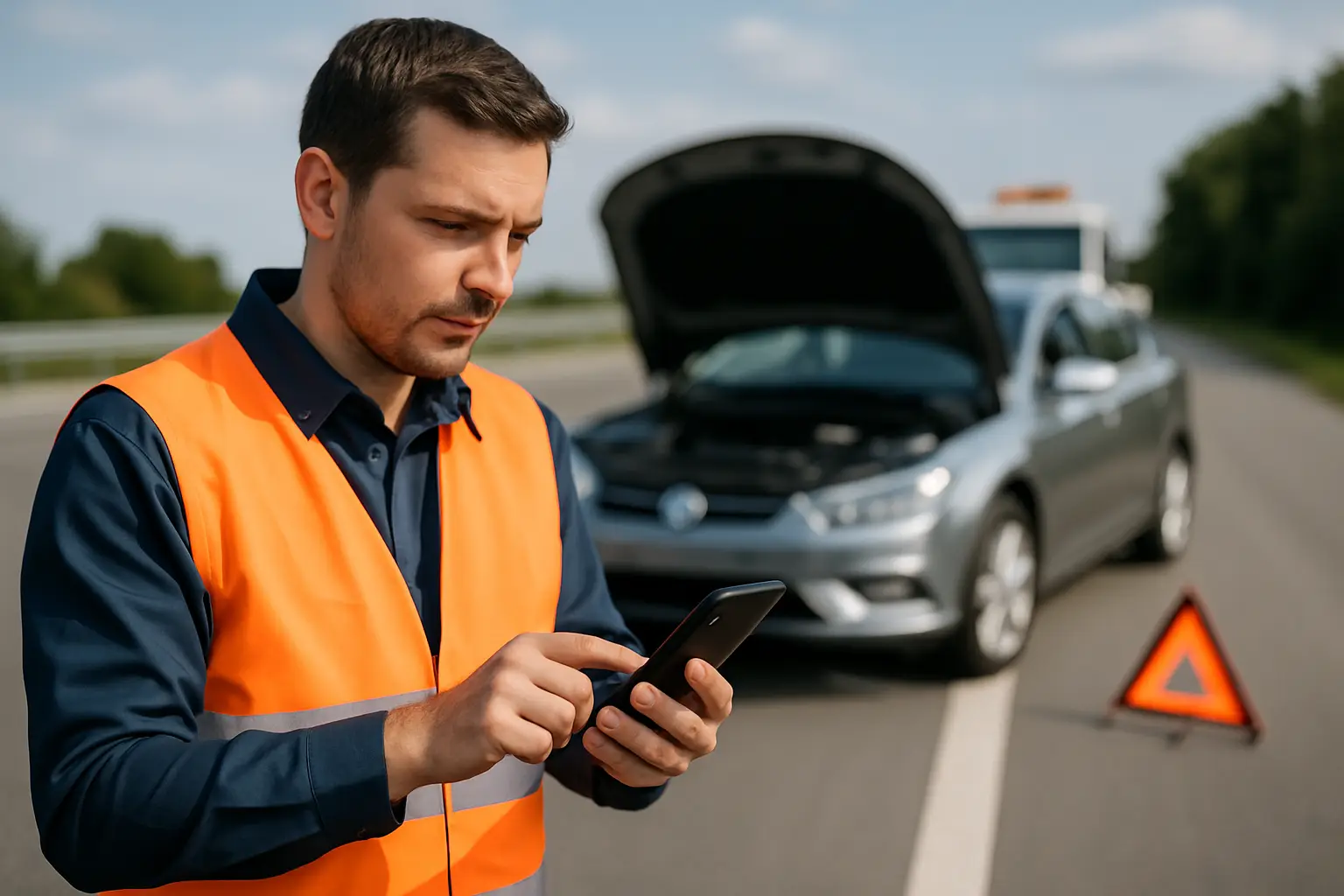
A breakdown on I-10 doesn’t feel like a “service request.” It feels like your whole day just stopped. And in that moment, dispatch technology is either your fastest path back to normal, or the reason you’re still waiting on the shoulder.
Dispatch is changing quickly, and most drivers only see the surface - a call, a text, a tow truck that shows up. Behind the scenes, the tools that decide who gets sent, how fast they arrive, and what equipment they bring are evolving. The future isn’t about fancy apps for their own sake. It’s about fewer wrong trucks, fewer repeat phone calls, clearer ETAs, and safer pickups.
What the “future” really means for roadside dispatch
When people talk about the future of roadside assistance dispatch technology, they usually picture automation. But the real shift is decision quality under pressure.
A good dispatch decision happens in minutes. It has to match the right truck to the right vehicle, pick the safest approach route, factor in traffic and weather, and set expectations with the customer. That’s a lot to do when the caller is stressed, the location is unclear, and the situation is changing.
The future looks like dispatch systems that act more like a co-pilot: they collect better information up front, propose the best operator and equipment, and keep everyone updated without forcing the driver to chase answers.
Smarter intake: less back-and-forth, fewer mistakes
One of the biggest causes of delay is simple misunderstanding. “I’m by the exit” can mean three different places. “It won’t start” could be a dead battery, a starter issue, or a key fob problem. And a “truck” might be a half-ton pickup or a loaded work vehicle.
The next generation of intake tools is built to reduce guesswork. Expect more dispatch flows that ask a few targeted questions and use the answers to classify the job immediately. Instead of a long interrogation, it’s quick prompts that matter: vehicle type, drivability, wheel condition, whether the vehicle is in a garage, and whether it’s in a lane of traffic.
Photos and short video clips will play a bigger role, too. A single picture of a flat tire, a damaged wheel, or a low-clearance parking garage entrance can prevent the wrong equipment from getting sent. That is faster for you and safer for the operator.
Location accuracy that works in real life
If you’ve ever tried to explain where you are while your hazard lights are flashing, you already know why location tech matters.
GPS pin-sharing is improving, but the real advance is reliability in messy conditions: under overpasses, in parking structures, in heavy rain, and in areas where the “address” is basically a stretch of roadway. Dispatch platforms are moving toward multi-source location confirmation - combining phone GPS, map matching, and landmark prompts to lock onto the right spot.
For drivers, that should mean fewer “Are you at the Shell or the Chevron?” calls. For operators, it means less circling and fewer risky U-turns.
Predictive routing and live ETAs that don’t feel fake
Drivers don’t need a perfect ETA. They need an honest one.
The future of roadside assistance dispatch technology includes better routing that accounts for more than traffic. It weighs job type, loading time, towing distance, and even known bottlenecks like event traffic or construction zones. Systems can learn from past runs in the same area and adjust ETAs based on what actually happens, not what a map thinks should happen.
This is where dispatch earns trust. A realistic arrival window and proactive updates reduce panic and reduce repeat calls. If conditions change, the system should adjust quickly and explain what’s happening in plain language.
Matching the right truck and operator, automatically
Not every call needs the same response. A lockout is different from a medium-duty tow. A car in a tight parking lot is different from an SUV on the shoulder. Dispatch tech is moving toward automated job-to-resource matching.
That means the system looks at:
- the vehicle details you provide
- whether the vehicle rolls, steers, and brakes
- the pickup environment (street, garage, mud, ditch)
- the destination need (repair shop, home, long-distance transport)
- the equipment required (flatbed vs. wheel-lift, dollies, winch, specialized straps)
It then recommends the closest qualified truck and operator, not just the closest unit. That’s a key trade-off: sending the nearest truck can be fast, but if it’s the wrong setup you lose more time overall. Future systems optimize for “fastest successful completion,” not “fastest dispatch.”
Two-way communication without the phone tag
Phone calls aren’t going away. In some situations, talking to a real person is the best thing you can get.
But dispatch technology is trending toward fewer unnecessary calls. Expect more two-way texting that lets you confirm details, share a location link, or answer a quick question without having to stay on hold. This also helps when you’re in a loud area, you’re traveling, or your phone signal drops in and out.
The best version of this is simple: you request help, you get an ETA, and you get updates when the truck is en route, nearby, and on scene. If something changes, you can reply right in the thread.
AI triage: helpful when it’s controlled
AI will show up in dispatch, but it needs guardrails.
Where AI helps is pattern recognition. It can flag that a “won’t start” description plus dim interior lights plus a recent cold snap is likely a jump-start. It can also spot high-risk situations like “stopped in left lane” and push the job to the front with a safety script for the driver.
Where AI can hurt is when it pretends to be certain. Roadside work is full of exceptions. A vehicle might look fine in a photo but have a locked wheel. A “simple tow” might turn into a recovery. Good dispatch tech will treat AI suggestions as recommendations, with a trained dispatcher or operator confirming the final call.
Digital proof, job documentation, and safer handoffs
Another quiet change is how jobs are documented. Dispatch platforms are moving toward digital job tickets that track time stamps, location, photos, and customer confirmations.
For the customer, that can mean clearer pricing and fewer misunderstandings about what was requested. For the provider, it reduces errors and supports safer operations. If a vehicle has special instructions - low clearance, all-wheel-drive constraints, or a specific drop-off procedure - that information should travel with the job, not get lost between phone calls.
There’s a privacy trade-off here. More data can improve speed and accuracy, but it also has to be handled responsibly. The best dispatch systems keep data minimal, secure, and tied only to the service being provided.
Payments and authorization that don’t slow the scene down
In a perfect world, payment is quick, clear, and done at the right time. Dispatch technology is improving how authorizations and receipts are handled, including secure payment links and digital invoices.
This matters because it reduces time on scene and reduces stress. You shouldn’t be digging for cash on a dark roadside. At the same time, not every customer wants to pay through a link, and not every situation allows it. The future is flexible: card, cash, invoice options for planned transport, and clear communication on what’s due and when.
Connected vehicles and automatic crash detection
As vehicles get more connected, dispatch will change again.
Some newer cars already send crash alerts or roadside requests through built-in systems. Over time, more calls may start with partial data already attached: vehicle make and model, approximate location, and whether airbags deployed.
That can speed up response, but it also adds complexity. Not all alerts reflect the real need on the ground. A minor bump can trigger a notification. A serious situation might have incomplete data. Dispatch systems will need to blend vehicle-reported info with human confirmation and prioritize safety first.
What drivers around New Orleans and Kenner should expect
Technology doesn’t remove the realities of the road. In the New Orleans metro area, dispatch has to work around bridges, tight service roads, heavy rain, event traffic, and construction patterns that change fast.
So the most valuable “future” improvements will be practical ones: quicker location confirmation, more accurate ETAs, better equipment matching, and consistent updates. If a provider is using modern dispatch tools well, you feel it as a customer because everything takes fewer steps. You don’t have to explain yourself three times, and you’re not left guessing what happens next.
If you want a simple rule when choosing help, it’s this: look for a company that treats dispatch like operations, not like a call center. The dispatch process should sound confident and organized, with clear questions and clear next steps.
For drivers who want fast, local help 24/7, Zain Towing LLC builds its service around rapid-response dispatch and trained operators in the Kenner and New Orleans area. If you ever need towing or roadside assistance, you can request service or a quote at https://zaintowing.net/.
The next time you’re stuck, the best “future tech” won’t be the fanciest screen. It’ll be the moment you realize you’re no longer doing the hard part - you’ve got a clear ETA, the right truck is on the way, and you can focus on getting somewhere safe.
Need help right now?
Zain Towing runs 24/7 in Kenner, New Orleans, Metairie, Harahan and Gretna. Call (504) 666-9099 or see our towing service, roadside assistance and New Orleans pages.