Guide to Accident Recovery Towing After a Crash
A crash can leave your vehicle blocking a busy Kenner road, sitting on a New Orleans shoulder, or stuck off the pavement with fluid leaking underneath. This guide to accident recovery towing explains what happens next, how to stay safe, and how to get the right truck to your location without creating more damage or stress.
Put Safety Ahead of the Vehicle
Before anyone discusses a tow, check for injuries. Call 911 right away if someone is hurt, traffic is at risk, there is a fire hazard, or your vehicle is creating an immediate danger. If the vehicle can be moved safely and local authorities direct you to do so, pull out of travel lanes. Turn on hazard lights and move yourself and passengers to a protected area away from traffic.
Do not stand between your vehicle and moving traffic. On a bridge, narrow shoulder, curve, or high-speed roadway, staying inside the vehicle may not always be the safest option. Follow instructions from law enforcement and emergency personnel, who can assess the scene conditions in real time.
If there is smoke, a fuel smell, exposed wiring, or a deployed airbag, do not attempt a roadside repair. Keep bystanders away and wait for first responders. A tow operator can recover the vehicle once the scene is cleared and it is safe to work.
What Accident Recovery Towing Includes
Accident recovery is more than hooking up a disabled car and driving away. The operator must assess the vehicle's condition, its position, traffic conditions, wheel damage, suspension damage, and the safest way to load it. A car with a broken axle or damaged steering cannot always be towed the same way as a vehicle with a dead battery.
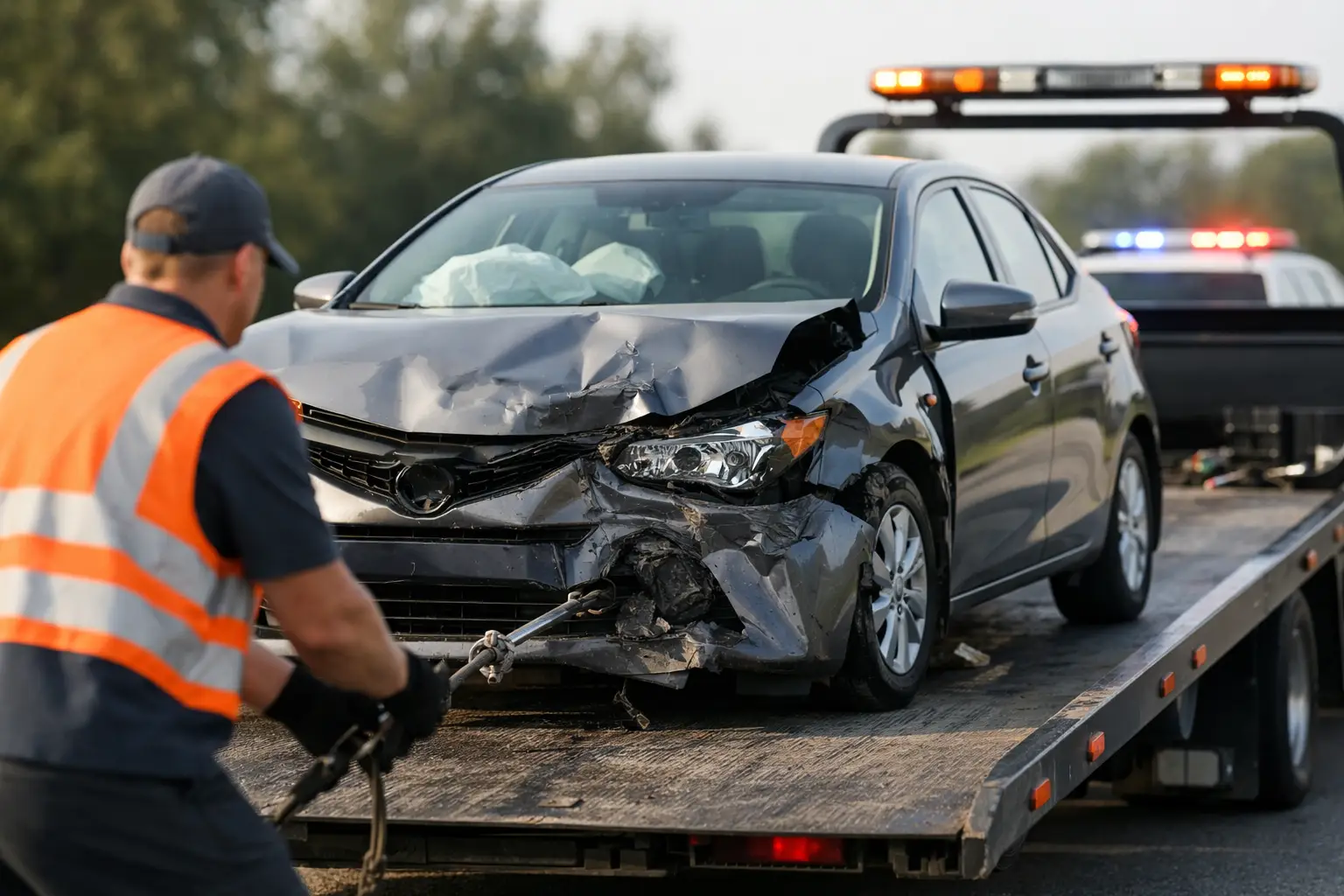
Recovery may involve winching a vehicle from a ditch, median, embankment, parking barrier, or soft shoulder. It may require dollies to protect damaged wheels, a flatbed to keep all four tires off the road, or extra rigging to stabilize a vehicle before it moves. The right approach depends on the crash, not just the make and model.
A professional operator should inspect the vehicle before loading, use proper attachment points, and secure it for transport. This reduces the chance of dragging damaged components, worsening body damage, or creating a second incident during the tow.
Choose the Right Tow Method for the Damage
Flatbed towing is often the safest choice after an accident. The vehicle is fully loaded onto the truck bed, avoiding road contact for tires, wheels, and drivetrain components that may have been damaged in the collision. It is a strong option for all-wheel-drive vehicles, luxury vehicles, low-clearance cars, motorcycles, and cars with uncertain mechanical damage.
Wheel-lift towing may be appropriate when the vehicle is structurally sound and the undamaged wheels can roll safely. However, it is not the default answer for every crash. If the steering is locked, a wheel is bent, the suspension is compromised, or the vehicle has all-wheel drive, a flatbed or dollies may be necessary.
For trucks, SUVs, vans, RVs, or other medium-duty vehicles, dispatch needs to send equipment rated for the vehicle's size and weight. A too-small truck can delay the recovery and put both the vehicle and operator at risk. This is why accurate information at the start matters.
Winching Is Not the Same as Towing
When a vehicle has left the roadway, standard towing may not begin until it is recovered to stable ground. Winching uses controlled pulling equipment to reposition the vehicle safely. It requires careful planning, especially around mud, water, uneven ground, guardrails, or nearby traffic.
Do not try to pull a crashed vehicle out with a personal truck, tow strap, or improvised chain. Recovery points can fail, vehicles can shift unexpectedly, and a simple pull can turn into a serious injury or costly damage situation.
Give Dispatch the Details That Change the Response
A fast dispatch starts with clear information. You do not need to be an expert, but sharing the basics helps the towing company send the right operator and equipment the first time. Be prepared to provide these four details:
- Your exact location, including cross streets, highway direction, exit number, or nearby business
- The vehicle type, such as sedan, SUV, pickup, motorcycle, RV, or commercial van
- The vehicle's condition, including whether it rolls, has wheel damage, is in a ditch, or has deployed airbags
- Your preferred destination, such as a repair shop, dealership, body shop, home, or secure storage location
Also let dispatch know if police are on scene, if the vehicle is blocking traffic, or if access is restricted by a parking garage, gated community, or narrow roadway. These details help prevent avoidable delays.
Protect Your Vehicle Before It Leaves the Scene
Once everyone is safe, take photos of the vehicle from several angles if conditions allow. Capture visible damage, license plate information, the surrounding scene, and personal property inside the vehicle. These photos can help with insurance documentation and give you a record of the vehicle's condition before transport.
Remove valuables, important documents, medication, electronics, work equipment, and garage remotes. If you cannot safely access the vehicle, tell the tow operator what remains inside. Keep your keys, insurance information, registration, and tow receipt with you.
Ask where the vehicle is being delivered and confirm the destination before loading begins. If it is going to a repair facility after hours, make sure that facility accepts after-hours drop-offs. Some shops require vehicles to be placed in a designated area or need keys left through a secure process.
Know What to Expect From the Tow Operator
A trained tow operator should explain the plan when conditions permit: whether the vehicle will be loaded on a flatbed, whether dollies or winching are needed, and where the vehicle will be taken. At an active crash scene, the operator may need to work quickly under direction from police, but safety should never be rushed.
Professional service also means using equipment suited to the vehicle, securing it properly, and documenting the transport. Licensed and insured towing matters because accident recovery has real risks. Your vehicle may already be damaged, and careful handling is essential to avoid making the situation worse.
Zain Towing LLC provides 24/7 accident recovery and towing throughout Kenner and the New Orleans area, with trained operators and equipment for light- and medium-duty vehicles. The goal is rapid dispatch, safe loading, and secure delivery, with a stated arrival goal of less than 30 minutes when traffic, weather, and scene conditions allow.
Handle Insurance and Repair Decisions Without Guesswork
You do not have to solve every insurance question at the roadside. Start by getting the vehicle somewhere safe. Keep the tow receipt, recovery invoice, photos, police report information, and the name of the repair facility. Your insurer may ask for these details when opening or updating a claim.
If you have a preferred body shop or dealership, tell the dispatcher. If you are unsure where the vehicle should go, consider whether it needs collision repair, mechanical diagnosis, or dealership-specific service. A vehicle with major body damage may be better sent directly to a collision center, while a car with a possible drivetrain or electrical issue may need a qualified repair shop.
It depends on your insurance policy and the type of damage, so avoid authorizing unnecessary repairs before you understand the estimate and your claim options. Transporting the vehicle safely now gives you time to make that decision without pressure on the roadside.
Call for Recovery When Driving Is No Longer Safe
Do not drive away from a crash simply because the engine still starts. Call for accident recovery towing if a wheel is bent, a tire is flat after impact, fluids are leaking, warning lights are on, airbags deployed, the steering feels wrong, or body panels are rubbing the tires. These problems can cause a loss of control or make the damage much more expensive.
The same applies if your car appears normal but was hit hard underneath. Damage to suspension components, exhaust systems, battery mounts, or drivetrain parts may not be obvious from the driver's seat. A professional tow is often the safer and less costly choice.
After an accident, the best next move is usually the simplest one: get people to safety, let first responders manage the scene, and arrange the proper recovery truck. A careful tow protects what can still be protected and gets you off the roadside so you can focus on the decisions that come next.
Need help right now?
Zain Towing runs 24/7 in Kenner, New Orleans, Metairie, Harahan and Gretna. Call (504) 666-9099 or see our towing service, roadside assistance and New Orleans pages.