Guide to Damage Free Vehicle Towing
A bad tow can do more damage than the breakdown itself. Bent bumpers, scraped wheels, transmission problems, and suspension issues often happen when the wrong truck shows up or the vehicle is loaded the wrong way. That is why a real guide to damage free vehicle towing starts with one simple point: the safest tow begins before the vehicle ever leaves the ground.
If you are stuck on the shoulder in Kenner, parked in a flooded lot in New Orleans, or trying to move a non-running vehicle across town, speed matters. But speed without proper handling is a risk. The right towing company should be able to dispatch fast, identify the correct equipment, and secure your vehicle for transport without cutting corners.
What damage free vehicle towing really means
Damage-free towing is not just about getting your car from point A to point B. It means protecting the vehicle at every stage - approach, loading, securing, transport, and unloading. Each step matters because each step creates its own risk.
A low-clearance sedan can scrape during loading if the operator does not account for the angle. An all-wheel-drive SUV can suffer drivetrain damage if it is towed the wrong way. A motorcycle can tip or shift if it is not strapped correctly. Even a basic local tow needs the right setup for the specific vehicle.
That is why professional towing is never one-size-fits-all. The truck, the operator, and the securement method should match the vehicle type, its condition, and the road situation.
The right truck is the first decision
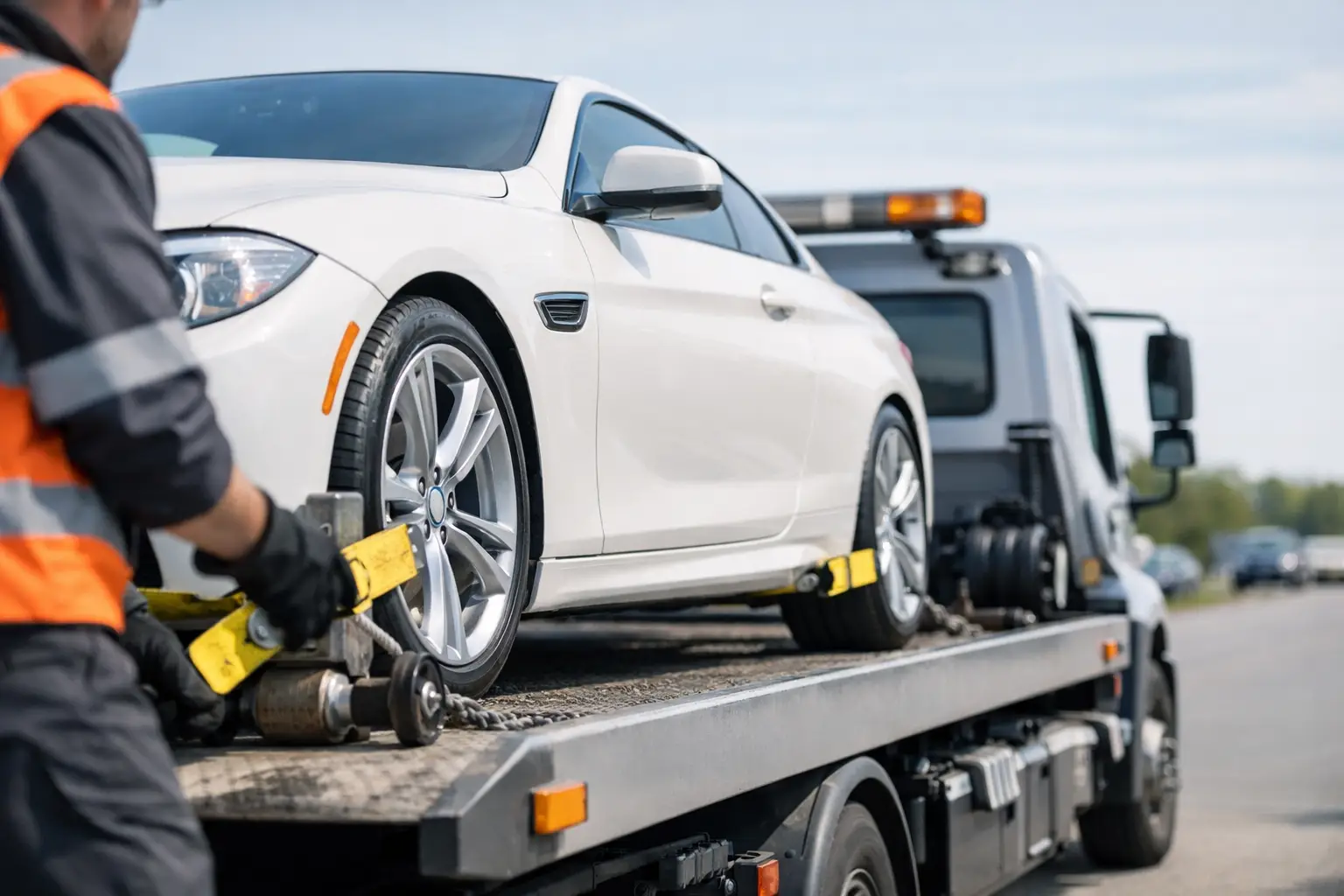
One of the biggest factors in a guide to damage free vehicle towing is choosing the right type of tow truck. In many cases, a flatbed is the safest option because the entire vehicle rides off the ground. That reduces wear during transport and helps prevent damage to tires, drivetrain components, and body panels.
Flatbeds are especially useful for luxury cars, all-wheel-drive vehicles, low-clearance cars, motorcycles, and vehicles with accident damage. They also make sense when a car will not roll properly or has broken suspension parts.
Wheel-lift towing still has its place. It can be efficient for certain short-distance moves and works well in tighter spaces where a flatbed may be harder to position. But it depends on the vehicle. If the drivetrain setup, condition, or damage pattern makes wheel-lift towing risky, a flatbed is the better call.
A professional dispatcher should ask the right questions before sending a truck. What type of vehicle is it? Is it drivable? Was it in an accident? Is it front-wheel drive, rear-wheel drive, or all-wheel drive? Is it stuck in mud, a ditch, or standing water? Those details are not small talk. They help prevent the wrong equipment from showing up.
Why loading causes so much towing damage
Most people assume the danger happens on the road. In reality, loading is where a lot of towing damage occurs. If the angle is too steep, the front spoiler, exhaust, bumper, or undercarriage can make contact. If the wheels are not straight or the vehicle is pulled unevenly, that can create stress where the car is already vulnerable.
This is where trained operators stand out. They know when to use ramps, skates, soft straps, or winching techniques that protect the vehicle. They also know when to slow the process down. In towing, rushing the load is often what leads to the damage customers notice later.
For disabled vehicles, loading may require extra care. A locked steering wheel, missing tire, or damaged axle changes the process. The safest operator will adapt the method instead of forcing the vehicle into a standard tow setup.
Low-clearance and specialty vehicles need extra care
Sports cars, lowered vehicles, motorcycles, and custom trucks all need more attention during loading. Clearance is tighter, body kits are more exposed, and tie-down points may be less obvious. That does not mean these vehicles are hard to tow. It means the operator needs the right equipment and enough experience to handle them correctly.
Owners of specialty vehicles should not be shy about asking how the vehicle will be loaded and secured. A reputable towing company should be able to answer clearly and confidently.
Secure tie-downs matter more than many drivers realize
Once a vehicle is on the truck, the next risk is movement during transport. Proper tie-downs keep the vehicle stable without damaging wheels, suspension, or body components. Too loose, and the vehicle can shift. Too tight in the wrong place, and parts can be bent, stressed, or scratched.
Professional operators typically use securement methods designed for the vehicle and tow type. Soft straps, wheel straps, and proper anchor points all help reduce contact damage. Chains have their place in recovery work, but for standard transport, the goal is controlled securement that protects finish and structure.
This is another reason insured, trained towing matters. Safe towing is not just about owning a truck. It is about knowing how to secure a vehicle for real road conditions like turns, braking, rough pavement, and sudden traffic changes.
Vehicle type changes the towing plan
Different vehicles bring different risks. Passenger cars are straightforward in many cases, but even then, drivetrain and ground clearance matter. SUVs and trucks can have higher centers of gravity and may require different balance considerations. Motorcycles need specialized handling to stay upright and stable. RVs, vans, and larger commercial vehicles may need medium-duty equipment and a more deliberate loading process.
Accident recovery is its own category. If a vehicle has front-end damage, broken steering, or locked wheels, the operator may need dollies, winching, or recovery tools before the tow even begins. In flood-prone areas around Southeast Louisiana, water exposure can also create hidden issues, especially with brakes and electrical systems.
That is why the best towing approach is based on the actual condition of the vehicle, not just its size.
What drivers should do before the tow starts
If you are waiting for a truck, there are a few smart steps that can help protect your vehicle and speed up service. First, share accurate details with dispatch. Mention if the car is lowered, all-wheel drive, in a parking garage, stuck off-road, or damaged from a collision. Small details can change the equipment needed.
Second, remove personal valuables and take quick photos of the vehicle if it is safe to do so. This is especially helpful after an accident or when transporting a specialty vehicle. Third, put the vehicle in the safest possible condition for pickup. If it can be shifted to neutral and the steering can be unlocked safely, that may help. If not, tell the operator before loading begins.
Just as important, stay clear during the loading process unless the operator asks for information. A professional crew will walk you through what they need.
How to choose a towing company that protects your vehicle
Not every towing provider gives the same level of care. If damage prevention matters, look for a company that is licensed and insured, offers 24/7 dispatch, and can explain what kind of truck they are sending. Fast response is important, but so is matching the right truck to the job.
It also helps to choose a company that handles more than basic breakdowns. Operators who regularly manage local towing, long-distance hauling, roadside service, and recovery work tend to be better prepared for unusual vehicle conditions. Experience shows up in the details - how the truck is positioned, how the vehicle is loaded, and how clearly the operator communicates.
For drivers in Kenner and New Orleans, local knowledge matters too. Tight streets, heavy traffic, weather exposure, and event congestion can all affect how a vehicle is recovered and transported. A local team that knows the area can often get to you faster and work more efficiently once on scene.
If you need immediate help, the safest move is to contact a professional towing company that can dispatch the correct equipment right away. Zain Towing LLC provides 24/7 towing and roadside service with trained operators, licensed and insured service, and a strong focus on secure vehicle handling. You can request service or get a quote at https://zaintowing.net/.
The real value of damage free towing
A tow is supposed to solve a problem, not add a second repair bill. That is why damage-free towing is not an extra feature. It is the standard that matters most when your car is already vulnerable.
When the right truck arrives, the vehicle is loaded carefully, and the securement is done correctly, towing becomes what it should be - safe, straightforward, and one less thing to worry about when your day has already gone sideways. If you ever need a tow, ask how your vehicle will be handled. The answer will tell you a lot.
Need help right now?
Zain Towing runs 24/7 in Kenner, New Orleans, Metairie, Harahan and Gretna. Call (504) 666-9099 or see our towing service, roadside assistance and New Orleans pages.