
A Guide to Roadside Jump Starts That Keeps You Safe
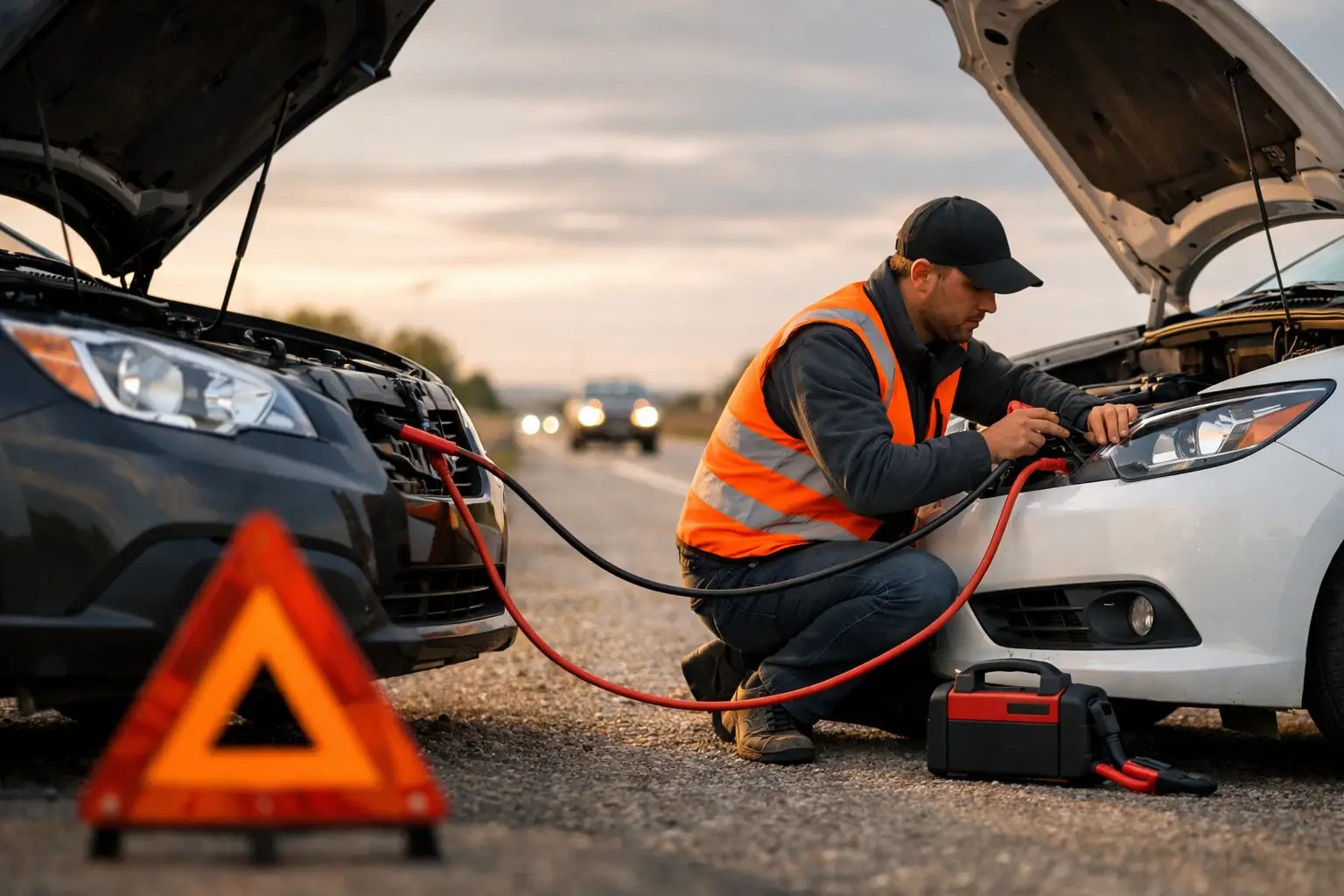
A dead battery can turn a normal drive through Kenner or New Orleans into a stressful roadside stop, especially after dark, during heavy rain, or when you are trying to get to work. This guide to roadside jump starts explains what to do first, how to jump a conventional vehicle safely, and when the smarter move is calling for professional roadside help.
Start With Your Safety, Not the Cables
Before opening the hood, get your vehicle out of moving traffic if it can be done safely. Turn on hazard lights, set the parking brake, and put the vehicle in Park or Neutral. If you are on a busy shoulder, near a curve, on an interstate, or in an area with limited visibility, stay inside with the doors locked unless leaving the vehicle is clearly safer.
A jump-start is not worth taking risks around traffic. Louisiana rain can make shoulders slick, and standing between two vehicles creates another hazard. If you do not have a safe, level place to position both vehicles, call for roadside assistance instead.
Also look for signs that the issue may be more than a discharged battery. A strong sulfur or rotten-egg smell, smoke, a swollen battery case, leaking fluid, damaged cables, or a battery that feels unusually hot are reasons to stop. Do not attempt a jump-start in these conditions. Keep people away from the vehicle and request trained help.
Confirm That the Battery Is the Likely Problem
A battery problem often shows up as clicking when you turn the key, slow cranking, dim interior lights, or no response at all. But those symptoms can overlap with a loose battery terminal, failed starter, blown fuse, bad alternator, or an electronic issue.
Check the simple things first. Make sure the vehicle is in Park or Neutral, press the brake pedal as required, and confirm that headlights and accessories are turned off. If the battery terminals are visibly loose, do not force a jump-start. A poor connection can create heat and sparks, and the vehicle may stall again even if it starts.
If your car starts after a jump but the battery warning light stays on, the charging system may not be working. Driving farther could leave you stranded again. That is a good time to arrange towing or professional diagnosis rather than assuming the battery just needs a few more minutes of driving.
Roadside Jump Start Setup for Conventional Vehicles
Only jump-start a standard 12-volt battery system if your owner's manual allows it. Hybrid, electric, and some newer vehicles have specific jump points and procedures. The high-voltage components in those vehicles are not something to touch or improvise around. Use the designated 12-volt terminals only, or call a professional who knows the vehicle type.
For two conventional gas or diesel vehicles, park the assisting vehicle close enough for the cables to reach without letting the vehicles touch. Turn both vehicles off, remove keys or fobs from the immediate starting area when possible, and switch off lights, climate controls, radios, and chargers.
Inspect your jumper cables before using them. Cracked insulation, badly corroded clamps, exposed wire, or damaged handles make the job unsafe. Keep the red and black clamps from touching each other once connected to a battery.
Connect the Cables in the Right Order
The sequence matters because it reduces the chance of sparks around the weak battery. Follow these steps carefully:
- Connect the red clamp to the positive terminal on the dead battery. The positive terminal is usually marked with a plus sign.
- Connect the other red clamp to the positive terminal on the good battery.
- Connect the black clamp to the negative terminal on the good battery.
- Connect the final black clamp to an unpainted metal ground point on the vehicle with the dead battery, such as a sturdy engine bracket or factory-designated ground point. Keep it away from the battery, fuel lines, belts, and moving parts.
Do not connect the final black clamp directly to the dead battery's negative terminal unless the vehicle manufacturer specifically directs it. The final connection can create a spark, and batteries can release flammable gas.
Once the clamps are secure, start the assisting vehicle and let it run for a minute or two. Then try starting the disabled vehicle. Do not crank continuously for long periods. Try for a few seconds, then wait before trying again. Repeated cranking can overheat the starter and drain both batteries.
If the vehicle does not start after a couple of reasonable attempts, stop. The problem may not be the battery, or the battery may be too damaged to accept a jump. Calling for professional roadside service is safer than continuing to guess.
Disconnect Without Creating Another Problem
After the vehicle starts, leave it running and remove the cables in reverse order. Take off the black clamp from the previously dead vehicle's ground point first, then the black clamp from the assisting vehicle. Remove the red clamp from the assisting vehicle, followed by the red clamp from the vehicle that was dead.
Keep clamps apart throughout the process. Do not let them touch metal surfaces, each other, or moving engine parts. Close both hoods securely before driving.
What to Do After the Vehicle Starts
Starting the engine does not prove the problem is solved. A battery may be weak because it is old, because lights were left on, or because the alternator is failing to charge it. If possible, drive directly to a safe place for a battery and charging-system test rather than making several stops.
Avoid turning the vehicle off immediately. A short idle may not recharge a battery enough to restart later, particularly if the battery is aged or temperatures are high. Still, driving longer is not a guaranteed fix. If the alternator has failed, the vehicle can lose power while you are on the road.
Watch for warning signs after the jump: a battery light, flickering lights, dim dashboard displays, electrical accessories cutting out, a burning smell, or the engine running rough. Pull over safely if those symptoms appear. Continuing to drive can turn a simple battery issue into a breakdown in a less safe location.
When a Portable Jump Pack Is the Better Option
A quality portable jump pack can be useful when no second vehicle is available. It also avoids positioning another car close to traffic. However, it must be charged, rated for your engine size, and used according to its instructions.
The same safety rules apply: verify the correct terminals, keep clamps from touching, use the designated ground point if instructed, and do not use a damaged pack. Many modern jump packs have reverse-polarity protection, but that protection is not a reason to rush. Confirm every connection before turning the unit on.
Portable packs are practical for commuters, rideshare drivers, and families, but they are not a replacement for diagnosis. If you need them repeatedly, your vehicle needs service.
Call for Help When the Situation Is Not Clear
Roadside jump starts are straightforward only when the vehicle, battery, cables, and location are all safe. It depends on the circumstances. A dead battery in a well-lit driveway is different from a no-start on I-10 at night, during a storm, or with children in the vehicle.
Call for professional help if you are unsure about the battery type, cannot locate safe connection points, have a hybrid or EV, see corrosion or battery damage, or simply do not feel safe working roadside. A trained operator can assess the no-start condition, provide a proper jump, and arrange secure towing if the vehicle cannot be safely driven.
Zain Towing LLC provides 24/7 roadside assistance for drivers in the Kenner and New Orleans area, with trained operators ready to help when a battery problem leaves you stuck. Have your location, vehicle make and model, and a quick description of what happens when you try to start the car ready for dispatch.
A calm decision at the roadside protects more than your schedule. If the location or vehicle condition does not feel safe, keep your hazards on, move away from traffic when possible, and get the right help on the way.
Need help right now?
Zain Towing runs 24/7 in Kenner, New Orleans, Metairie, Harahan and Gretna. Call (504) 666-9099 or see our towing service, roadside assistance and New Orleans pages.