
Guide to Vehicle Lockouts for New Orleans Drivers
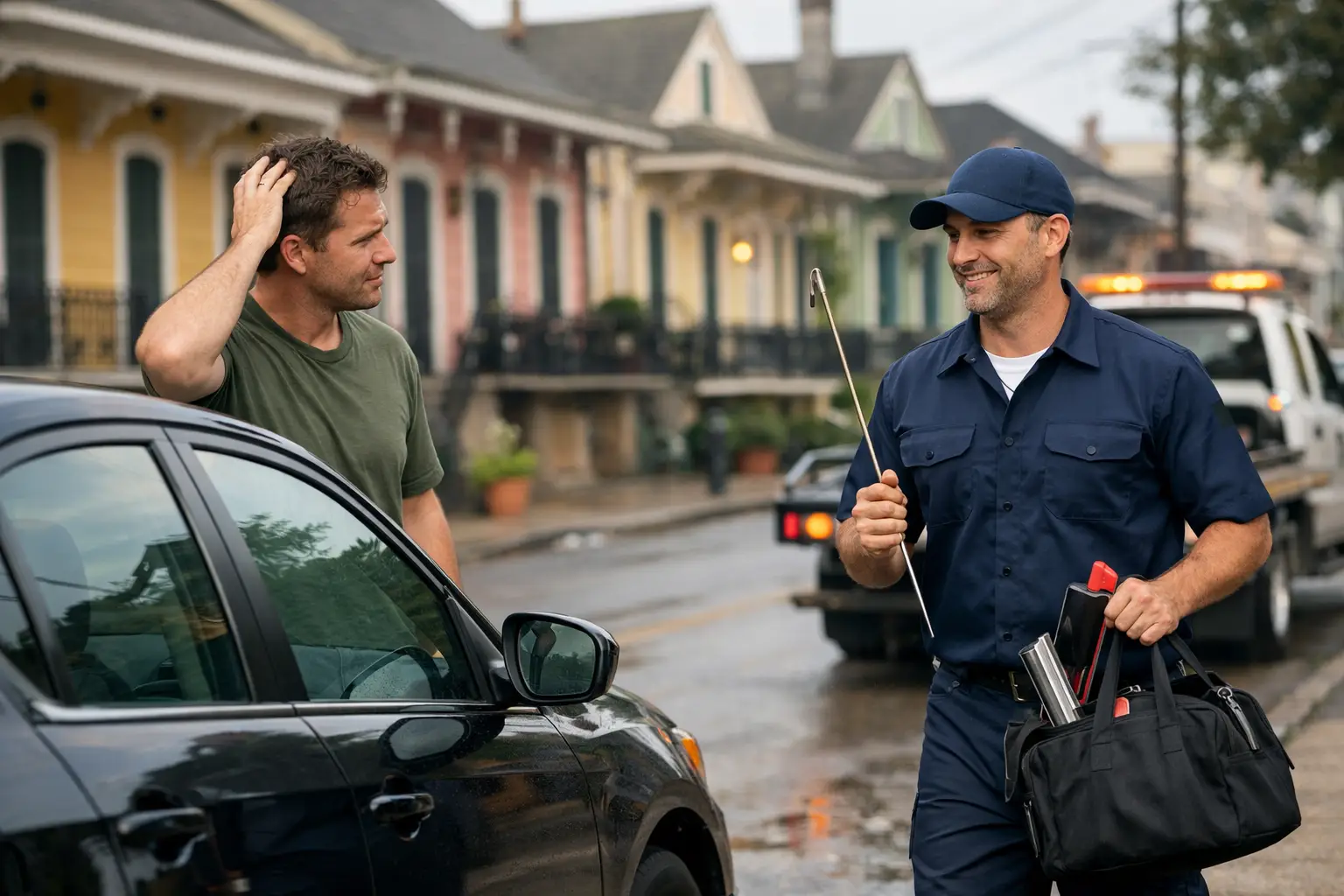
A vehicle lockout can turn an ordinary stop at a gas station, grocery store, job site, or French Quarter parking lot into a stressful situation fast. This guide to vehicle lockouts helps Kenner and New Orleans drivers make the right call: protect yourself, avoid costly damage, and get professional roadside help instead of forcing the door open.
First Steps During a Vehicle Lockout
Take a breath and check the situation before trying anything. Confirm that the keys are actually inside the vehicle, not in a bag, jacket pocket, or nearby seat. If you have a spare key available through a family member or roommate, that may be the simplest option, but only if it can arrive quickly and safely.
Your priority is your location. Move to a well-lit area if possible, stay aware of traffic, and keep your phone charged. If you are locked out on the shoulder, in a high-crime area, during severe weather, or with a child or pet inside the vehicle, the situation requires immediate action.
For a child, pet, or vulnerable passenger locked inside a hot vehicle, call 911 right away. Louisiana heat can become dangerous in minutes. Do not wait for a routine roadside dispatch if someone inside may be in distress.
For a standard lockout with no one trapped, contact a 24/7 roadside assistance provider. Give the dispatcher your exact location, vehicle year, make, model, and color. Let them know whether the keys are visible, whether the vehicle has a smart key or push-button start, and whether there is any damage to the door, window, or lock.
What Not to Do When You Are Locked Out
Trying to save a few minutes with a coat hanger, screwdriver, shoelace, or wedge can create a much bigger repair bill. Modern vehicles have tighter door seals, side airbags, electronic lock systems, protective weather stripping, and delicate window components. A method that worked on an older car can damage a newer vehicle quickly.
Avoid prying the top of the door frame. It may bend the frame, tear the weather seal, scratch the paint, or leave a wind-noise problem that lasts long after the lockout is over. Do not force a key into the lock cylinder, strike a window, or repeatedly pull on handles. If a key fob is not responding, it may be a dead fob battery rather than a true lockout, but forcing entry is still not the answer.
There is also a security concern. If you are in a public parking lot or on the roadside, do not leave valuables visible while you wait. Stay near the vehicle when it is safe to do so, but do not stand in traffic or expose yourself to passing vehicles.
Professional Guide to Vehicle Lockouts and Safe Entry
A trained lockout technician uses the right entry method for the specific vehicle. The goal is controlled access without damaging the door, glass, lock, paint, or electronic components. The proper approach depends on the vehicle design, its locking mechanism, and where the keys are located.
Older vehicles may allow access through a mechanical door lock. Many newer cars require specialized lockout tools and careful techniques around electronic systems. Some vehicles have double-lock or deadlock features, while others have protected cables and sensors inside the door. That is why the vehicle details you provide to dispatch matter.
Professional roadside assistance is especially valuable for luxury vehicles, late-model trucks and SUVs, vehicles with frameless windows, and cars with side curtain airbags. The wrong tool in the wrong position can lead to expensive door-panel, window, wiring, or airbag repairs.
Zain Towing LLC provides 24/7 lockout assistance in the Kenner and New Orleans area with trained operators focused on safe, damage-conscious vehicle entry. A fast dispatch helps you get back to your day without turning a lockout into a towing or body-shop problem.
Information to Have Ready When You Call
A clear call helps the dispatcher send the appropriate operator and estimate arrival time accurately. Be prepared to provide your location as precisely as possible. A street address is best, but nearby cross streets, parking-lot names, landmarks, mile markers, or a shared phone location can help when you are stranded.
You should also have your vehicle information ready: year, make, model, color, and license plate number if available. Mention whether the vehicle is parked in a garage, behind a gate, in a crowded lot, or in a location with low overhead clearance. Access conditions can affect which service vehicle and tools are needed.
The operator may ask you to verify that you own or are authorized to access the vehicle. Keep your ID, registration, insurance card, or digital proof of ownership available if it is accessible. If those documents are locked inside, explain that during the call. Professional operators take vehicle security seriously and may need to confirm ownership before entry.
Lockouts in Parking Lots, Driveways, and Along the Road
Where you are locked out changes the safest plan. In a home driveway or secure workplace lot, you may have the option to wait inside a building while you keep an eye on the vehicle. In a busy parking lot, choose a visible area near the vehicle and avoid accepting help from strangers who want to force the door open.
A roadside lockout needs extra caution. Turn on your hazard lights if you can do so safely. If the vehicle is disabled close to moving traffic, stand well away from the travel lane, preferably behind a guardrail or at a safe distance from the road. Do not sit in the vehicle if you are unable to access it, and do not attempt an entry while traffic is passing close by.
For drivers on I-10, Veterans Memorial Boulevard, Williams Boulevard, Airline Drive, or other high-traffic routes around Kenner and New Orleans, visibility and personal safety come first. A fast response is helpful, but the waiting period still needs to be handled carefully.
Special Situations That Need a Different Response
Not every lockout is simple. A lost key, broken key, damaged ignition, dead vehicle battery, or malfunctioning key fob may require more than door entry. If you get into the vehicle but it will not start, let the operator know what happened. You may need a jump-start, tire service, towing, or transport to a dealership or repair facility.
Smart-key vehicles can be confusing. Some models have an emergency mechanical key hidden inside the fob, while others use a designated backup reader location that can start the vehicle when the fob battery is weak. Your owner's manual may explain the procedure, but do not spend an hour searching for instructions in unsafe conditions. A roadside professional can assess the problem and help determine the next step.
If your keys were stolen, do not treat the issue as a routine lockout. Move to a safe location, contact law enforcement as appropriate, and consider having the vehicle transported. A stolen key can create a theft risk even after you regain entry.
How to Reduce the Chance of Another Lockout
No one plans to lock keys in a vehicle, but small habits make it less likely. Keep a spare key with someone you trust, especially if multiple people use the same car. Replace a weak key-fob battery before it fails, and get in the habit of checking for your key or fob before closing the door or trunk.
For families, rideshare drivers, delivery drivers, and anyone who is in and out of a vehicle all day, a Bluetooth tracker or a consistent key-storage routine can help. The best method depends on your vehicle and daily schedule. Just avoid hiding a spare key in an obvious exterior location, where it could create a security issue.
A lockout is frustrating, but it does not have to become a damaged door, broken window, or dangerous roadside wait. Keep your location safe, avoid improvised entry methods, and call for qualified help when you need it. The right response gets you back inside your vehicle with less stress and less risk.
Need help right now?
Zain Towing runs 24/7 in Kenner, New Orleans, Metairie, Harahan and Gretna. Call (504) 666-9099 or see our towing service, roadside assistance and New Orleans pages.