
How Long Does Towing Take? Real Timelines
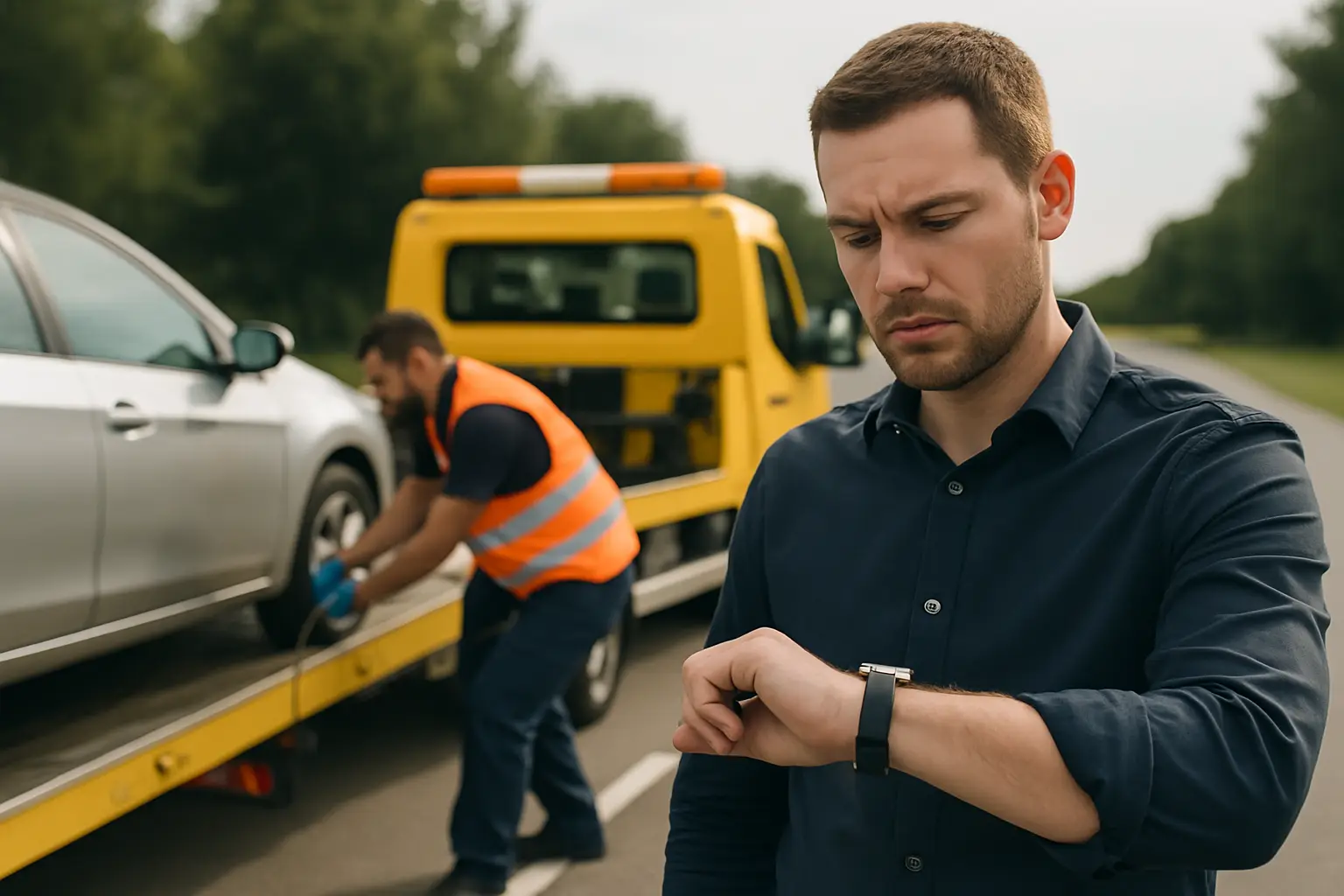
That moment your car won’t start on Airline Drive or you’re stuck on I-10 near Kenner, the clock suddenly feels loud. You’re not just wondering who can help - you’re wondering how long you’ll be sitting there, how long your car will be on the truck, and when you can get home or get back to work.
If you’re asking “how long does towing take,” the most honest answer is: it depends on three time blocks. First is arrival time (how fast the truck gets to you). Second is hookup time (how long it takes to load and secure your vehicle). Third is drive time (how long it takes to get your vehicle to the destination). Once you understand those pieces, towing stops feeling like a mystery and starts feeling predictable.
How long does towing take from call to drop-off?
In the Kenner and New Orleans area, a typical local tow often lands in a 45 to 120 minute range from the time you call to the time your vehicle is dropped off. That’s not a promise for every situation - traffic, location, and the type of recovery can stretch it - but it’s a realistic expectation for standard breakdowns on accessible roads.
If you’re on a shoulder with easy access and you just need a basic tow to a nearby shop, the timeline can be on the shorter side. If you’re in a tight parking garage, a muddy lot, or you’ve been in an accident that requires extra safety steps, the same tow can take longer even if the destination is close.
A more useful way to think about it is this: towing is rarely one single “wait.” It’s a sequence of short phases, and each phase has its own speed bumps.
Phase 1: Dispatch and arrival time
Arrival time is what most people care about first, and for good reason. For a well-staffed 24/7 towing company with active trucks in the area, the goal is usually a quick dispatch and a fast roll-out.
In normal conditions around Kenner and New Orleans, arrival commonly ranges from about 20 to 45 minutes for a local call when a truck is nearby and the location is clear. During peak traffic, heavy rain, major events, or a surge of calls, it can stretch to 60 minutes or more.
What affects arrival time the most is simple: where the truck is when you call, and how easy it is to reach you. A driver broken down on a main road with a clear pin location is faster to reach than someone inside a complex apartment parking lot with no gate code, or a vehicle stranded on the far side of a construction detour.
If you want the tow truck to find you fast, give the dispatcher clean information up front: the exact address or nearest cross street, the direction you’re facing if you’re on a highway, and any landmarks that matter (for example, “right shoulder past the exit” or “in the rear lot by the loading dock”). Those details can shave real minutes off the response.
Phase 2: On-scene assessment and hookup time
Hookup is where people get surprised. They assume the tow truck arrives and their car is instantly gone. In reality, a professional operator takes a few minutes to assess the safest way to load your vehicle without damage.
For a straightforward tow - car in a normal spot, wheels roll, no special complications - loading and securing often takes about 10 to 20 minutes. That includes positioning the truck, setting wheel straps or chains correctly, checking clearance, and confirming the vehicle is stable for transport.
A flatbed tow can sometimes be faster for certain vehicles because the entire vehicle is loaded onto the bed, but it still takes time to winch up, center the car, and strap it down the right way. If the vehicle is stuck in park, has a locked steering wheel, has a dead battery, or has damage from an accident, you can expect extra minutes on scene.
If you’re in a risky location (tight shoulder, heavy traffic, low visibility), operators may take added safety precautions. That can feel slow when you’re stressed, but it’s the difference between a clean tow and a secondary accident.
Phase 3: Drive time to the destination
Once your vehicle is loaded, the rest is basic math: distance plus road conditions. A local tow across town might be 10 to 30 minutes. A tow from Kenner to a shop deeper into New Orleans might be 20 to 45 minutes depending on time of day.
Long-distance towing changes the equation. The load is secure, but you’re now dealing with miles, scheduled routes, and sometimes planned stops. For long-distance hauls, most reputable operators will give you a clear estimated delivery window based on route and timing, not just mileage.
If you’re arranging a long-distance tow, ask for an estimated pickup time and a realistic drop-off window. A good dispatcher will set expectations based on what the fleet can actually execute.
What makes towing take longer than expected?
Some delays are avoidable. Others are just reality in a busy metro area.
Traffic is the big one. New Orleans traffic patterns can change quickly, and a simple route can turn into a crawl. Weather is another. Heavy rain reduces speed and increases on-scene safety steps.
Then there’s the call type. A basic tow from a safe parking lot is faster than a recovery. If your vehicle is off the roadway, in a ditch, or needs winching, the operator has to stabilize the situation, choose the right rigging points, and pull the vehicle out without causing more damage. That’s careful work, and it can add 20 to 60+ minutes depending on conditions.
Access issues also create slowdowns: garages with low clearance, gated communities, narrow alleyways, crowded event areas, or vehicles blocked in by other cars. If a truck can’t get close, the operator has to reposition or use alternate loading methods.
Finally, paperwork and payment can add time if details aren’t ready. It’s not about bureaucracy - it’s about confirming the destination, authorization to move the vehicle, and how you want it handled.
How to speed up the towing process (without cutting corners)
You can’t control traffic, but you can control how clean the handoff is.
Start by sending the correct location and staying reachable. If your phone is dying, say so. If you can safely wait in a visible spot, do it. If you’re on a highway, prioritize safety first - move away from traffic and follow emergency guidance.
Have the destination ready. If you’re going to a repair shop, confirm they’re open and accepting drop-offs. If you’re going home, confirm where you want the vehicle placed. “Just tow it to my house” can turn into a delay if there’s no clear parking plan.
Know your vehicle basics. You don’t need to be a mechanic, but it helps to tell dispatch whether the car starts, whether it can shift into neutral, whether the steering is locked, and whether any wheel is damaged. That information helps send the right truck the first time.
If you’re not the registered owner, be upfront. Authorization requirements vary, but having the owner available by phone or on scene can prevent a last-minute stall.
How long does towing take for different situations?
A quick breakdown of real-world timing helps set expectations.
Local breakdown tow (car won’t start)
Often the fastest scenario. If the vehicle is accessible and rolls, it’s mostly dispatch plus a standard load. Expect roughly 45 to 90 minutes total in many cases.
Flat tire, dead battery, lockout (roadside help)
Roadside service can be faster than towing because there’s no transport phase. Many calls are resolved on scene in 15 to 30 minutes once the operator arrives. The biggest variable is still arrival time.
Accident tow
Accidents tend to take longer. There may be police instructions, a need to clear debris, and more care required to avoid additional damage. If the vehicle has wheel or suspension damage, loading time increases. Total time can easily move into the 60 to 150 minute range depending on severity and scene control.
Winch-out or recovery (ditch, mud, off-road)
This is the most variable category. A simple pull-out might be quick. A complicated recovery can take significant time because it requires planning, correct rigging, and safe angles. Expect it to take longer than a standard tow even if the destination is nearby.
Long-distance towing
Long-distance is mostly drive time plus secure loading. Pickup may be scheduled, and delivery depends on distance and route. The key is getting a realistic delivery window rather than expecting the same pace as a local tow.
What a professional towing company should tell you up front
When you call for a tow, you deserve clear expectations. A solid dispatcher can usually give you an estimated arrival window and ask the right questions to avoid surprises.
You should expect to be asked where you are, what kind of vehicle you have, what’s wrong with it, and where it needs to go. That isn’t small talk - it’s how they send the right equipment and avoid delays.
If you’re in the Kenner and New Orleans area and want a fast, straightforward dispatch process with trained operators and secure transport, you can request service through Zain Towing LLC.
The timeline you should plan for when you’re stranded
If you’re stuck on the road, plan like this: assume it will take longer than you want, but shorter than you fear if you provide clean information and the vehicle is accessible.
Give yourself a buffer for traffic and weather. If you have passengers, think about comfort and safety while you wait. If you’re heading to work or catching a flight, start making calls early - towing companies can move fast, but they can’t teleport.
The best move is to focus on the next actionable step: get your exact location, describe the problem clearly, and choose the right destination. When that’s handled, the rest of the timeline usually falls into place.
Need help right now?
Zain Towing runs 24/7 in Kenner, New Orleans, Metairie, Harahan and Gretna. Call (504) 666-9099 or see our towing service, roadside assistance and New Orleans pages.