
How Much Does Towing Cost in New Orleans?
You are on I-10, your car will not move, and the first question hits right after the stress: how much is this going to cost?
Towing prices feel confusing because two calls that sound the same - “I need a tow” - can be completely different jobs. A quick hook-up in a safe parking lot is one thing. A disabled vehicle on the shoulder during a rainstorm at 2 a.m. is another. The good news is you can get a clear estimate fast if you know what actually changes the price.
How much does towing cost in real life?
Most towing bills are built from a base service charge plus mileage, then adjusted for the equipment and conditions needed to move your vehicle safely.
In the Kenner and New Orleans area, a straightforward local tow for a standard passenger vehicle is often priced as a minimum fee that covers dispatch and hookup, with a per-mile rate added if you are going farther than the included miles. That “simple” job is usually: easy access, wheels roll, no special recovery, and a normal passenger car or small SUV.
Where drivers get surprised is when they expect every tow to be priced like that basic scenario. If your vehicle is stuck, cannot roll, needs a flatbed, is oversized, or the pickup location is hazardous or tight, the towing company has to send different equipment and often a more experienced operator. That is not upselling - it is how damage prevention works.
The biggest factors that change towing price
If you want the fastest, most accurate quote, be ready to answer a few questions. These are the levers that typically move the total cost.
Distance and route
Mileage is the simplest variable. Longer tows cost more, and not just because of fuel. A long-distance haul ties up a truck and an operator for a bigger block of time.
Local towing is usually priced differently than long-distance transport. With longer trips, some companies may quote a flat rate based on the route and timing, especially if the drop-off is far outside the metro area.
Tow type: wheel-lift vs. flatbed
Equipment matters because it changes the time and the risk profile.
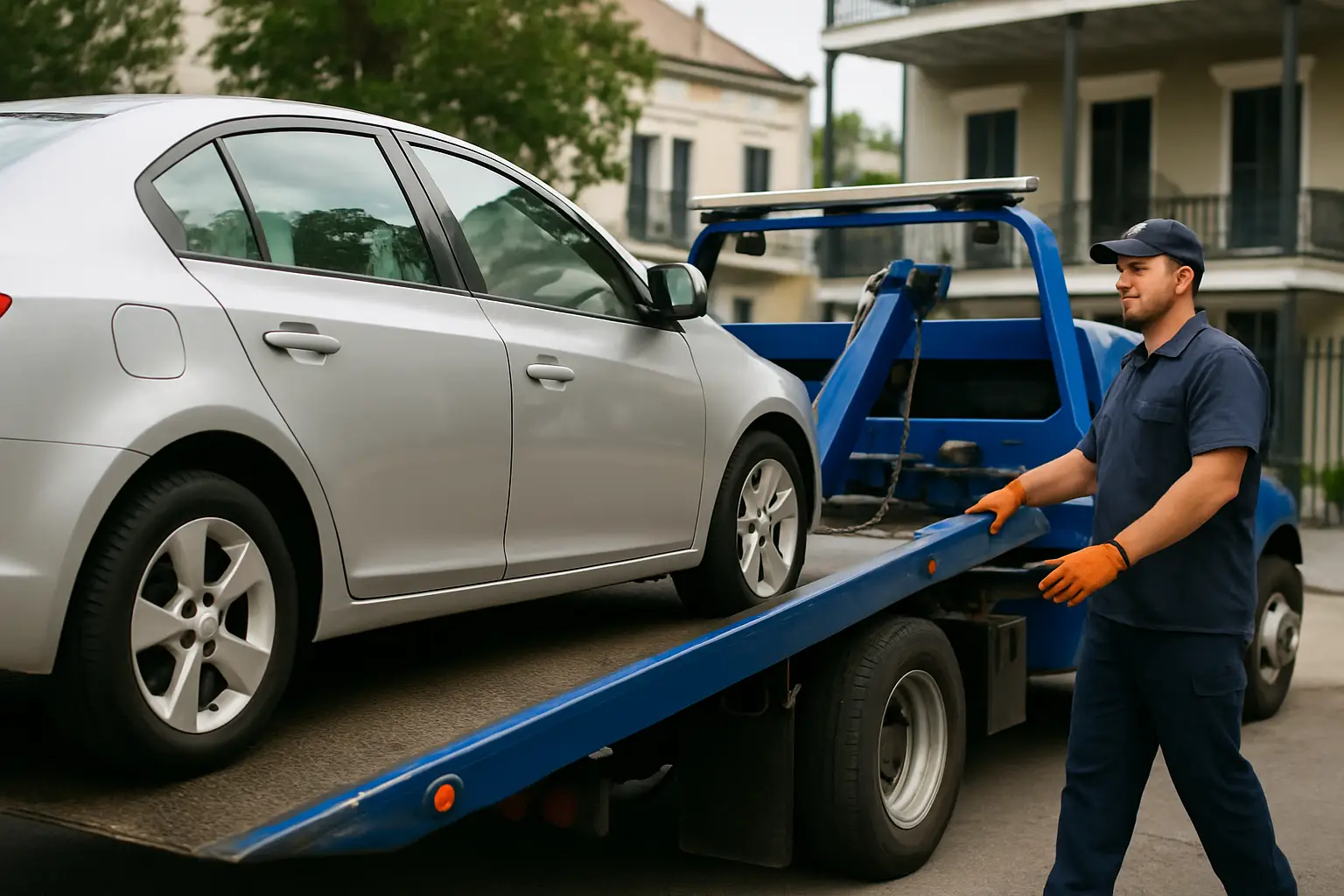
A wheel-lift tow can be efficient for many standard situations where the vehicle can roll and steering is functional. A flatbed is often the safer choice for vehicles with drivetrain issues, low ground clearance, damage from an accident, or all-wheel drive situations where dragging could cause problems.
If you are not sure which you need, describe the condition and let the dispatcher decide. The goal is secure transport without additional damage.
Vehicle size and weight
A compact sedan and a work van are not the same job. Larger SUVs, trucks, loaded vehicles, and some specialty vehicles may require different towing setups and can push you into medium-duty pricing.
If you drive a commercial vehicle, have a trailer, or you are hauling something heavy, mention that up front. It affects what truck gets sent and prevents delays.
Condition of the vehicle
Can it roll? Is the steering locked? Is a wheel missing? Are the brakes seized? Those details can change the cost because they change the labor and gear needed to load and secure the vehicle.
The same is true after an accident. If the front end is damaged, the car may not track straight or may have parts that catch during loading. A careful load takes time, straps, skates, and sometimes additional planning.
Recovery vs. a standard tow
This is one of the most common misunderstandings.
A standard tow is moving a vehicle that is readily accessible.
A recovery is when the vehicle is not readily accessible or is stuck - in a ditch, in mud, behind a gate, off the roadway, in a parking garage where clearance is tight, or positioned in a way that requires winching.
Recoveries often cost more because they involve winch work, extra time on scene, and higher liability. It is still about safety - yours, the operator’s, and everyone on the road.
Time of day and urgency
Many towing companies operate 24/7, but late-night dispatch and high-demand periods can affect pricing. If you are calling during a busy window - after a storm, during a holiday weekend, or when accidents pile up - it may take longer to secure a truck, and rates may reflect the operational load.
If your situation is urgent because you are in an unsafe spot, say that. A good dispatcher prioritizes safety and will tell you the realistic ETA and cost range.
Location and access
Two pickups that are “in New Orleans” can still be very different.
A vehicle on the shoulder of a fast-moving highway, one in a tight French Quarter street, and one inside a parking garage all require different approaches. Access issues can increase on-scene time and sometimes require specialized equipment.
Roadside service vs. towing
Sometimes you do not need a tow at all.
If the car just needs a jump-start, a tire change, fuel delivery, or a lockout service, that is usually priced as a roadside call rather than towing plus mileage. When you are trying to control costs, it helps to diagnose the basics: do you have a dead battery, a flat, or keys locked inside?
What a towing quote should include
A transparent quote is not just a number. It should tell you what you are paying for and what could change.
At minimum, you should understand whether the price includes dispatch and hookup, how many miles are included (if any), the per-mile rate after that, and whether the quote assumes a basic tow or a recovery. You should also confirm the destination, because changing the drop-off can change the route and the mileage.
If your vehicle is disabled in a way that is hard to describe, a dispatcher may give a range until the operator can see it. That is normal. The cleanest way to avoid surprises is to share photos if asked and be direct about the condition.
How to keep towing costs under control without cutting corners
When you are stressed, it is easy to focus only on getting the lowest number. The trade-off is that the cheapest option is not always the safest option for your vehicle.
You can still protect your wallet by doing a few practical things.
First, give accurate information. If you say “it rolls fine” but a wheel is locked, the wrong truck may arrive. Then you are paying for extra time and possibly a second dispatch.
Second, choose the safest tow method for the situation. A flatbed may cost more upfront, but it can prevent expensive drivetrain or body damage. That is a real savings if your car has all-wheel drive, low clearance, or accident damage.
Third, be ready at pickup. If you can meet the driver, share the exact location, and remove valuables quickly, the load goes faster. Time on scene matters.
Fourth, if you have a preferred repair shop, confirm hours and drop-off procedures. If the shop is closed and does not allow after-hours drops, you may need an alternate destination.
Questions to ask when you are calling for a tow
You do not need to know towing lingo. Ask the simple questions that clarify the bill.
Ask what the base charge covers, whether mileage is included, and what the rate is per mile after that. Ask if your situation sounds like a standard tow or a recovery. Ask whether your vehicle should be towed on a flatbed based on its condition.
Also ask for the ETA. A fast response matters when you are stranded, but a realistic ETA also helps you plan - especially if you are in an area where you cannot leave the vehicle unattended.
Local vs. long-distance towing costs
Local towing is typically straightforward: pickup, secure the vehicle, transport across town, unload. Long-distance towing adds planning and time.
If you are moving a vehicle to another city or even out of state, the tow company may quote based on total distance, timing, and the type of vehicle. For long trips, securement and damage prevention become even more important because the vehicle is on the truck longer, hits more road conditions, and may need extra checks.
If your long-distance tow is planned, you can usually schedule it and reduce the stress factor. If it is unplanned, the priority is still safe loading first, then cost.
The cost of “cheap towing” when it goes wrong
It is fair to shop for price. It is not smart to ignore safety and legitimacy.
If a provider is not properly licensed and insured, you are taking on risk that can cost far more than the tow. If a vehicle is improperly secured, you can end up with damage to bumpers, wheels, suspension, or drivetrain. And if the operator is not trained to handle your specific situation - an all-wheel drive vehicle, a lowered car, a tight-access pickup - the odds of problems go up.
A good tow is not just transport. It is controlled loading, correct securement, and careful handling from pickup to drop-off.
Get a fast, accurate towing price in Kenner and New Orleans
If you are in Kenner or the New Orleans metro and need an immediate quote, the fastest path is to call with three details: your exact location, your destination, and the vehicle condition (can it roll, any accident damage, any special vehicle type). If you prefer to request pricing online, you can do that through Zain Towing LLC.
If you are stranded right now, focus on safety first: get yourself out of traffic, turn on hazards, and then make the call. A clear description gets the right truck dispatched the first time, and that is usually the biggest cost-saver of all.
Need help right now?
Zain Towing runs 24/7 in Kenner, New Orleans, Metairie, Harahan and Gretna. Call (504) 666-9099 or see our towing service, roadside assistance and New Orleans pages.