How to Prevent Damage During a Tow
A tow should solve one problem, not create another. If your car, truck, SUV, or motorcycle needs to be moved, the biggest concern after getting help fast is making sure it arrives without new scratches, suspension issues, bumper damage, or drivetrain trouble.
That is exactly why knowing how to avoid towing damage on transport matters. Some risks come from the wrong truck. Some come from bad loading angles, poor tie-down points, or a driver who treats every vehicle the same. And some damage happens before the tow even starts, when the owner does not know what to remove, what to mention, or what type of transport the vehicle actually needs.
How to avoid towing damage on transport starts with the right tow method
The safest tow is not always the cheapest or fastest-looking option. It depends on the vehicle, its condition, and where the damage or mechanical failure is.
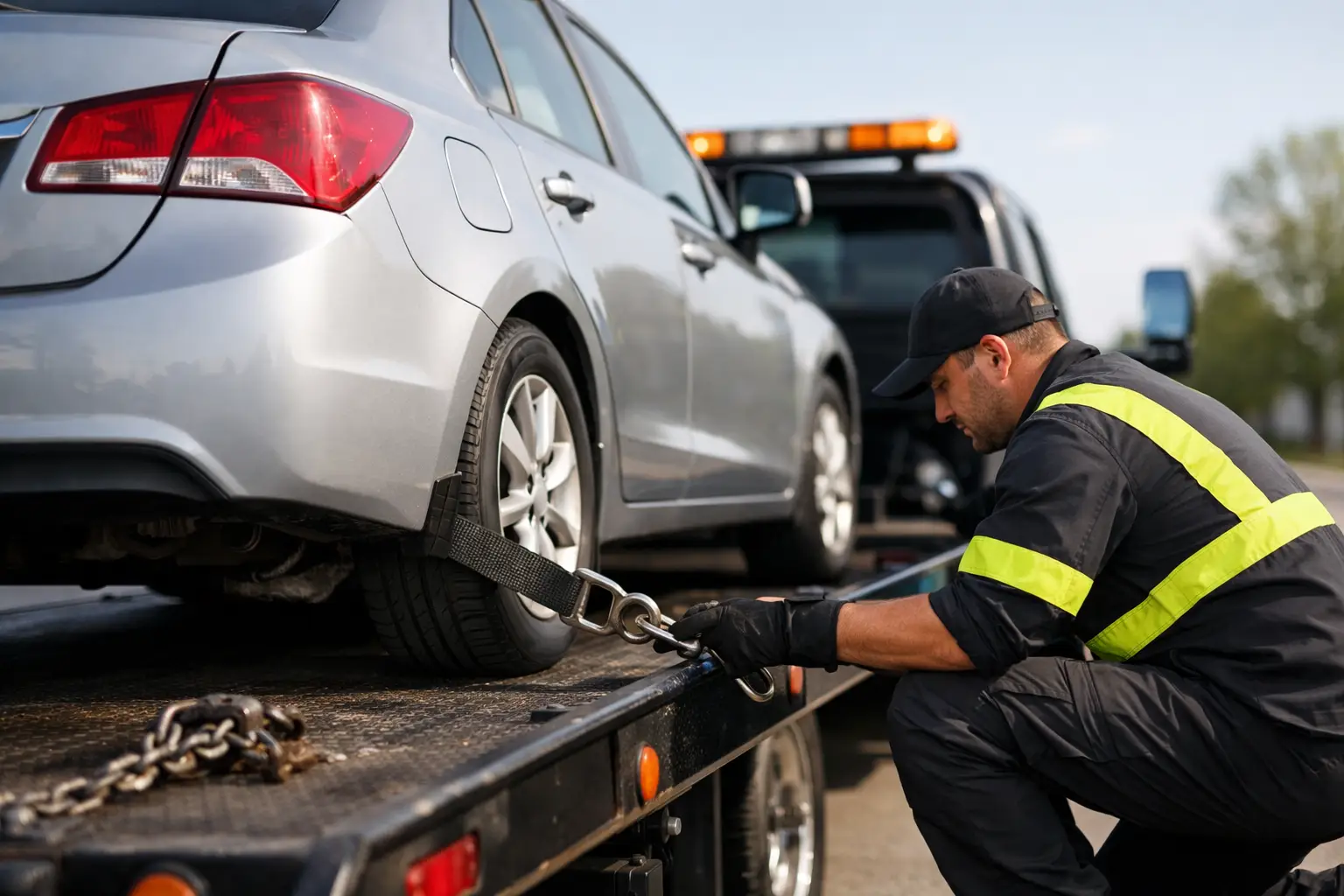
For many vehicles, flatbed towing is the best choice because all four wheels stay off the ground. That reduces the chance of tire wear, transmission strain, and underbody scraping during transport. It is often the preferred option for all-wheel drive vehicles, low-clearance cars, motorcycles, luxury vehicles, and vehicles already damaged in an accident.
Wheel-lift towing can still be safe when used correctly, especially for short-distance moves and certain light-duty vehicles. But it has to match the vehicle’s drivetrain and condition. If a car cannot roll freely, has locked wheels, or has suspension damage, forcing it into the wrong tow setup can cause more problems.
This is where trained operators matter. A professional should ask what kind of vehicle you have, whether it is front-wheel drive, rear-wheel drive, or all-wheel drive, whether it starts, and whether there is crash damage, a flat tire, or steering trouble. Those details are not small. They decide what truck gets dispatched and how the vehicle gets loaded.
Tell the tow operator what is wrong before loading begins
One of the easiest ways to prevent damage is also one of the most overlooked. Be clear about the condition of the vehicle before transport starts.
If the transmission is stuck, say so. If the car sits unusually low, mention it. If one wheel is bent, the steering is locked, or the vehicle has body damage near the bumper, tell the dispatcher and the operator right away. Hidden issues can turn into loading damage when the truck arrives expecting a routine tow.
This also applies to modified vehicles. Lowered cars, aftermarket body kits, oversized tires, roof racks, and custom wheels all affect how a vehicle should be handled. A low front bumper may need special ramp angles or boards. A motorcycle needs proper soft straps and balance points. A heavy SUV or pickup may need different tie-down methods than a compact sedan.
Good towing starts with accurate information. The more the operator knows, the better the transport plan.
Protect the vehicle before it is hooked up
If it is safe to stay near the vehicle, take a minute to prepare it. This does not mean doing the operator’s job. It means preventing avoidable problems.
Remove loose personal items from the cabin if they could slide around. Fold in mirrors when needed. Take out valuable items and anything mounted externally that could shift during transport. If the vehicle has an alarm system that may activate during towing, let the operator know. If the parking brake is engaged and the vehicle needs to roll for loading, that has to be addressed carefully.
It also helps to take quick photos of the vehicle from several angles before loading. That is not about expecting a problem. It is about having a clear record of the vehicle’s condition, especially after an accident or mechanical breakdown where damage may already exist.
If your car has special instructions in the owner’s manual for towing or transport mode, mention that too. Many newer vehicles, especially hybrids, EVs, luxury models, and all-wheel drive systems, have manufacturer-specific handling requirements.
The biggest damage risks usually happen during loading
Most people think towing damage happens on the road. In reality, loading and unloading are where many issues start.
A vehicle can scrape if the ramp angle is too steep. It can shift if the winch pull is uneven. It can suffer wheel or suspension stress if tie-down points are incorrect. If hooks, chains, or straps are attached to the wrong part of the vehicle, the result can be bent components, body damage, or undercarriage issues.
That is why proper equipment matters. Soft straps, wheel nets, skates, dollies, winches, and flatbeds are not interchangeable extras. They are what allow the operator to match the method to the vehicle. A damaged car that cannot roll normally may need skates or dollies. A low-clearance car may need careful ramp management. A motorcycle should be stabilized upright with the correct tie-down technique, not rushed onto a truck like a standard passenger car.
A professional operator should also check ground clearance, approach angle, and weight distribution before loading. Rushing this part is where avoidable mistakes happen.
How to avoid towing damage on transport for different vehicle types
Not every vehicle faces the same risk.
Sedans and compact cars are often vulnerable to bumper scrapes and underbody contact, especially if they sit low. SUVs and trucks bring more weight and height, which means secure balance and tie-down tension become more important. Motorcycles need specialized handling because even a small mistake in strap placement can affect forks, fairings, or stability during transport.
All-wheel drive vehicles deserve extra attention because towing them incorrectly can damage the drivetrain. EVs and hybrids also need proper handling due to battery placement, recovery points, and manufacturer restrictions. If a vehicle has been in a crash, structural damage may make standard loading unsafe without adjustments.
That is why a one-size-fits-all tow is a bad sign. Safe transport depends on the vehicle in front of the operator, not a generic routine.
Choose a licensed and insured towing company
If you want to reduce the chance of towing damage, the company you call matters as much as the truck that shows up.
A licensed and insured provider gives you a higher level of accountability. More importantly, professional towing companies invest in trained operators, maintained equipment, and dispatch processes that match the right service to the right situation. That is what protects your vehicle.
Ask simple questions. Is the company insured? Do they offer flatbed towing? Have they handled your vehicle type before? Can they transport low-clearance, all-wheel drive, or damaged vehicles safely? A company that answers clearly is usually a better choice than one that gives vague assurances.
For drivers in the Kenner and New Orleans area, Zain Towing LLC focuses on exactly this kind of safe, secure handling with trained operators, proper equipment, and 24/7 dispatch support through https://zaintowing.net/.
What you should watch for when the tow truck arrives
You do not need to supervise every move, but you should pay attention. If the operator does not inspect the vehicle, ask about damage points, or explain how it will be loaded, that is worth noticing.
A professional operator should identify safe attachment points, account for existing damage, and choose a loading method that fits the vehicle. If your car is especially low, all-wheel drive, non-running, or visibly damaged, they should already be adjusting their approach.
It is also reasonable to ask where the vehicle will be secured and whether any special precautions are needed. Good operators do not get defensive about that. They answer because safe transport is part of the job.
Fast service should still be careful service
When you are stranded on the shoulder, in a parking lot, or outside your home late at night, speed matters. But speed without proper handling is where towing goes wrong.
The best towing response is fast and controlled. Dispatch should send the right truck the first time. The operator should know what kind of vehicle they are handling before arrival. And once on scene, the focus should be safe loading, secure transport, and careful delivery, not just getting the job done as quickly as possible.
That balance matters even more during emergencies. After an accident or breakdown, most drivers are stressed and not thinking about ramp angles, drivetrain issues, or tie-down points. A dependable towing company should think about those things for you.
If you remember one thing, make it this: preventing towing damage starts before the vehicle moves. The right information, the right truck, and the right operator make all the difference. When you call for help, do not just ask who can get there fast. Ask who can get your vehicle there safely.
Need help right now?
Zain Towing runs 24/7 in Kenner, New Orleans, Metairie, Harahan and Gretna. Call (504) 666-9099 or see our towing service, roadside assistance and New Orleans pages.