
How to Change Tire on Busy Road Safely
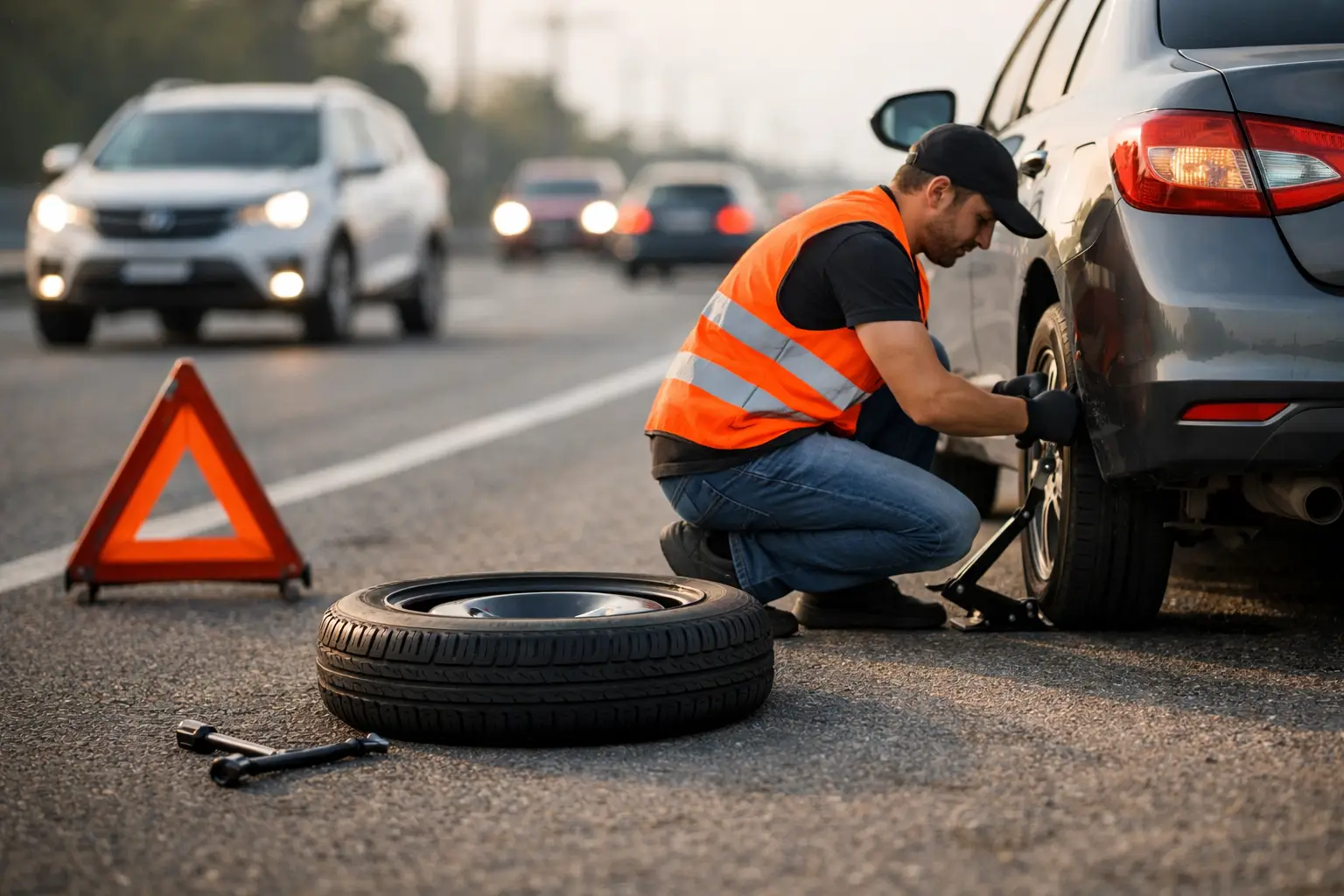
A flat tire on a crowded road changes the situation fast. If you are searching for how to change tire on busy road safely, the first thing to know is this: getting the wheel changed is not always the top priority. Staying out of traffic is. On a high-speed shoulder, a narrow city street, or a bridge approach around Kenner or New Orleans, the safest move may be to avoid changing it yourself and call for roadside help right away.
That is not fear talking. It is how roadside professionals look at risk. A tire change on a quiet parking lot is one job. A tire change with cars moving a few feet away is a different one entirely.
How to Change Tire on Busy Road Without Taking Extra Risk
Before you touch the jack or the lug wrench, stop and assess the location. If your vehicle still rolls and the tire is not completely shredded off the rim, ease forward to a safer place. That may mean the next exit, a wider shoulder, a gas station, a parking lot, or any area where you are well clear of moving traffic. Driving a short distance slowly on a flat can damage the wheel, but that trade-off can still be safer than kneeling beside a travel lane.
If the vehicle cannot be moved, turn on your hazard lights immediately. Keep a firm grip on the wheel, slow down gradually, and position the vehicle as far to the right as possible. Straighten the wheels, put the car in park, set the parking brake, and shut off the engine once you are stopped.
Now make a decision. If traffic is heavy, visibility is poor, the shoulder is narrow, the road surface is uneven, or you have passengers with you, especially children, do not force a roadside tire change. Call for trained help. A fast dispatch is worth far more than trying to save a few minutes in an unsafe spot.
When You Should Not Change a Tire Yourself
There are times when the right answer is simple: do not get out and try it.
Do not attempt a tire change if you are on an interstate shoulder with fast-moving traffic, near a curve where drivers may not see you in time, on a bridge, on soft ground, during heavy rain, or after dark without good lighting. The same applies if your car is leaning, if the lug nuts are badly rusted, or if you do not have the right tools.
It also depends on who is with you. If you have kids, elderly passengers, or anyone who cannot stand safely away from traffic, keep everyone inside with seat belts on unless the vehicle itself is in immediate danger. On some roads, standing outside the car is more dangerous than staying inside it.
Professional roadside operators deal with these situations every day. They have warning equipment, proper jacks, lighting, and the training to work around traffic. If you are in the Kenner or New Orleans area and the scene feels exposed, calling a licensed and insured roadside team is the safer call.
If You Must Change the Tire, Set Up the Scene First
If you have judged that the location is safe enough and you need to change the tire yourself, do the setup before you begin the mechanical work.
Put on a reflective vest if you have one. Place reflective triangles or flares behind your vehicle if conditions allow and if you can do it without stepping into traffic. Keep your phone with you, not on the seat. If possible, have passengers exit on the side away from traffic and move well off the road to a protected spot. If there is no safe place for them outside, they may be safer inside with seat belts on.
Take out your spare tire, jack, and lug wrench. Check that the spare is actually inflated. Many drivers discover too late that the spare is flat too. If it looks low, damaged, or dry-rotted, stop there and call for assistance.
Read the jack points in your owner’s manual if you are unsure. Guessing can bend the pinch weld, damage the underbody, or cause the jack to slip. On uneven pavement, that risk goes up.
The Safe Step-by-Step Process
Loosen the lug nuts before you raise the vehicle. Turn them counterclockwise, but do not remove them yet. This is easier and safer while the tire is still on the ground. If the nuts will not move, do not jump on the wrench or strain into traffic trying to force them. That is another point where roadside help makes sense.
Place the jack at the correct lift point and raise the vehicle only until the flat tire is just off the ground. You do not need extra height, and more lift can mean less stability. Keep your body clear of the underside of the vehicle at all times.
Remove the loosened lug nuts and place them somewhere they will not roll away. Pull the flat tire straight off. Mount the spare, line up the holes carefully, and hand-thread the lug nuts. Tighten them lightly in a star pattern so the wheel seats evenly.
Lower the vehicle until the spare touches the ground enough to keep it from spinning, then tighten the lug nuts more firmly in the same star pattern. Once the full weight is back on the tire, tighten them again. You want them snug and even, not randomly forced one by one.
Put the flat tire and tools back in the vehicle. Do a quick visual check before pulling away. If the spare is a compact temporary tire, remember it is not built for normal driving speeds or long distances.
After the Spare Is On
A successful tire change is not the end of the issue. Temporary spares usually have speed and distance limits, and even a full-size spare may not match your damaged tire in wear or pressure.
Drive carefully to a tire shop or service location as soon as possible. Avoid hard braking, quick lane changes, and high speeds. If the steering feels off, the spare wobbles, or you hear unusual noise, stop and call for help instead of trying to push through it.
You should also have the lug nuts checked with the proper torque as soon as you can. Hand-tightening on the roadside gets you moving, but it is not the same as a final torque check with the right equipment.
Common Mistakes Drivers Make on Busy Roads
The biggest mistake is changing the tire exactly where it went flat, even when a safer spot is just ahead. The second is starting the job without checking whether the shoulder is level and wide enough. The third is focusing on speed instead of visibility.
Drivers also forget to chock the opposite wheel if they have a block or wedge available, or they place the jack in the wrong spot and create a more dangerous situation than the flat tire itself. Another common problem is unloading the trunk on the traffic side, which puts your body where it should never be.
And then there is the spare tire issue. Plenty of people carry a spare they have not looked at in years. It may be low, cracked, or missing entirely. That is one reason many roadside calls for flat tires turn into service dispatches instead of quick do-it-yourself fixes.
How to Decide Fast: Change It or Call?
Ask yourself four questions. Is the vehicle fully out of traffic? Is visibility good? Do you have the right tools and a usable spare? Do you feel physically safe doing the work without rushing?
If the answer to any of those is no, call. A busy road is not the place to prove you can handle it alone. The goal is to get you and your vehicle out of danger with as little exposure as possible.
For local drivers, commuters, families, and travelers passing through, that decision often comes down to simple math. A professional roadside tire service can arrive fast, handle the change safely, and reduce the chance of injury or vehicle damage. That is exactly why companies like Zain Towing keep 24/7 roadside help ready for tire problems, lockouts, jump-starts, and towing when the shoulder is not a safe workspace.
If you remember one thing, make it this: on a busy road, safety beats speed every time. A tire can be replaced. Your job is to make sure you are still standing there when it is done.
Need help right now?
Zain Towing runs 24/7 in Kenner, New Orleans, Metairie, Harahan and Gretna. Call (504) 666-9099 or see our towing service, roadside assistance and New Orleans pages.