
How to Get Car Unstuck Safely
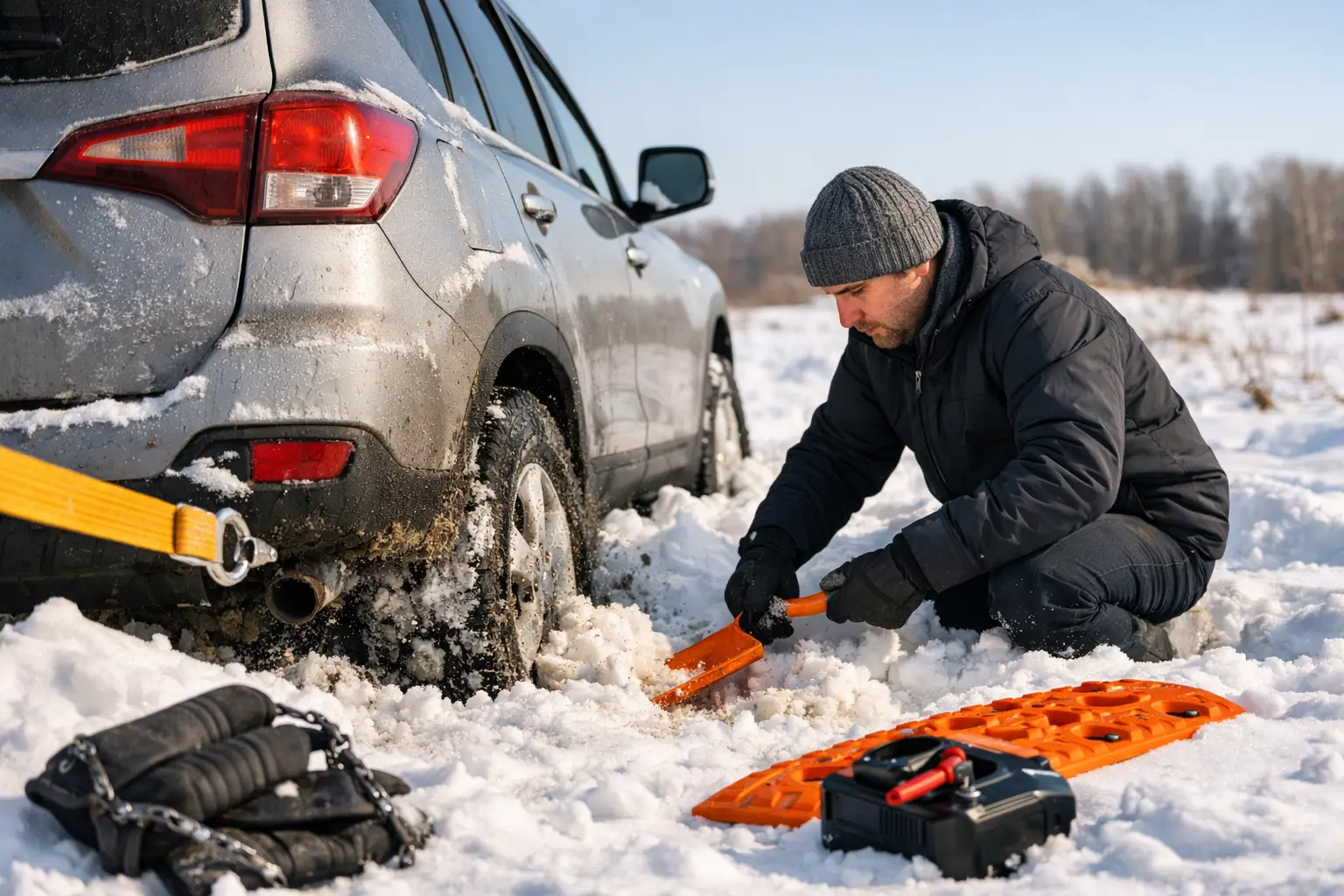
One tire starts spinning, then the whole car settles deeper. That is usually how drivers realize they need to know how to get car unstuck safely - not with more gas, but with better decisions. In Kenner and New Orleans, soft shoulders, wet grass, muddy lots, and saturated ground can trap a vehicle fast, especially after heavy rain.
The first priority is not getting moving again. It is protecting yourself, your passengers, and your vehicle from a bad situation getting worse. A stuck car can become a traffic hazard, slide farther off the road, overheat, or suffer damage from aggressive towing attempts. The safest recovery depends on where the car is stuck, what surface is underneath it, and whether the vehicle is stable.
How to get car unstuck safely starts with the scene
Before you touch the gas pedal again, stop and assess. If you are on the shoulder of a busy road, near standing water, or close to a ditch, your risk level is already higher than most drivers realize. Turn on your hazard lights. If it is dark, low visibility, or raining hard, stay visible and stay alert.
If the vehicle is in a dangerous position, such as partly in a lane, tilted toward a ditch, or stuck near traffic, do not try a DIY recovery first. That is the point where professional recovery is the safer call. A trained operator with the right truck, winch, and recovery points can pull the vehicle out without adding body damage, suspension strain, or undercarriage damage.
If the scene is stable, get out only if it is safe to do so. Watch for passing traffic, soft ground, and pooled water. Then check what is actually holding the vehicle in place. In many cases, it is one drive wheel spinning on mud, sand, or wet grass while the rest of the vehicle has lost traction.
Figure out what kind of stuck you have
Not every stuck vehicle needs the same move. A front-wheel-drive sedan trapped on wet grass needs a different approach than a rear-wheel-drive truck buried in mud or an SUV bellied out on a high center. If the car's frame or underside is resting on the ground, spinning the tires harder usually will not help. The wheels can spin all day without enough weight on them to grab.
You also need to know whether the tires are buried, whether the ground is uneven, and whether there is a safe path out. The best recovery route is usually the exact direction you came from, because that path already supported the vehicle once. Trying to power forward into softer ground often makes recovery harder.
What not to do first
The biggest mistake is flooring it. High wheel spin polishes mud, digs holes, and overheats the transmission. It can also throw debris, damage tires, and bury the vehicle deeper. Another common mistake is letting untrained bystanders push from unsafe positions near traffic or behind a vehicle that could suddenly lurch.
Avoid attaching ropes or chains to random parts under the car. Bumpers, suspension parts, and tie-down components are not always rated recovery points. If an attachment fails, that hardware can snap loose with serious force.
Safe steps to try before calling for recovery
If the vehicle is stable and lightly stuck, a few careful steps may be enough. Start by straightening the wheels. Tires turned sharply left or right create more resistance. Then gently ease off the brake and apply very light throttle. The goal is controlled movement, not speed.
If that does not work, try rocking the vehicle. In an automatic, shift between drive and reverse with a full stop between shifts. In a manual, use low gear and smooth clutch control. You are trying to create a small back-and-forth motion to build momentum. If the tires spin freely without movement, stop. That is your sign the ground is giving way.
Next, clear material away from the drive tires. Use a small shovel, a board, floor mats, cardboard, cat litter, or sand if available. Place traction material directly in front of the tires in the direction you want to move. This can help on mud, wet grass, or light sand, but it depends on how deep the vehicle is and whether the underside is dragging.
Lowering tire pressure can help in sand by increasing the tire's footprint, but it is not a universal fix and it comes with risk. If you do not know how much to reduce safely or you do not have a way to reinflate the tires immediately, skip this step. Driving on underinflated tires afterward can damage the tire or wheel.
When a tow strap is not the safe answer
Drivers often assume another truck and a strap will solve the problem. Sometimes it does. Sometimes it creates a more expensive repair. Safe recovery requires the correct strap or winch line, proper rated recovery points, and enough room to pull without jerking the vehicle sideways.
A hard yank from another vehicle can bend components, tear off trim, or break parts if the stuck vehicle is suctioned into mud or resting on its frame. It also assumes the second vehicle has enough traction to pull without getting stuck too. On soft Louisiana ground, that is not always a good bet.
If you are considering a pull, the only safe setup is one using proper recovery equipment attached to manufacturer-approved points. If you are not certain where those are, do not guess. This is where calling an insured recovery service is usually faster than risking damage.
Situations where you should stop and call now
Some recoveries should never be trial-and-error. If the vehicle is leaning, partly in traffic, stuck in deep mud, high-centered, near a canal or ditch, or trapped in standing water, stop trying to self-recover. The same goes for luxury cars, low-clearance vehicles, EVs, and vehicles with visible underbody contact. These situations need controlled recovery and equipment matched to the vehicle.
The same rule applies if you smell something hot, see smoke, hear scraping under the car, or notice fluid leaking. Continued attempts can turn a simple pull-out into drivetrain, cooling system, or body damage. In that moment, getting help is not overreacting. It is protecting the vehicle.
In the Kenner and New Orleans area, rain-soaked shoulders and soft parking areas can look solid until they are not. If you are stranded and need quick, careful help, Zain Towing LLC can dispatch trained operators for safe recovery and transport 24/7.
How professionals get a car unstuck safely
Professional recovery is not just stronger pulling power. It is a safer process. A trained operator evaluates surface conditions, vehicle angle, drive type, clearance, and approved attachment points before recovery starts. That matters because the wrong pull angle can damage steering components, body panels, or the undercarriage.
A proper recovery may involve a winch, skates, soft straps, boards, or a flatbed depending on how the vehicle is positioned. Sometimes the safest option is not pulling the car back onto the road and driving it away. It may be loading it for transport if there is risk of hidden damage. Licensed and insured service also gives drivers more confidence that the job will be handled correctly.
A few surface-specific tips
Mud is usually the toughest because it creates suction and gets slick fast. If you are only slightly stuck, traction aids and gentle rocking may work. If the tires are deeply sunk or the car is resting low, more throttle will usually make recovery harder.
Sand responds better to smooth, steady input than abrupt acceleration. Straight wheels and a slow roll are your best chance. Wet grass can be deceptively slippery, especially on an incline. It may look like an easy pullout but behave more like mud under the tires.
Ditches are a different category altogether. Even when the vehicle looks fine from the road, the angle can put stress on suspension, wheels, and body panels. A ditch recovery should be treated as a professional job in most cases.
Keep a small recovery kit in the car
You do not need a garage full of gear, but a few items can make a real difference. A flashlight, gloves, small shovel, traction aids, and a phone charger are practical. So are a reflective vest and warning triangles if you drive often at night or on highways.
What matters most is knowing the limit of that kit. Basic gear helps with minor traction problems. It does not replace a winch truck, trained operator, or safe roadside recovery setup.
The safest mindset when you are stuck
If you remember one thing, make it this: a stuck car is not always a simple traction problem. It can be a roadside safety issue, a damage-prevention issue, or both. Knowing how to get car unstuck safely means recognizing when light self-help is reasonable and when professional recovery is the smart next move.
If the vehicle is stable, lightly stuck, and away from traffic, a careful attempt may work. If conditions are poor, the car is sinking, or the position is unsafe, stop early and get qualified help. That decision often saves the most time, the most money, and a lot of stress.
Need help right now?
Zain Towing runs 24/7 in Kenner, New Orleans, Metairie, Harahan and Gretna. Call (504) 666-9099 or see our towing service, roadside assistance and New Orleans pages.