How to Handle Breakdown Towing Safely
A breakdown on I-10, Veterans, or a side street in Kenner rarely gives you much warning. One minute your vehicle feels fine, the next you are stuck on the shoulder with traffic flying by. If you are wondering how to handle breakdown towing, the first priority is simple: protect yourself, protect your passengers, and then get the right tow truck on the way.
When people are stressed, they often focus on the car before they focus on safety. That is understandable, but it is backwards. A disabled vehicle can be replaced or repaired. Your safety cannot. Start by getting as far off the road as possible if the vehicle still moves. Turn on your hazard lights right away and stay calm enough to look at your surroundings before making your next move.
How to Handle Breakdown Towing on the Roadside
If your vehicle dies in traffic or on a busy road, do not stay in a travel lane unless the car cannot move at all. If you can coast into a shoulder, parking lot, gas station, or side street, do it. The safer and more accessible the location, the easier it is for a tow operator to load your vehicle without adding more risk.
Once stopped, put the vehicle in park, set the parking brake, and keep your hazard lights on. If it is dark, raining, or visibility is poor, this matters even more. Drivers often underestimate how hard it is for passing traffic to see a disabled vehicle until it is too late.
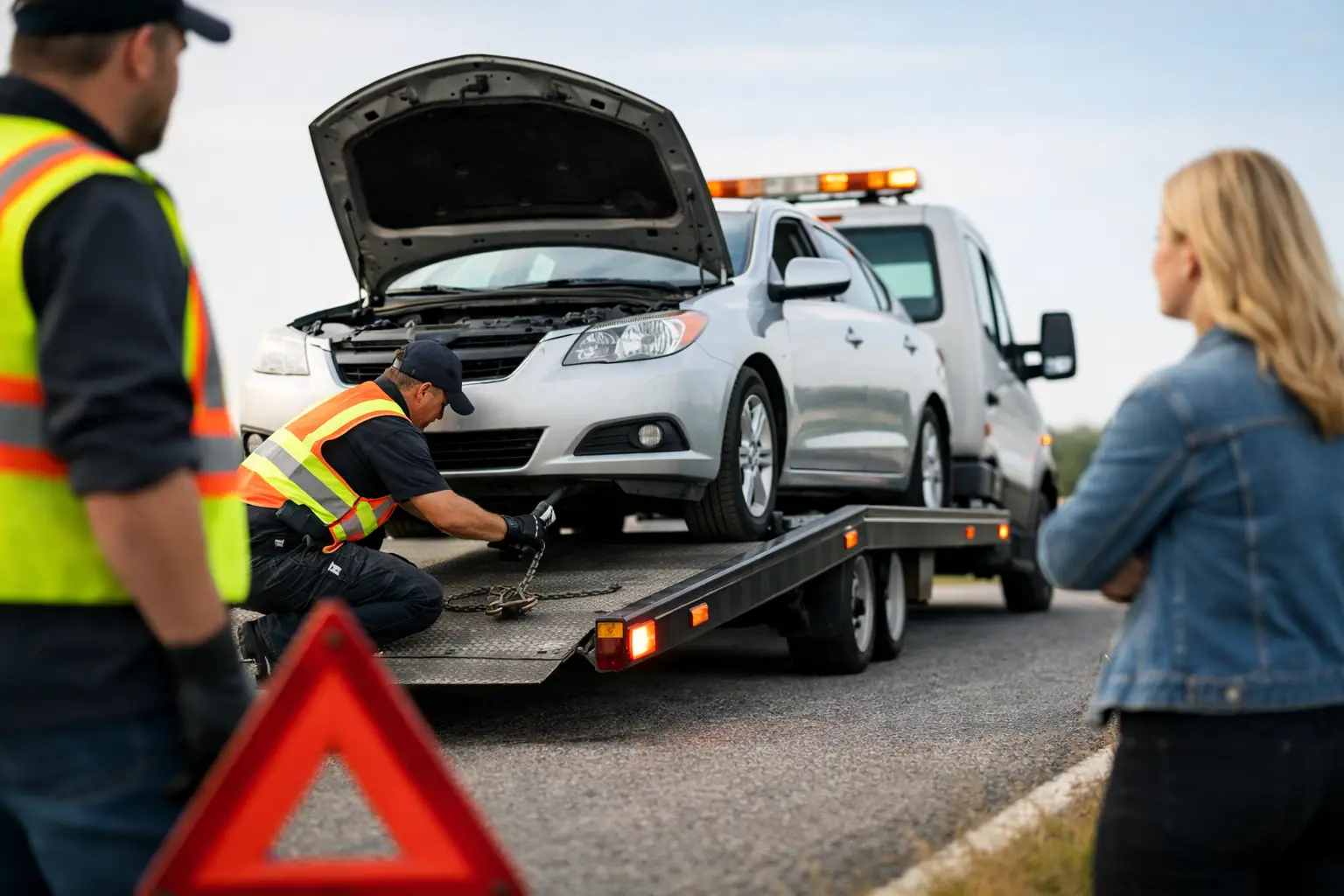
If you have reflective triangles or flares and it is safe to place them, use them. If traffic is heavy or the shoulder is narrow, it may be safer to stay inside the vehicle with your seat belt on than to get out and walk around near moving traffic. It depends on where you are stopped. On a wide shoulder, exiting from the passenger side may be the safer option. On a narrow bridge or busy interstate shoulder, staying inside may be smarter until help arrives.
If you smell fuel, see smoke, or believe there is a fire risk, get everyone away from the vehicle immediately and move to a safe location well off the roadway. In that case, call emergency services first.
Know When You Need a Tow and When You Need Roadside Help
Not every breakdown requires full towing. Sometimes a dead battery, flat tire, empty fuel tank, or lockout can be handled on-site. If you know the problem, say it clearly when you call for help. That allows dispatch to send the right truck and equipment the first time.
If the issue involves engine failure, transmission trouble, overheating that will not stop, accident damage, steering problems, or anything that makes the vehicle unsafe to drive, ask for a tow. Trying to push through with a damaged vehicle can make the repair bill much worse. It can also leave you stranded in a more dangerous location a few miles later.
This is where experience matters. A professional dispatcher can usually tell from your description whether you need a jump-start, tire service, winch-out, flatbed, or standard tow. The more accurate your information, the faster the response.
What to Tell the Tow Company
A fast dispatch starts with clear details. Give your exact location first. Highway name, direction of travel, nearest exit, landmark, business name, or cross street all help. In the New Orleans area, being specific matters because a delay of even a few minutes can happen if your location is vague.
Then describe your vehicle. Mention the year, make, model, and whether it is a car, SUV, pickup, motorcycle, van, or something larger. If the vehicle has low clearance, all-wheel drive, heavy damage, or cannot roll, say that too. Those details affect whether a wheel-lift or flatbed is the safer choice.
Also tell the company what happened. A simple explanation like "engine quit," "front tire blew out," or "rear end damage after an accident" helps the operator prepare. If you know your destination, have that ready as well, whether it is your home, a repair shop, dealership, body shop, or another city.
Choosing the Right Type of Tow
One of the biggest parts of how to handle breakdown towing is understanding that not every vehicle should be towed the same way. A flatbed is often the safest option for many breakdowns because the vehicle rides fully off the ground. This reduces wear and lowers the chance of damage during transport. It is especially useful for luxury cars, all-wheel-drive vehicles, motorcycles, and vehicles with accident damage.
A wheel-lift tow can be appropriate in some situations, especially for short-distance moves and certain light-duty vehicles. But if the drivetrain, wheels, suspension, or underbody may be affected, a flatbed is usually the better call.
If you drive a truck, SUV, van, or work vehicle, be sure the towing company knows the size and weight. Medium-duty needs require the right truck and trained operator. Sending the wrong equipment wastes time you do not have.
Protecting Your Vehicle Before It Is Loaded
Before the tow begins, remove valuable items if it is safe to do so. That includes wallets, keys, paperwork you need, electronics, medication, and anything else you would not want left in the vehicle. If you are sending the vehicle to a repair shop after hours, grab what you may need before it is dropped off.
Take quick photos of the vehicle from a few angles if conditions allow. This is not about expecting a problem from a professional tow company. It is simply a smart habit when your car is disabled, especially after an accident or major mechanical issue. It helps document the vehicle's condition before transport.
If the operator asks you to put the vehicle in neutral, release the parking brake, or provide a key, follow their instructions. If the car cannot shift or the wheels are locked, say so right away. Never try to force a damaged vehicle into gear just to make loading easier.
Avoid Common Mistakes During Breakdown Towing
The biggest mistake is calling the cheapest option without asking basic questions. Speed, insurance coverage, equipment, and operator training matter more than a low quote that turns into damage or delay. A licensed and insured towing company protects both your vehicle and your peace of mind.
Another mistake is accepting help from an unverified driver who appears out of nowhere. In high-stress breakdown situations, some motorists feel pressured to accept the first offer. If you did not call them, be careful. Confirm the company name, truck details, and dispatch information before handing over your keys.
People also make the mistake of staying too close to the loading area. Once the tow operator begins work, give them space. Professional loading takes positioning, chains or straps, and careful checks. Standing nearby can put you at risk if traffic is moving fast or the ground is uneven.
After the Tow Truck Arrives
A trained tow operator should confirm your destination, inspect the vehicle, and explain how it will be loaded. If you have questions, ask them. Good towing is not just fast. It is controlled, secure, and clear from the first contact to final drop-off.
Check that the destination is correct before the truck leaves. If the car is being taken to a repair shop, make sure the shop can accept it, especially after business hours. If not, ask about alternatives. A rushed decision can create a second problem once the tow is complete.
For drivers in Kenner and the New Orleans area, response time matters, but so does local familiarity. Roads, traffic patterns, and access points can change how quickly a disabled vehicle gets reached and loaded. That is one reason many local drivers choose Zain Towing LLC when they need 24/7 towing or roadside help and want the right truck dispatched without guesswork.
How to Stay Ready Before the Next Breakdown
No one plans for a breakdown, but a little preparation changes how the moment feels. Keep your phone charged when possible. Save a trusted towing number before you need it. Carry your registration, insurance card, and a basic emergency kit with water, a flashlight, and reflective gear.
It also helps to know your vehicle's towing needs ahead of time. If you drive all-wheel drive, a lowered car, motorcycle, or work truck, understand what kind of tow is safest. You do not have to become a towing expert. You just need enough information to ask the right questions under pressure.
Breakdowns are stressful because they interrupt your day and take away control. The best response is not panic. It is a safe stop, a clear call, and a professional tow handled the right way from the start. When you know what to do next, the whole situation gets a little more manageable.
Need help right now?
Zain Towing runs 24/7 in Kenner, New Orleans, Metairie, Harahan and Gretna. Call (504) 666-9099 or see our towing service, roadside assistance and New Orleans pages.