
What to Do About Towing After a Crash
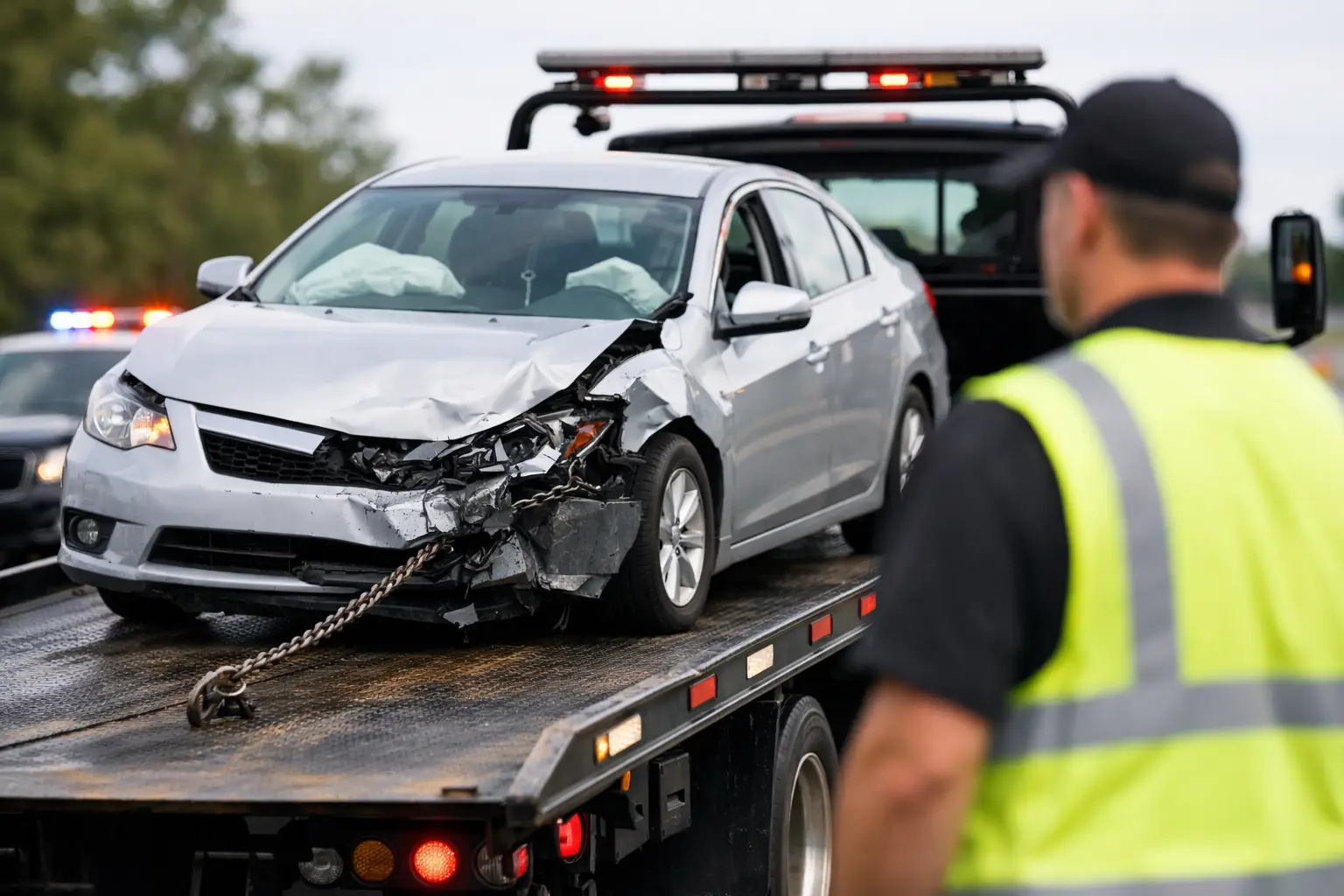
A crash can leave you standing on the shoulder with traffic moving fast, hazards flashing, and two questions hitting at once - Is everyone okay, and what happens to the car now?
That second question matters more than most drivers realize. If you make the wrong towing decision in the first few minutes after an accident, you can end up with extra storage fees, the wrong destination, added vehicle damage, or a long fight with insurance. If you make the right one, you protect the vehicle, keep the scene moving, and reduce a lot of stress.
How to handle towing after accident stress in the first 10 minutes
Start with safety, not the tow truck. Check for injuries, call 911 if anyone may be hurt, and move to a safe location if the vehicle can be moved without creating more danger. If the car is disabled or traffic conditions are unsafe, stay clear of the roadway as much as possible and wait for emergency direction.
Once immediate safety is handled, look at the vehicle realistically. A car that leaks fluid, has wheel damage, airbag deployment, steering problems, or severe front or rear damage should not be driven. Even if it starts, trying to limp it away can cause more damage and create a second accident.
This is usually the point when towing becomes the right next step. The goal is not just to get the vehicle off the road. The goal is to get it moved safely, documented properly, and delivered to the right place the first time.
Decide who is towing the vehicle
After a collision, drivers are often rushed into a towing decision. Police may arrange removal if the vehicle is blocking traffic. In other cases, your insurance company may suggest a provider, or you may call your own towing company directly. Which option makes sense depends on the scene.
If law enforcement orders an immediate tow for traffic or safety reasons, you may have less choice in the first move. Ask where the vehicle is being taken and how you can retrieve it or redirect it later. If you do have a choice, it is usually better to work with a licensed and insured towing company that can tell you the truck type being dispatched, estimated arrival time, and destination details before the hook-up starts.
Be cautious if an unsolicited tow truck shows up and pressures you to sign quickly. After accidents, some drivers feel cornered and agree before they understand charges, storage terms, or where the vehicle is going. A professional operator should be clear, direct, and willing to answer basic questions.
Ask these questions before the tow begins
When you are figuring out how to handle towing after accident damage, a few questions can save you money and trouble. Ask where the vehicle will be taken, whether flatbed towing is recommended, what fees may apply, and whether storage charges begin immediately if it goes to a yard.
Also ask what information the driver needs from you. In most cases, that will include your name, phone number, vehicle make and model, pickup location, and destination. If the car cannot roll or steer, say that up front. The dispatcher needs the right equipment on the first trip.
For many accident vehicles, a flatbed is the safest choice because it keeps all four wheels off the ground and reduces the chance of added damage. That is especially true for all-wheel-drive vehicles, motorcycles, severely damaged cars, and any vehicle with broken suspension or wheel components.
Choose the right destination
One of the biggest towing mistakes after an accident is not thinking through the drop-off location. You generally have three likely options: a repair shop, your home, or an insurance-approved inspection or storage location. The right choice depends on the damage and what your insurer requires.
If the vehicle clearly needs body or mechanical repair and you already trust a shop, sending it there can save time. If the insurance process is still unclear, some drivers prefer having the vehicle delivered home first so they can decide without storage fees adding up elsewhere. If the car is likely a total loss or your insurer wants it inspected first, a designated lot may be necessary.
There is no one perfect answer for every crash. What matters is making the choice on purpose. Once a vehicle sits in the wrong yard for days, moving it again usually means more fees, more delay, and more frustration.
Document the tow before the truck leaves
Before the vehicle is loaded, take photos of all visible damage, the license plate, mileage if accessible, and personal property left inside. If conditions are dark or unsafe, do what you reasonably can without putting yourself in danger. A quick phone photo set can help if there is later confusion about damage, contents, or condition.
You should also keep copies of any tow authorization, receipt, dispatch details, and destination information. If the tow was police-directed, write down the agency and, if possible, the incident number or responding officer's name. These details make insurance conversations much easier later.
Remove valuables and essentials if you can do so safely. That includes wallets, keys, medication, chargers, work items, child seats if needed immediately, and any documents you do not want left in the car. If the vehicle is heading to a storage lot, getting back into it later may take time and paperwork.
Talk to your insurance company, but do not wait too long to act
Many drivers freeze because they think towing cannot happen until insurance approves it. That is not always true. If the vehicle is unsafe or blocking traffic, it needs to be moved. Insurance can often be sorted out after the immediate tow, especially when you have receipts and clear documentation.
Still, contact your insurer as soon as you can. Ask whether they have towing coverage, what destinations they allow, whether they need photos right away, and whether they recommend a claim inspection before repairs begin. Some policies reimburse towing and storage up to certain limits, while others have restrictions.
The key is balance. Do not leave the vehicle sitting in a dangerous place while you wait on hold for an adjuster. But do not send it somewhere random without understanding the cost and insurance impact if you can avoid that.
Special situations that change the towing decision
Not every accident tow is the same. If you drive a pickup with cargo, an SUV packed for travel, a motorcycle, or a larger vehicle, the equipment matters. A standard wheel-lift may not be the best fit for every damaged vehicle. Heavier units, low-clearance cars, and vehicles with locked wheels often need a more specific setup.
If the crash happened late at night, on a bridge, in heavy rain, or on a busy New Orleans-area roadway, response speed matters just as much as the truck type. Waiting too long on the shoulder increases risk. In those situations, a local 24/7 company with trained operators and the right equipment can make a major difference in how quickly the scene is cleared.
This is also where experience counts. Accident recovery is not the same as a routine breakdown tow. The operator may need to deal with debris, awkward vehicle angles, wheel damage, or a car that cannot be shifted into neutral. Safe loading prevents a bad situation from getting worse.
When fast local towing is the smart move
If you are in Kenner or the New Orleans area and need immediate help, speed and safe handling should be your top priorities. A licensed and insured local company like Zain Towing LLC can dispatch the right truck for accident towing, recovery, or roadside support without making you guess what happens next. That means clear communication, secure transport, and a destination you approve when possible.
In a crash, friendly service is not a small thing. You want someone who can show up fast, explain the process clearly, and move the vehicle without adding stress or damage. That is what professional towing should look like at 2 p.m. and at 2 a.m.
What drivers get wrong most often
The most common mistake is assuming any tow is good enough. It is not. The wrong truck, wrong destination, or wrong paperwork can complicate the claim and increase your costs.
Another mistake is forgetting about storage. A vehicle sitting in a yard can start generating daily fees fast. If the car is there temporarily, find out how long you have before those charges begin or increase.
The last big mistake is trying to drive a damaged vehicle just to avoid the tow. If steering, braking, alignment, tires, or fluids are affected, that choice can turn a manageable accident into a more expensive one.
A crash puts you under pressure, and that is exactly when clear decisions matter most. Focus on safety first, ask where the vehicle is going, document everything, and choose a tow that protects the car instead of just moving it. When the road settles down and your heart rate finally catches up, you will be glad the next step was handled the right way.
Need help right now?
Zain Towing runs 24/7 in Kenner, New Orleans, Metairie, Harahan and Gretna. Call (504) 666-9099 or see our towing service, roadside assistance and New Orleans pages.