
How to Move a Broken Down SUV Safely
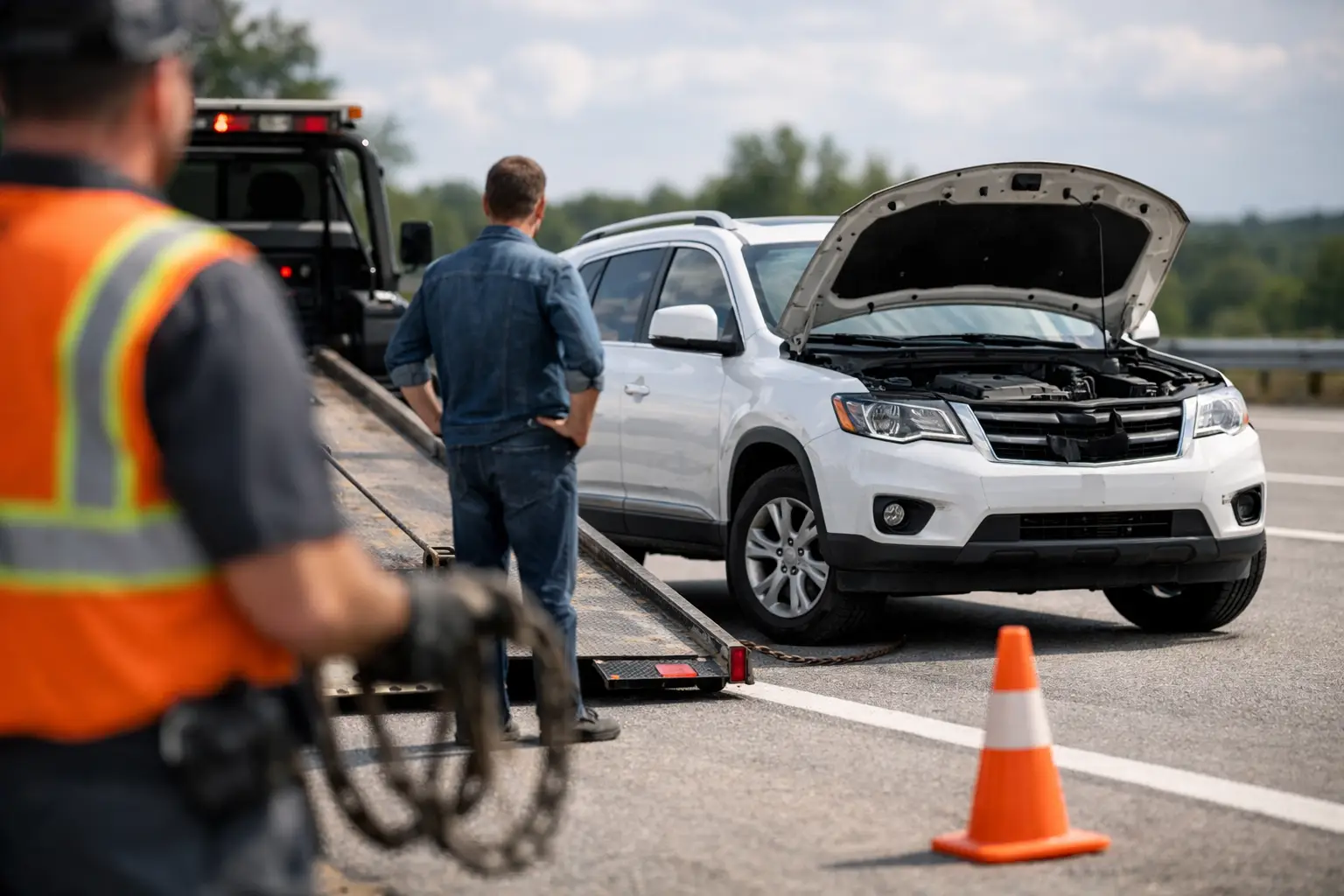
An SUV quits in the middle of traffic, on the shoulder, or in a parking lot, and the first question usually hits fast: how to move broken down suv safely without making the problem worse. That answer depends on where it stopped, what failed, and whether the vehicle can roll without causing more damage. In many cases, the safest move is not moving it yourself at all.
SUVs are heavier than standard cars, and that changes everything. Weight affects braking, steering, loading angle, tow capacity, and how easily a disabled vehicle can shift during transport. A method that might work for a small sedan can be the wrong call for a crossover, full-size SUV, or four-wheel drive model. If the transmission is damaged, a wheel is broken, or the SUV was in an accident, trying to drag it a short distance can turn a towable problem into a major repair.
How to move broken down SUV vehicles without causing damage
Start with the immediate safety check. If the SUV died in an active lane, turn on hazard lights right away. If it is safe to exit, move yourself and passengers away from traffic and stand well off the roadway. If the vehicle is smoking, leaking fluid, or sitting at an angle after a collision, do not try to restart it or push it. Call for professional towing.
If the SUV is off the road and in a safer spot, look at three basics before deciding anything else. Can it roll freely? Is the steering working? Is there visible damage to the wheels, suspension, or undercarriage? If the answer to any of those is no, it needs proper equipment, not a guess.
A lot of drivers assume neutral solves the problem. Sometimes it does not. Some SUVs with electronic shifters, dead batteries, or transmission faults may not shift fully into neutral, even if the lever moves. Others can roll, but towing them with drive wheels on the ground can still damage the drivetrain. That is especially true with AWD and 4WD systems.
When you should not tow a broken down SUV yourself
There are situations where the decision is simple - do not self-tow. If the SUV has front-end or rear-end damage, a locked wheel, broken axle, steering failure, severe overheating, or a fluid leak you cannot identify, it should be loaded by a trained operator. The same goes for most modern AWD vehicles, which often require a flatbed to avoid drivetrain damage.
The other issue is equipment mismatch. A rope, chain, or another SUV with a hitch does not automatically make a tow setup safe. Home towing attempts often go wrong because the disabled vehicle is too heavy, the tow points are incorrect, or the braking distance is badly underestimated. Even a low-speed pull through a city street can become dangerous if the disabled SUV cannot steer cleanly or stop on command.
If you are in Kenner, New Orleans, or on a busy highway nearby, time matters as much as technique. A fast, licensed tow response is usually the safer and cheaper option than risking body damage, transmission damage, or an accident during an improvised tow.
The safest way to transport a disabled SUV
For most breakdowns, a flatbed tow truck is the best answer. It keeps all four wheels off the ground, which protects the transmission, transfer case, differential, and tires. It also gives the operator better control when the SUV has low ground clearance, accident damage, or one or more flat tires.
Wheel-lift towing can work in some cases, but it depends on the SUV’s drivetrain and condition. A two-wheel-drive SUV may be transportable that way if it is being handled correctly and the non-lifted wheels are not creating drivetrain risk. That is not a call most drivers should make on the roadside. It is a call for dispatch and a trained tow operator who knows the vehicle type and the right method.
Professional towing also matters because of loading angles and securement. SUVs sit higher than many cars, but that does not mean they are easy to load. Some models have long overhangs, damaged bumpers, or suspension problems that require careful winching and positioning. A rushed load can scrape body panels or stress parts that are already compromised.
If you only need to move it a short distance
Sometimes the immediate goal is just getting the SUV out of a traffic lane or away from a dangerous shoulder. If the vehicle can roll freely and steering still works, pushing it a very short distance to a safer spot may be possible. Only do this if conditions are controlled, there are enough adults to manage the weight, and traffic allows it safely. One person should stay at the wheel for steering and braking.
Do not try this on an incline, around curves, across multiple lanes, or in heavy traffic. And do not keep pushing once the SUV is safe. Moving it a few feet to reduce danger is one thing. Trying to relocate a heavy disabled vehicle across a parking lot or down a street without the right equipment is another.
If the SUV is stuck in mud, a ditch, soft shoulder, or standing water, that is not a simple move either. Recovery work is different from basic towing. Pulling at the wrong angle can tear components loose, sink the vehicle deeper, or create a snapback hazard with straps or chains.
What to tell a tow company when your SUV breaks down
The faster you give the right details, the faster the correct truck can be dispatched. Say the SUV’s make and model, where it is located, whether it is front-wheel drive, rear-wheel drive, AWD, or 4WD if you know it, and whether it was in an accident or just stopped running. Mention flat tires, wheel damage, leaks, low clearance, or if the SUV is stuck somewhere.
It also helps to say where the vehicle needs to go - your home, a repair shop, dealership, tire shop, or another city. That lets the dispatcher match the job correctly from the start. A local short tow and a long-distance haul are not the same assignment.
This is where a professional service makes a real difference. A company like Zain Towing LLC can send the right truck based on the SUV’s condition instead of forcing a one-size-fits-all tow. That lowers the chance of delays, relays, or preventable damage.
Common mistakes drivers make with disabled SUVs
One of the biggest mistakes is trying to restart the engine over and over when the SUV is clearly overheating, knocking, or showing low oil pressure. Another is assuming all tow hooks are recovery points, or that every visible metal point under the vehicle can handle a pull. That can bend components quickly.
Another common problem is leaving the parking brake on, forgetting the steering lock, or trying to tow with the wrong end lifted. On modern SUVs, small mistakes can get expensive fast. Electronic parking brakes, hybrid systems, and advanced drivetrains are less forgiving than older vehicles.
Drivers also lose valuable time waiting too long to call. If you are stuck in an unsafe place, in bad weather, at night, or with family in the vehicle, there is no benefit in guessing your way through it. Get the SUV secured and moved properly.
How to protect yourself while waiting for the tow
Stay visible. Keep hazard lights on if the battery allows it, and use reflective triangles or flares if you have them and it is safe to set them out. If the SUV is in a risky position near traffic, waiting inside is not always the best option. It depends on the shoulder width, speed of traffic, weather, and visibility.
If you are on a narrow shoulder or near fast-moving vehicles, move well away from the roadway. Keep children close and out of the vehicle if remaining inside puts them near impact risk. If weather is severe and the vehicle is in a relatively protected area, use your judgment and follow emergency guidance.
Have your phone ready, know your location as closely as possible, and keep your keys with you. If the tow truck arrives, confirm the destination before loading starts. A good operator will walk you through the process and secure the SUV correctly before leaving.
When an SUV breaks down, the safest answer is usually the simplest one: protect yourself first, avoid guessing on the tow method, and get the right equipment on the way. A fast professional tow costs far less than avoidable drivetrain damage, body damage, or a roadside situation that gets worse by the minute.
Need help right now?
Zain Towing runs 24/7 in Kenner, New Orleans, Metairie, Harahan and Gretna. Call (504) 666-9099 or see our towing service, roadside assistance and New Orleans pages.