How to Request a Tow Truck Fast in New Orleans
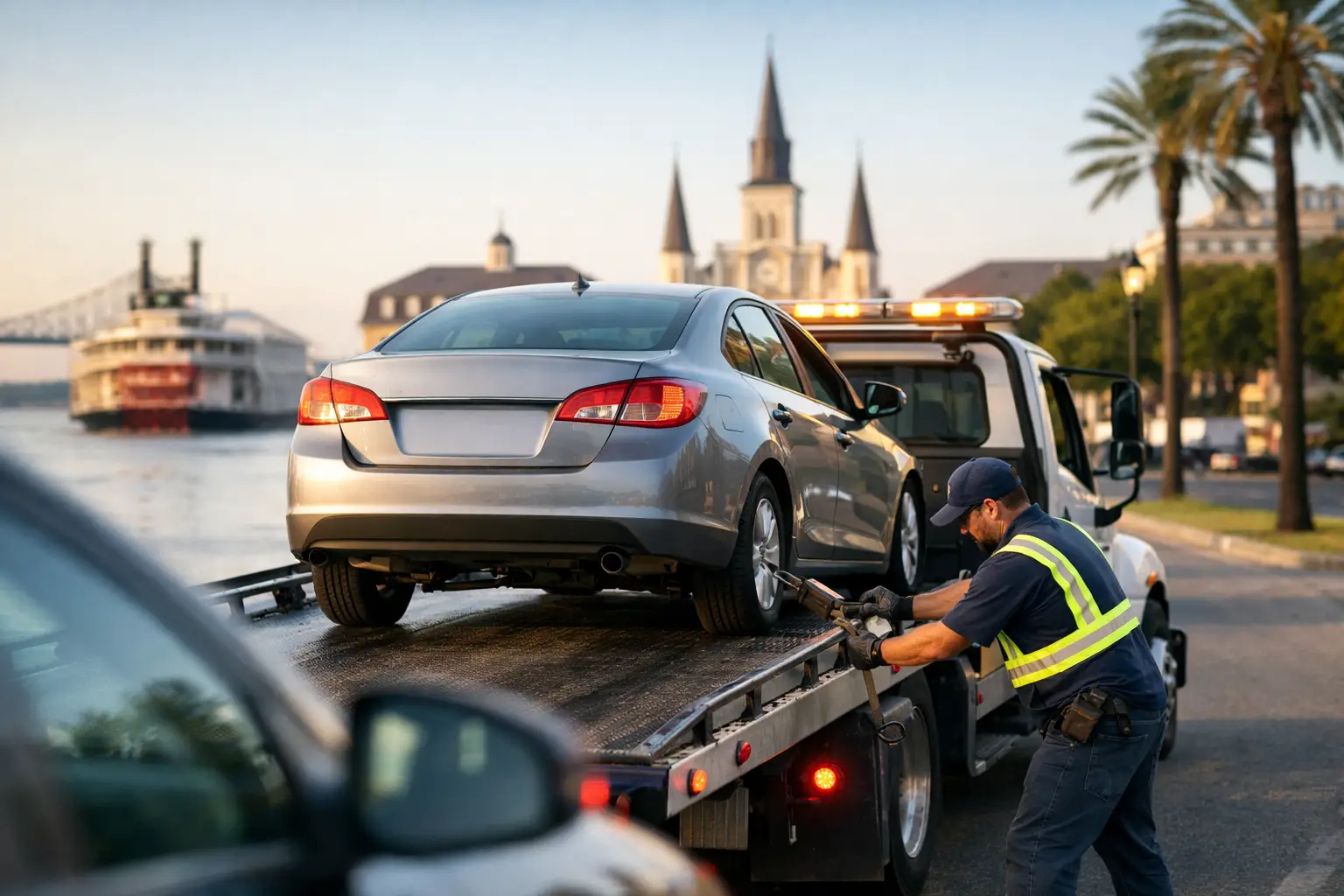
A stalled vehicle on I-10, a flat tire in a Kenner parking lot, or a car that will not start before work can make every minute feel longer. Knowing how to request a tow truck fast helps dispatch send the right operator, truck, and equipment without avoidable back-and-forth. Your first priority is safety. Your second is giving clear information so help can be on the way.
Get Yourself to a Safe Location First
If your vehicle is still moving, steer it to the shoulder, a parking lot, or another safe area away from traffic. Turn on your hazard lights. At night or in heavy rain, keep interior lights on if it helps other drivers see you, but stay aware of battery power.
On a busy road, do not stand between your vehicle and traffic. If you can safely exit, move behind a guardrail or stand well away from the roadway. If the vehicle is in an active traffic lane, has been in an accident, is leaking fluid, smoking, or creates an immediate hazard, call 911 first. A towing company can handle recovery and transport, but emergency responders may need to secure the scene.
If you are parked safely and only need a jump-start, tire help, lockout service, or fuel delivery, tell dispatch that too. Roadside assistance may get you moving without a tow, which can save time and money.
How to Request a Tow Truck Fast: Call With the Right Details
Calling is usually the fastest option when you are stranded. A dispatcher can ask the questions needed to match your situation with the proper truck, then send the job directly to an available operator. Stay on the phone long enough to confirm the pickup location, vehicle, and destination.
Before you call, take a breath and gather the details you can see. You do not need to be an expert on towing. Dispatch only needs accurate basics to send help safely and avoid delays.
Be ready to provide these four details:
- Your exact location, including the street address, cross streets, highway direction, exit number, or a nearby business
- Your vehicle’s year, make, model, color, and whether it is a car, SUV, truck, motorcycle, RV, or other vehicle
- What happened, such as a breakdown, accident, dead battery, flat tire, lockout, stuck vehicle, or need for planned transport
- Where the vehicle needs to go, including the name and address of the repair shop, home, dealership, or other destination
If you are on I-10, I-610, Airline Drive, Veterans Memorial Boulevard, or another major route, direction matters. “Near the airport” is helpful, but “eastbound on I-10 near exit 223, on the right shoulder” is much better. Check your map app, highway marker, or nearest sign if you are unsure.
Tell Dispatch About Any Access or Safety Issues
A tow operator needs to know more than the vehicle model in certain situations. Mention if your car is in a garage, a tight apartment lot, a muddy ditch, a flooded area, a parking deck, or behind a locked gate. Tell them if a wheel is damaged, the steering is locked, the vehicle is lowered, it is all-wheel drive, or it has been in a collision.
This information affects the equipment needed. A flatbed is often the safest choice for an all-wheel-drive vehicle, a car with major damage, a luxury vehicle, or a vehicle that should not be pulled with its wheels on the ground. Recovery work may require additional equipment when a vehicle is stuck off-road, in mud, or in a ditch.
Honest details protect your vehicle and help prevent a second truck from being needed. The goal is not to make the call complicated. It is to make sure the first operator arrives prepared.
Confirm the Arrival Time and Price Before Dispatch
When you request service, ask for an estimated arrival window and confirm the quoted price or how the rate is calculated. Towing costs can depend on distance, vehicle type, condition, recovery needs, time of day, and the destination. A simple local tow is different from a vehicle recovery or a long-distance haul.
You should also ask whether roadside service is possible before towing. For example, a jump-start or tire change may be enough if the vehicle is otherwise safe to drive. If the alternator has failed, the engine is overheating, a tire has sidewall damage, or warning lights indicate a serious issue, towing is usually the safer decision.
A professional provider should explain what service is being dispatched and what you can expect next. Licensed and insured towing matters because your vehicle needs proper handling from pickup through delivery, especially after an accident or when it cannot roll normally.
Keep Your Phone Available and Prepare the Vehicle
Once a truck is dispatched, keep your phone close and answer calls from the operator or dispatcher. They may need help locating you in a large lot, on a service road, or near a difficult highway access point. If your phone battery is low, use a charger if available and send your location to a trusted contact as a backup.
Remove personal valuables, medications, work equipment, and important documents if it is safe to do so. If you are leaving the vehicle at a repair shop after hours, make sure you know where to leave the keys and whether the shop has approved the drop-off. Some facilities require keys to be placed in a secure drop box.
If possible, have your registration, insurance information, and photo ID ready. You may not need every item for every tow, but having them nearby speeds up the handoff. Do not attempt to push a disabled vehicle through traffic or hook it to another vehicle with a rope or chain. Those shortcuts can create a much more dangerous situation.
Know When a Tow Is Better Than Driving
Drivers sometimes try to make it home or to a shop when the car still starts. That can work for a minor issue, but it can also turn a repair into major damage. Request a tow if the engine is overheating, oil pressure is low, the transmission is slipping badly, steering or brakes are affected, a tire is shredded, or the vehicle has collision damage.
The same applies after driving through deep water. In the New Orleans area, flooding can hide road damage and cause electrical or engine problems that are not obvious right away. Starting or driving a flood-affected vehicle can make the situation worse. Tell dispatch what happened and request secure transport to a trusted repair facility.
For motorcycles, classic vehicles, low-clearance cars, and vehicles with all-wheel drive, specify that you need careful loading or flatbed transport. The right equipment is part of fast service because it avoids delays at pickup and reduces the risk of damage.
What to Do While You Wait for the Tow Truck
Stay alert, especially if you are on the roadside. Keep children and passengers away from traffic. If weather conditions are severe or the area feels unsafe, wait in a safe nearby location when possible and tell the dispatcher exactly where you will be.
You can also take a few photos of the vehicle and its position, particularly after an accident. This is useful for insurance records and lets you document the condition of the vehicle before transport. Do not interfere with police instructions or enter a dangerous area just to take pictures.
When the operator arrives, verify the company name and explain any issue that may affect loading. Point out damaged wheels, low bumpers, a locked steering wheel, or items that cannot be moved. A trained operator will assess the vehicle, secure it correctly, and explain the next step before transport.
Fast Help Starts With a Clear Call
When you need 24/7 towing or roadside service in Kenner or New Orleans, Zain Towing LLC can dispatch trained professionals for light- and medium-duty towing, flatbed transport, recovery, lockouts, jump-starts, and tire help. Sharing your location, vehicle type, problem, and destination allows the team to send the right response quickly, with a stated goal of arriving in less than 30 minutes when conditions allow.
A breakdown is stressful enough. Make the call, give clear details, stay in a safe place, and let a properly equipped tow operator handle the vehicle from there.
Need help right now?
Zain Towing runs 24/7 in Kenner, New Orleans, Metairie, Harahan and Gretna. Call (504) 666-9099 or see our towing service, roadside assistance and New Orleans pages.