How to Stay Safe While Waiting Towing
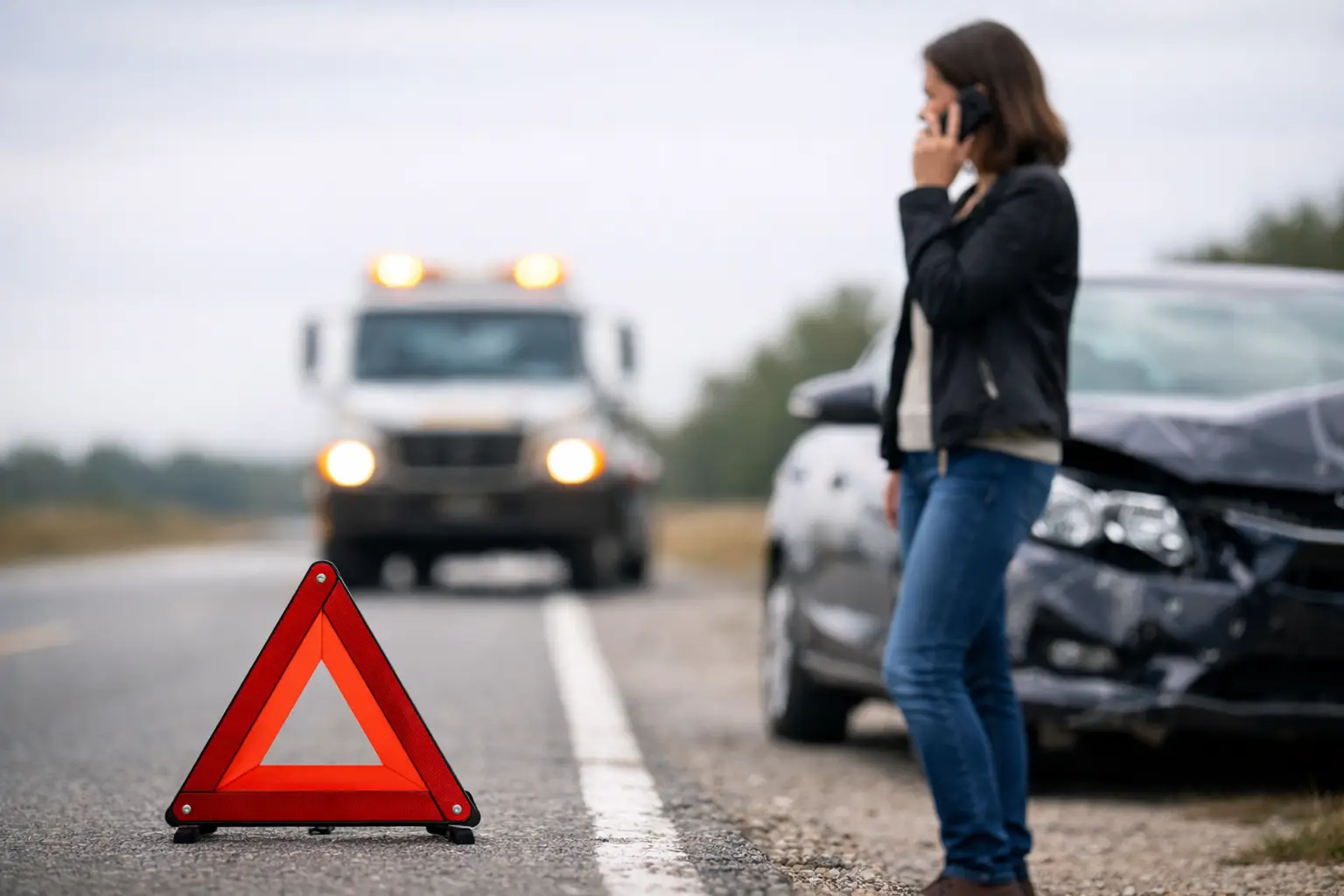
A breakdown on I-10, a flat tire on Veterans Memorial Boulevard, or an engine problem on a dark side street in New Orleans can turn stressful fast. If you are searching for how to stay safe while waiting towing, the first priority is simple: protect yourself before you worry about the vehicle. A tow truck can replace a car. It cannot replace your safety.
How to stay safe while waiting towing starts with location
The safest waiting spot depends on where your vehicle stopped and what traffic is doing around you. If the car still moves, ease it out of live traffic and onto the shoulder, a parking lot, a side street, or any area with more room between you and passing vehicles. Even a few extra feet matter.
Once you stop, turn on your hazard lights right away. They help other drivers see you earlier, especially at night, in rain, or during heavy traffic. In the Kenner and New Orleans area, quick storms can cut visibility in minutes, so making your vehicle visible is one of the first things to do.
If you are on a narrow shoulder, a bridge, or a curve where drivers may not see you in time, do not treat that spot as safe just because the car is technically off the road. In those cases, your next move should be based on traffic speed, weather, and whether you can get farther away from moving cars.
Should you stay in the car or get out?
This is where safety advice depends on the situation. If you are on a busy highway or any road with fast traffic, staying inside the vehicle with your seat belt on is often safer than standing near it. People get hit when they step out too close to traffic, especially at night or during poor weather.
If the vehicle is smoking, leaking fuel, sitting in a dangerous position, or stopped where another car could easily slam into it, getting out may be the better choice. If you exit, use the side away from traffic when possible and move well off the roadway. Stand behind a guardrail if there is one, or go to a safe area away from the shoulder.
For city streets, parking lots, and lower-speed areas, use common sense. If the vehicle is in a reasonably safe place and conditions are calm, staying inside with the doors locked may be best. If the area feels unsafe for other reasons, such as poor lighting or suspicious activity, move to a nearby public place if one is close and reachable without risking traffic exposure.
When children, older adults, or pets are with you
Keep everyone together and avoid repeated trips in and out of the vehicle. Children should stay restrained unless there is a clear reason to evacuate. Older passengers may need help moving to a safer location, so decide quickly and calmly. Pets should stay secured on a leash or in a carrier if you need to leave the car. A frightened pet near traffic can create a second emergency.
Make your vehicle easier to spot
Hazard lights are the starting point, but visibility should go further if you have the right equipment and it is safe to use. At night, keep interior lighting on only if it helps you stay visible without draining the battery too much. In heavy rain or fog, your position matters just as much as your lights.
If you carry reflective triangles or road flares, use them only when traffic conditions allow you to place them without putting yourself in danger. Do not walk along a high-speed shoulder just to set markers if cars are flying by a few feet away. Safety equipment helps, but not if using it exposes you to more risk.
Open the hood only if it helps the tow operator identify your vehicle and only if there is no sign of fire, steam pressure, or leaking fluid that could hurt you. If there is any doubt, leave the vehicle alone and wait for trained help.
Be careful who you trust on the roadside
Not every person who stops is there to help. Most people mean well, but a stranded driver is vulnerable. Keep your doors locked and lower the window only enough to speak if someone approaches. You do not need to accept a ride from a stranger or hand over your keys to anyone other than the verified tow operator you requested.
When you call for service, ask for the company name, truck type, and estimated arrival time. If possible, get the driver's name or dispatch details. When the truck arrives, confirm that the operator matches the company you contacted before you let anyone load your vehicle.
This matters even more after a crash, when multiple trucks may show up fast. You have the right to know who is towing your vehicle and where it is going. A licensed, insured towing company with trained operators gives you a much safer handoff than an unknown truck that appeared out of nowhere.
What to do while you wait
After you call, stay focused on safety instead of trying to fix everything at once. Share your exact location with dispatch. Look for mile markers, nearby intersections, exit numbers, business signs, or landmarks. In a local service area like Kenner and New Orleans, clear location details can cut delays.
Keep your phone charged as much as possible. If your battery is low, limit unnecessary calls, screen brightness, and app use. If you have a car charger and the vehicle electrical system still works safely, use it. A dead phone can leave you without updates when you need them most.
If weather is extreme, think ahead. Louisiana heat can build quickly inside a disabled vehicle, while heavy rain can flood shoulders and reduce visibility. Run the engine for air conditioning only if the car is in a safe condition and there is no sign of mechanical danger. If the issue involves overheating, smoke, or fluid leaks, do not restart it just for comfort.
Keep a safe waiting posture
Do not stand between your vehicle and traffic. Do not lean into the trunk while cars are passing. Do not crouch near the roadside where drivers may not see you. Whether you stay in the car or move away from it, choose a position that gives you distance, visibility, and a quick path to safety.
What to avoid while waiting for a tow truck
A lot of roadside injuries happen because people try to do too much. Unless you are trained and the situation is clearly safe, do not attempt repairs on the shoulder of a busy road. Changing a tire sounds manageable until a distracted driver drifts toward the shoulder.
Do not stand next to the vehicle to watch for the tow truck if traffic is heavy. It is better to wait inside with the seat belt on or in a safer area off the road. Do not leave valuables visible, and do not leave the vehicle unlocked while you move around.
Be cautious about using GPS pins alone to describe where you are. They help, but they are not always exact under overpasses, near service roads, or in dense city blocks. A human description still matters.
How to stay safe while waiting towing after an accident
After a collision, the risk level changes. Traffic may be confused, glass or debris may be on the ground, and your vehicle may not be stable even if it looks drivable. If anyone is injured or the scene is dangerous, call 911 first.
If police are responding, follow their instructions about where to wait and when to move the vehicle. Do not stand in traffic lanes taking photos if the scene is still active. Get to a safer spot first, then handle documentation.
If the vehicle took a hard hit, avoid getting underneath it or reaching into damaged areas. Bent metal, broken glass, deployed airbags, and leaking fluids can all cause injury. Wait for professional towing and recovery equipment rather than trying to improvise.
A few smart items make a big difference
You do not need a packed emergency kit to be safer, but a few basics help: a charged phone, flashlight, reflective vest, bottled water, simple first-aid supplies, and a portable phone charger. In this region, add an umbrella or rain jacket and keep them where you can reach them quickly.
If you drive long hours, travel with family, or work rideshare, these items are not extras. They are practical protection when a delay happens at the worst possible time.
Fast help matters, but safe help matters more
When you are stranded, speed is important. So is knowing the person loading your car is trained, insured, and using the right equipment for your vehicle. That is especially true for SUVs, trucks, motorcycles, RVs, and vehicles that need flatbed transport. Zain Towing LLC focuses on both sides of that equation - fast dispatch and secure handling - because a rushed response means little if the roadside process is not safe.
If you remember one thing, make it this: your job while waiting is not to solve the whole problem. Your job is to stay visible, stay calm, and stay out of harm's way until the right help gets there.
Need help right now?
Zain Towing runs 24/7 in Kenner, New Orleans, Metairie, Harahan and Gretna. Call (504) 666-9099 or see our towing service, roadside assistance and New Orleans pages.