How to Tow Motorcycles Without Causing Damage
A motorcycle can be damaged long before the tow vehicle starts moving. A loose strap, a sideways load, or a tow point that puts pressure on the wrong part of the bike can bend components, scrape bodywork, or drop the motorcycle in the road. Knowing how to tow motorcycles properly means securing the bike for every bump, turn, and stop between pickup and delivery.
For most riders, the safest option is a purpose-built motorcycle trailer or professional flatbed towing. If you are facing a breakdown, crash, flat tire, or no-start situation in the Kenner or New Orleans area, do not improvise with a rope or try to ride a damaged bike home. The right equipment and secure handling matter.
Choose the Right Way to Tow a Motorcycle
A motorcycle should not be towed with its wheels rolling behind a car unless you have specialized equipment designed for that purpose. Dragging a bike by a rope, chain, or strap is unsafe. It can destabilize the motorcycle, damage the drivetrain, and leave the rider with very little control if the bike leans or the connection fails.
A flatbed tow truck is usually the best choice for an inoperable, damaged, high-value, or unfamiliar motorcycle. The bike is loaded fully off the road, secured upright, and transported without accumulating road miles. This is also the better option after an accident, when you may not know whether the wheels, forks, brakes, or frame are safe to roll.
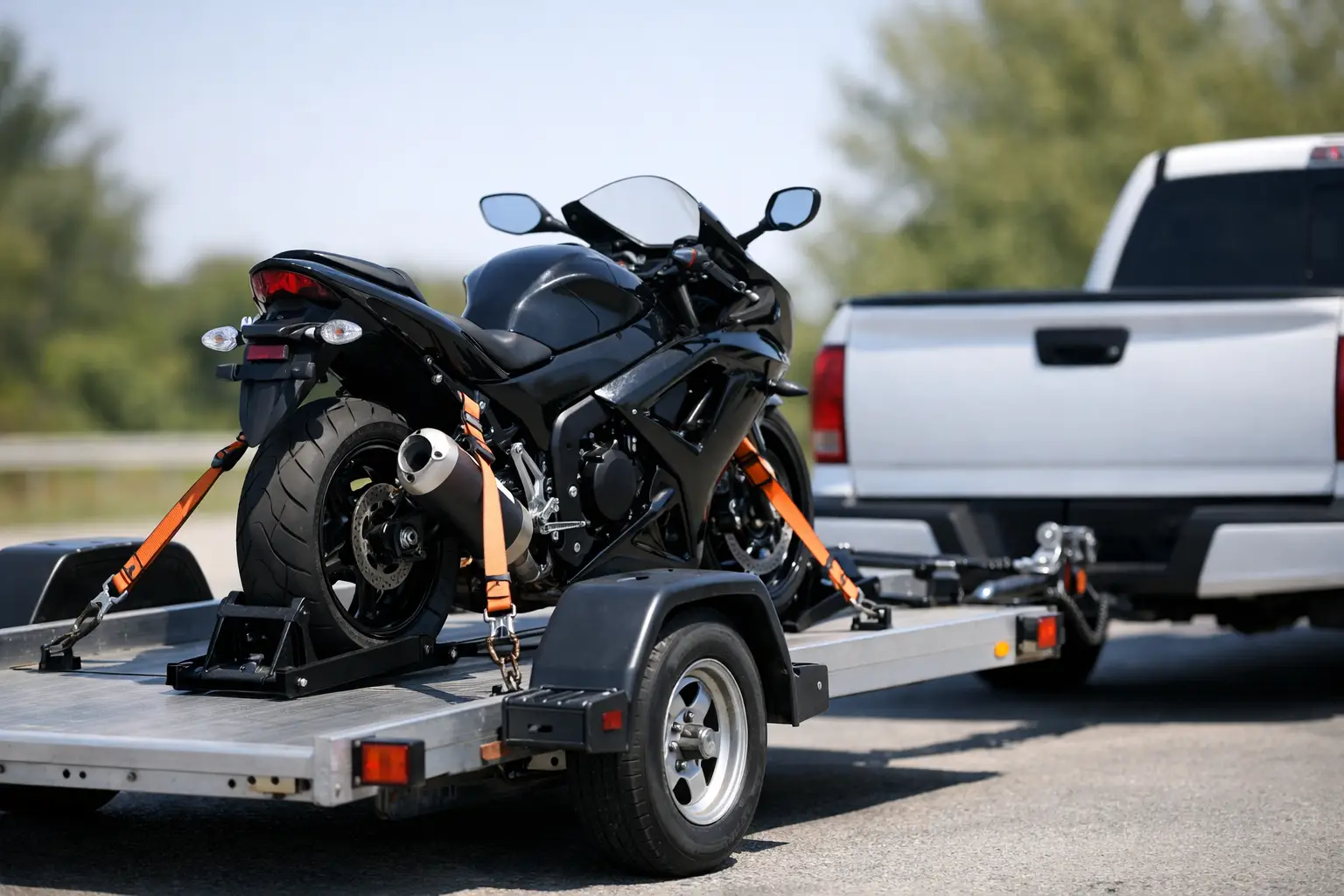
A motorcycle trailer is a practical option for planned transport, such as moving a bike to a shop, rally, storage unit, or new home. Use a trailer rated for the motorcycle's weight, including cargo and accessories. It should have a stable deck, a wheel chock or front wheel restraint, strong tie-down points, and working lights and tires.
A pickup truck can work for some motorcycles, but it requires extra care. The truck bed must be long and wide enough, the loading ramps must be rated for the weight, and the tailgate arrangement must not put the bike or ramp at risk. For many cruisers, touring bikes, trikes, and larger motorcycles, a flatbed or dedicated trailer is the safer call.
Equipment You Need to Tow Motorcycles Safely
Before loading, inspect the gear instead of assuming it is ready. A worn strap or weak anchor point can fail at highway speed. At minimum, you need equipment that matches the size and weight of the motorcycle.
- A trailer, pickup setup, or flatbed rated for the full load
- A properly sized front wheel chock or wheel restraint
- Four quality ratchet straps or cam-buckle straps rated for motorcycle use
- Soft loops to protect handlebars, fork tubes, or approved frame points
- A rated loading ramp with a non-slip surface
- Tie-down anchor points that are attached to the trailer or truck structure
Do not use bungee cords as primary restraints. They are useful only for keeping a loose cover or light item in place, never for holding a motorcycle upright. Avoid attaching straps to mirrors, turn signals, luggage racks, exhaust pipes, brake lines, or other parts not designed to carry towing loads.
How to Load a Motorcycle on a Trailer or Flatbed
Start on level, solid ground whenever possible. Wet pavement, loose gravel, and sloped shoulders make loading riskier, especially in Louisiana rain. Set the tow vehicle's parking brake and make sure the trailer is connected correctly before deploying ramps.
Line the motorcycle up straight with the ramp and wheel chock. Do not attempt to load at an angle. If the bike runs and is safe to operate, walk it slowly up under control rather than riding it onto a narrow trailer. If it does not run, use at least one helper or a powered winch. Trying to push a heavy bike up a ramp alone is a common way riders get injured or drop the motorcycle.
Once the front tire is seated in the wheel chock, keep the motorcycle upright. Put it in neutral unless the manufacturer or your transport setup calls for otherwise. The goal is to let the suspension help absorb road movement while holding the bike firmly in place.
Use soft loops around solid, approved locations near the front of the motorcycle. On many bikes, the lower triple clamp or sturdy fork area is appropriate, but the correct point depends on the model. Consult the owner's manual when possible. Run two front straps outward and forward to the trailer anchors, creating a wide V shape.
Tighten the front straps evenly until the front suspension compresses moderately. Do not crush the suspension all the way down. Excessive compression can stress seals and components during a long haul, while too little tension allows the bike to bounce and loosen the straps.
Then secure the rear with two straps leading outward and back. Rear straps help prevent side-to-side movement and keep the motorcycle from shifting forward or backward. They should stabilize the bike, not pull fragile bodywork or suspension parts out of position.
Check the Motorcycle Before You Drive
Step back and inspect the full setup from both sides. The motorcycle should stand straight, with no sharp strap angles rubbing against painted surfaces, cables, or brake lines. The front tire should remain centered in the chock, and all strap hooks should be fully seated in their anchor points.
Turn the handlebars gently to confirm the straps are not binding against controls. Check that the kickstand is up unless your specific trailer system requires it down. A deployed kickstand can catch, bend, or allow the motorcycle to settle unevenly during transport.
Before leaving, verify these details:
- The trailer coupler is locked, safety chains are connected, and trailer lights work.
- Every ratchet strap is locked and its loose end is tied off so it cannot flap or unwind.
- The bike has clearance from trailer rails, truck-bed walls, and nearby cargo.
- Saddlebags, loose accessories, and personal items are removed or secured separately.
- The towing vehicle can safely handle the combined weight of the trailer and motorcycle.
Stop after the first few miles and recheck every strap. Road vibration can settle the suspension and create slack that was not visible at the loading site. For longer trips, inspect the load at fuel stops and after heavy rain, rough pavement, or sharp maneuvering.
Drive Differently With a Motorcycle in Tow
Towing changes braking distance, acceleration, lane changes, and turning radius. Keep your speed reasonable and leave extra room ahead. Sudden braking can shift the load, while fast turns can put unnecessary force on straps and trailer tires.
Take corners wider and slower than usual. Watch for potholes, railroad crossings, and uneven bridge joints. A trailer may bounce hard over obstacles even when the tow vehicle feels stable. If you hear a new rattle, scraping sound, or repeated strap noise, pull over safely and inspect the motorcycle before continuing.
Weather matters too. Heavy rain can reduce trailer traction, and strong winds can push a light trailer around. If conditions are poor or the motorcycle is expensive, damaged, or difficult to secure, professional transport is usually less costly than repairing a bike after a preventable towing mistake.
When to Call a Professional Motorcycle Tow
Some situations are not good candidates for do-it-yourself transport. Call a professional tow operator if the motorcycle was involved in a collision, has a locked wheel, has fork or frame damage, will not roll safely, or is stranded on a busy roadway. The same applies if you do not have a rated trailer, proper straps, or enough help to load it safely.
A trained operator can assess the motorcycle, select the appropriate flatbed or towing equipment, and secure it without guessing. Zain Towing LLC provides 24/7 licensed and insured towing for motorcycles and other vehicles throughout the Kenner and New Orleans area, with secure transport focused on damage prevention.
Your motorcycle deserves more than a quick tie-down and a hope-for-the-best drive. Whether you are moving it across town or dealing with a roadside emergency, use the right equipment, recheck every connection, and choose professional help when the situation does not feel completely secure.
Need help right now?
Zain Towing runs 24/7 in Kenner, New Orleans, Metairie, Harahan and Gretna. Call (504) 666-9099 or see our towing service, roadside assistance and New Orleans pages.