
Jump Start Roadside Assistance That Gets You Moving
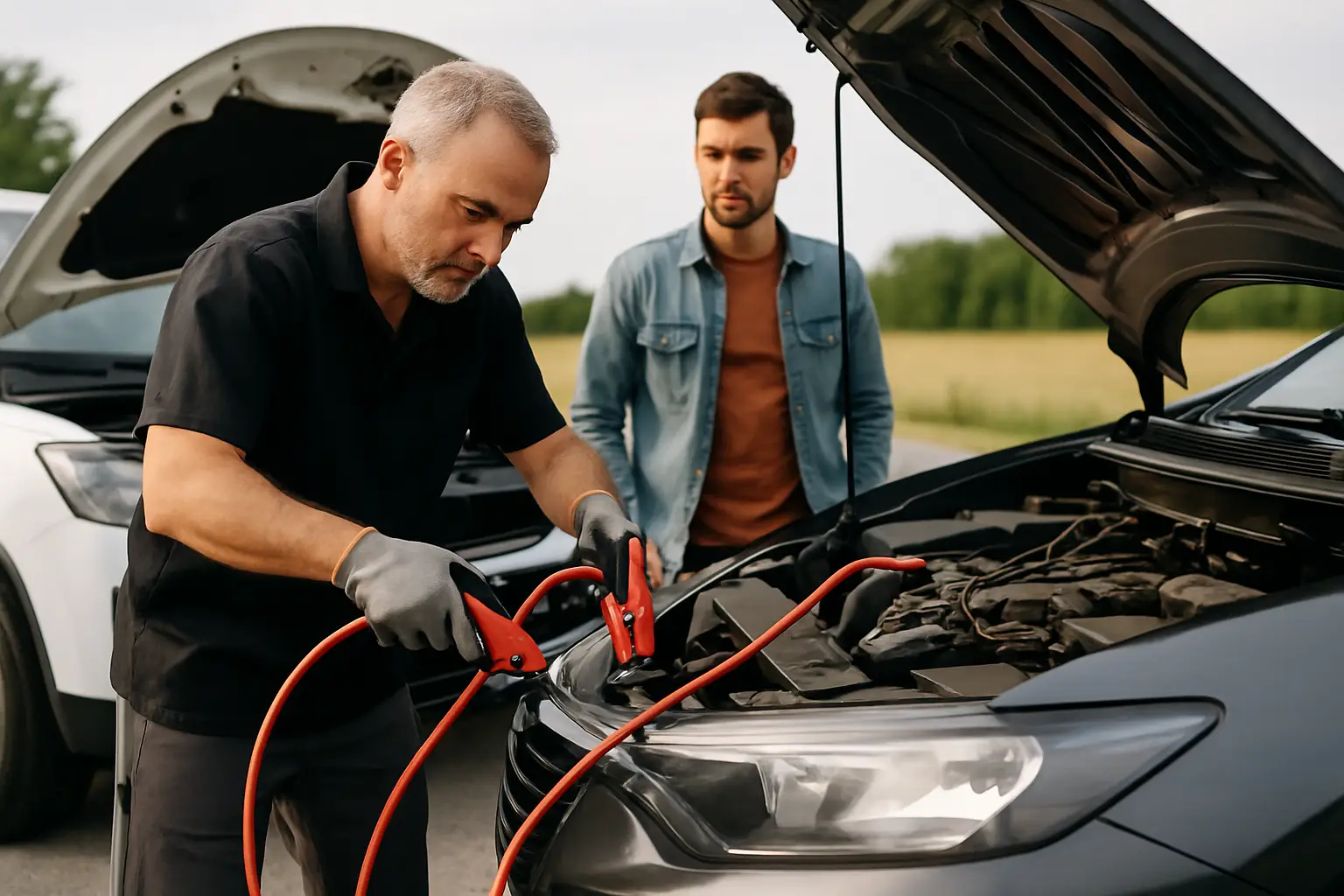
You turn the key outside a grocery store in Kenner or a hotel in New Orleans and get the worst sound a car can make: a click… then nothing. Maybe the dash lights flicker, maybe everything is dead. Either way, your day just stopped.
That is exactly when jump start roadside assistance matters - not as a “nice-to-have,” but as the quickest, safest way to get you back on the road without damaging your vehicle or getting stuck in an unsafe spot.
What “dead battery” usually means (and what it does not)
A dead battery is the most common reason a vehicle will not start, but it is not the only one. Sometimes it is simply a battery drained by leaving a light on, a door ajar, or a phone charger plugged in overnight. In those cases, a jump-start is often all you need.
Other times, the battery is telling you it is at the end of its life. If your car starts after a jump but dies again at the next stoplight, the battery may not be holding a charge, or your alternator may not be charging it while you drive. Jumping it gets you moving, but it does not “fix” the underlying problem.
And then there are situations that feel like a battery but are not. A bad starter can click just like a weak battery. Corroded terminals can block power even if the battery has charge. If you have had repeated no-start issues, the right move is still to get the vehicle safely started or towed - then diagnose it, instead of gambling on another jump in a parking lot.
When jump start roadside assistance is the smart call
If you are at home with time, have cables, and feel comfortable, you might try a self-jump. But a lot of breakdowns are not happening in calm, controlled places. They happen on the shoulder of I-10, in a tight French Quarter street, in a dark apartment lot, or in a busy airport pickup lane.
Jump start roadside assistance makes sense when speed and safety matter more than “figuring it out.” Call for help if you are in traffic, stranded at night, traveling with kids, dealing with bad weather, or you are simply not sure what is wrong. It is also the right move if you drive a vehicle with a hard-to-reach battery location or sensitive electronics and you do not want to risk a wrong connection.
There is also a practical point people forget: if your battery is completely dead, a jump can take longer than you expect. A professional can confirm the issue quickly, get safe power to the battery, and tell you if it looks like you are dealing with a deeper charging problem.
What happens during a professional jump-start
A proper jump-start is more than clamping cables and hoping for the best. A trained operator will typically verify the symptoms, check obvious issues like loose or heavily corroded terminals, and then connect power in the correct order.
They will also pay attention to where your vehicle is sitting. If you are parked on a slope, on a narrow street, or too close to traffic, the safest approach might include repositioning the service vehicle, using warning lighting, and controlling the work area so nobody gets hit while your hood is up.
Once started, you may be advised to keep the car running and drive for a period to help recharge - but this depends on the battery condition and your vehicle. If the battery is old or the alternator is failing, idling in place may not help much. The right advice is situation-specific, and that is why assistance from an experienced operator is valuable.
Common mistakes that make a bad day worse
When drivers try to DIY a jump under pressure, small errors can create big problems. Reversing polarity, clamping to the wrong location, or letting the clamps touch can cause electrical damage or sparks. A jump can also fail if the donor vehicle is not positioned safely, or if the cables are too short and stretched across an unsafe area.
Another common issue is assuming the jump “worked” because the engine started, then shutting the engine off immediately. If your battery was near zero, you may not have enough reserve to restart. If you are at a gas station, pay, and come back out to another no-start, you just doubled your stress.
If you are unsure, do not guess. A jump-start should be fast and controlled, not an experiment.
What to do while you wait for jump start roadside assistance
First, think safety. If you are in traffic or on a shoulder, stay aware of your surroundings. If it is safer to stay in the vehicle with your seatbelt on, do that. Turn on hazard lights. At night, keep your interior light low so you do not drain what little battery power remains.
Second, gather the info that speeds dispatch. Your exact location matters in the New Orleans and Kenner area where streets, ramps, and service roads can be confusing. If you can, share a nearby business name, cross street, or landmark.
Third, avoid draining the battery further. Do not run the radio, do not keep trying to crank the engine repeatedly, and do not leave doors open while waiting. Every attempt takes power. If the battery is already weak, repeated cranking can push it over the edge.
After the jump: how to avoid getting stranded again tonight
If your vehicle starts, you have a short window to make smart choices. If you are close to home, it may be best to head there and plan a battery test or replacement. If you are in an unfamiliar area, choose a safe, well-lit place to drive to - not a random side street.
Pay attention to warning signs during the first few minutes: dimming headlights, a battery light on the dashboard, or electronics behaving oddly can point to charging system trouble. If the car stalls or the battery light stays on, continuing to drive might leave you stranded in a worse spot.
It also depends on your trip. If you are about to cross the Causeway, head out to Metairie, or get on the interstate for a longer drive, a shaky battery is not something to “wait and see” about. Getting it checked first can save you from a second breakdown where help is harder to reach.
Special situations: newer vehicles, hybrids, and hard-to-access batteries
Not every vehicle jump is the same. Many newer cars have batteries tucked under panels, in the trunk, or in locations that are not obvious. Some have dedicated jump points under the hood even when the battery is elsewhere. If you do not know the correct points, you can waste time or damage components trying to access the battery directly.
Hybrids and some start-stop systems can also behave differently. The vehicle may have a small 12-volt battery that powers electronics and computer systems, even though the main drive battery is much larger. A jump-start may still be possible, but the process should be handled carefully and correctly.
This is one of those “it depends” scenarios where professional jump start roadside assistance is often safer than relying on a friend’s cables and a guess.
When a jump-start is not enough: tow vs. jump
Sometimes the best roadside decision is to stop trying to jump the vehicle. If the battery is visibly damaged, leaking, or swollen, do not attempt to boost it. If you smell sulfur or see smoke, step back and call for help. Safety comes first.
If you get a jump and the vehicle will not stay running, you may be dealing with an alternator issue, a severe battery failure, or another no-start problem. At that point, a tow can be the faster solution because it moves the problem to a shop or your driveway instead of keeping you stuck in place.
If you are not sure which service you need, say what is happening when you call: whether it clicks, whether lights come on, whether it started and died, and whether there are any warning lights. That information helps dispatch the right help.
What you should have ready when you call
To get fast service, keep it simple. Be ready with your location, your vehicle type, and what the car is doing when you try to start it. Mention if you are in a garage, behind a gate, in a tight parking structure, or on the shoulder of a highway. Access details can shave minutes off arrival time.
If you are in the Kenner or New Orleans area and need 24/7 help, Zain Towing LLC provides rapid-response roadside assistance, including jump-starts, with a focus on safe handling and getting you out of a stressful situation quickly.
A quick reality check on “cheap fixes”
Battery boosters, portable jump packs, and bargain cables can be helpful tools, especially if you drive a lot for work or travel. The trade-off is reliability and technique. A small jump pack may not have enough power for a larger engine or a fully dead battery. Cheap clamps can slip. And if you rarely use the pack, you might discover it is uncharged when you need it most.
If you like being prepared, keep a jump pack charged and learn your vehicle’s proper jump points. But if you are already stranded, the goal is not to prove you can DIY it. The goal is to start the vehicle safely and avoid turning a battery problem into an electrical problem.
Closing thought
A dead battery is frustrating, but it is also one of the most solvable roadside issues - as long as you treat it like a safety situation, not a puzzle. Get to a safe spot, make one clear call for jump start roadside assistance, and focus on getting moving again without adding damage or risk to an already stressful moment.
Need help right now?
Zain Towing runs 24/7 in Kenner, New Orleans, Metairie, Harahan and Gretna. Call (504) 666-9099 or see our towing service, roadside assistance and New Orleans pages.