
Jump Start Versus Replacement: Choose Safely
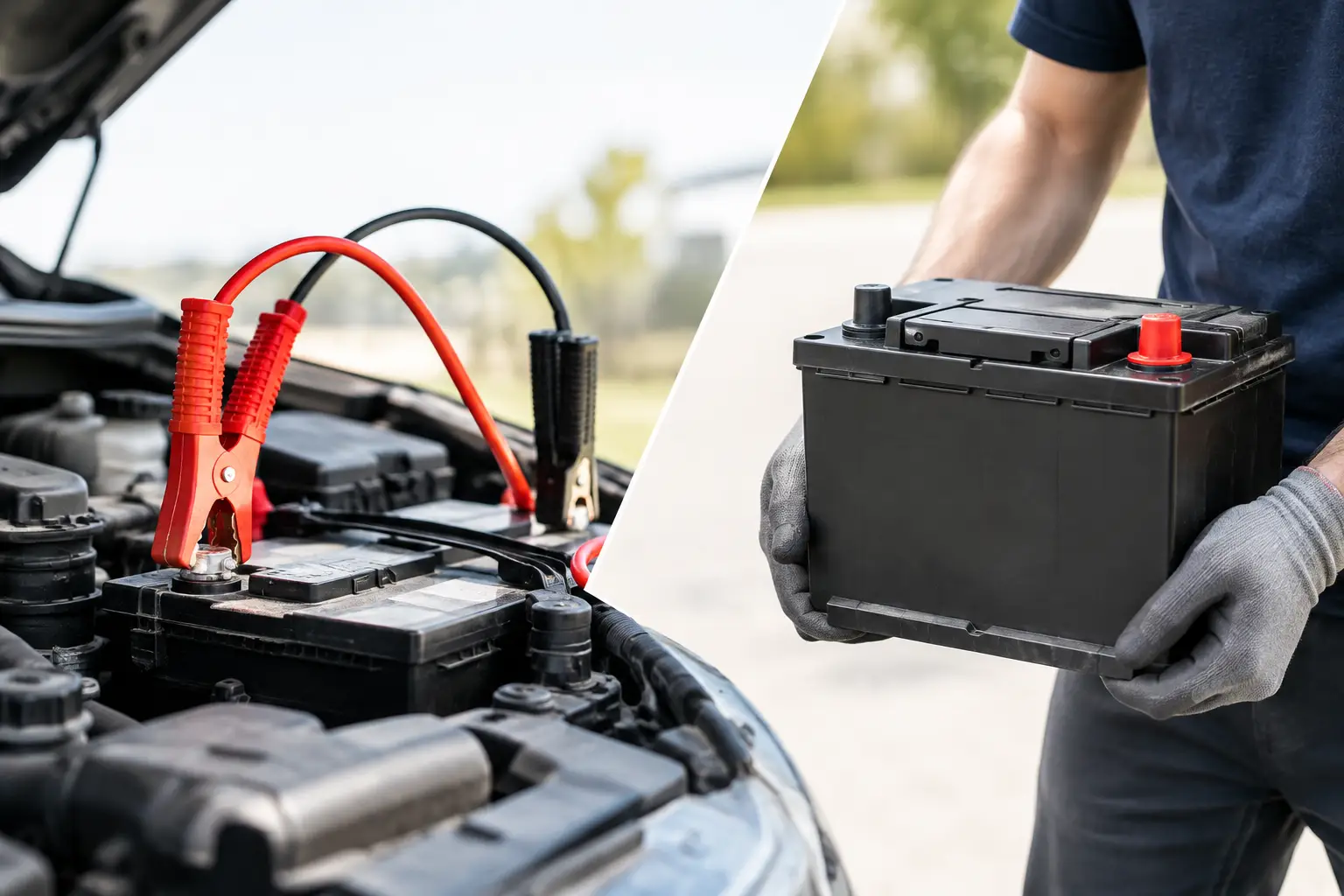
A dead battery rarely happens at a convenient time. You may be leaving work, picking up your kids, heading across Kenner, or trying to get home after a late night in New Orleans. The choice between a jump start versus replacement comes down to one question: did the battery simply lose its charge, or can it no longer hold one?
A jump-start can get a vehicle running quickly. It cannot repair a worn-out battery, a failing alternator, corroded connections, or an electrical drain. Knowing the difference can save you from getting stranded again a few miles down the road.
Jump Start Versus Replacement: The Basic Difference
A jump-start sends temporary power from a booster pack or another vehicle to your battery. That extra power gives the starter enough energy to crank the engine. Once the engine is running, the alternator should recharge the battery as you drive.
Battery replacement means the old battery has reached the end of its useful life or has failed internally. In that case, a jump may start the vehicle once, but the battery may die again after you park, shut off the engine, or even while you are driving if the charging system also has a problem.
The practical answer is not always obvious at the curb. A professional roadside technician can safely assess the situation, provide a jump if appropriate, and help you decide whether your vehicle should be driven, taken for battery service, or towed to a repair shop.
When a Jump-Start Is Usually the Right Move
A jump-start makes sense when the battery was drained by a clear, one-time event. Maybe the interior light stayed on, a door was not fully closed, headlights were left on, or the vehicle sat unused for several days. Louisiana heat can also speed up battery wear, but a newer battery may still lose charge after a period of inactivity.
If the vehicle starts normally after the jump and continues running without warning lights, the battery may only need time to recharge. Drive directly to your destination or a battery-testing location rather than making several short stops. A short drive may not fully restore a heavily discharged battery.
A jump is also a reasonable first step when you have no previous starting issues and the battery is relatively new. Check the battery’s installation date if you can. Many vehicle batteries last roughly three to five years, though hot weather, frequent short trips, and heavy electrical use can shorten that timeline.
Even when a jump works, pay attention to what happens next. If the engine cranks slowly the next morning, the battery is sending a message that should not be ignored.
Signs You Likely Need Battery Replacement
A battery can look normal from the outside and still fail under load. Repeated jump-starts are one of the clearest signs that replacement is becoming necessary. If you need a boost more than once, do not assume another jump will solve the problem.
Watch for these common warning signs:
- The engine cranks slowly, especially after the vehicle has been parked overnight.
- Dashboard lights flicker or electronics reset when you start the vehicle.
- You notice a swollen battery case, a sulfur-like odor, or corrosion around the terminals.
- The battery is several years old and has begun losing charge without an obvious reason.
- The car starts after a jump but dies again soon after being shut off.
A swollen case, leaking battery, or strong rotten-egg smell calls for extra caution. Do not attempt to jump a visibly damaged battery. Battery acid and gases can create a safety hazard, and the vehicle should be inspected by a qualified professional.
A Dead Battery Is Not Always a Bad Battery
This is where the jump start versus replacement decision gets more complicated. A healthy battery can go dead because something else in the vehicle is not working correctly.
The alternator recharges the battery while the engine runs. If the alternator is failing, the vehicle may start with a jump but lose power as you drive. You may see a battery warning light, dimming headlights, electrical problems, or an engine that stalls. Continuing to drive can leave you stranded in an unsafe location.
Loose or corroded battery terminals can also block the flow of power. A technician may be able to identify visible corrosion or a poor connection, but the underlying issue should be corrected before relying on the vehicle for daily driving.
Another possible cause is a parasitic draw. This happens when an electrical component continues using power after the vehicle is turned off. A glove box light, aftermarket accessory, faulty module, or wiring issue can drain a good battery overnight. Replacing the battery without finding the draw may only lead to another dead battery.
That is why a battery test and charging-system test are more useful than guessing. They help determine whether the problem is the battery, the alternator, the cables, or the vehicle’s electrical system.
What to Do When Your Vehicle Will Not Start
First, get yourself and your passengers to a safe place. If you are stopped on a busy New Orleans street, a bridge approach, or the shoulder of a highway, turn on your hazard lights and stay aware of traffic. If it is safer to remain inside the vehicle, keep the doors locked and wait for roadside help.
Before calling for a jump, make sure the issue actually appears battery-related. A rapid clicking sound, dim dashboard lights, or no response when turning the key can point to a weak battery. A single heavy click, grinding noise, or a vehicle that has power but will not crank could be a starter or mechanical problem instead.
Avoid repeated start attempts. They can drain the remaining battery charge and make diagnosis harder. Also avoid using damaged jumper cables or asking an untrained person to connect cables if you are unsure where the terminals are located. Incorrect connections can damage sensitive electronics or create sparks near the battery.
When you request roadside service, provide your exact location, vehicle year and model, and whether you are in a safe parking area or alongside traffic. Let dispatch know if the vehicle is an SUV, truck, hybrid, or electric vehicle, since access points and procedures can vary.
When a Tow Is Safer Than Another Jump
Sometimes the fastest way forward is not another jump. If the vehicle has needed multiple boosts, has a battery warning light while running, stalls after starting, smells like sulfur, or has obvious battery damage, arrange secure transport to a repair facility.
A tow is also the better choice when you are far from home, driving at night, carrying family members, or facing heavy traffic. Taking a chance on a vehicle that may stall can turn a simple battery issue into a dangerous roadside situation.
For drivers in Kenner and the New Orleans area, Zain Towing LLC provides 24/7 roadside jump-start service and safe towing when the vehicle needs more than temporary power. Trained operators can help reduce the stress of a no-start situation and move your vehicle securely when driving it is not the safe option.
How to Reduce Future Battery Trouble
Battery trouble cannot always be prevented, but a few habits make a difference. Have the battery and charging system tested before long trips, especially if the battery is more than three years old. Keep terminals clean, make sure the battery is securely mounted, and avoid leaving electronics running when the engine is off.
If you do not drive often, take the vehicle on a longer drive periodically or use a proper battery maintainer. Short trips can prevent the alternator from fully replacing the energy used to start the engine. This matters even more in hot Louisiana weather, where battery life can decline faster than expected.
When your vehicle will not start, focus on safety first and diagnosis second. A jump may get you moving, but a repeated dead battery deserves a real answer before it leaves you stranded again.
Need help right now?
Zain Towing runs 24/7 in Kenner, New Orleans, Metairie, Harahan and Gretna. Call (504) 666-9099 or see our towing service, roadside assistance and New Orleans pages.