Louisiana Tow Truck Insurance: What to Require
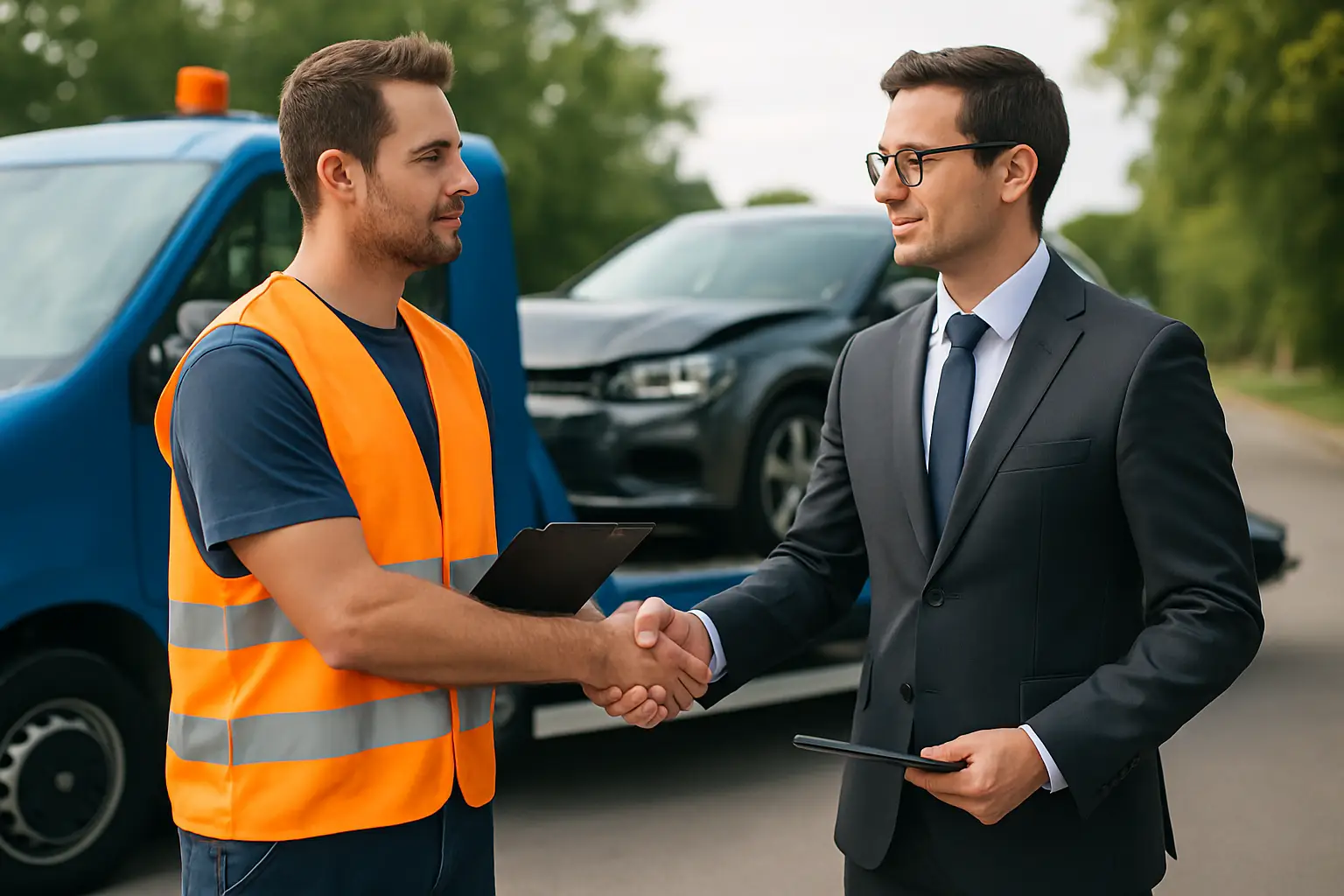
The moment you are stuck on I-10, on a dark stretch near the airport, or in a tight neighborhood street in New Orleans, you are not thinking about insurance forms. You are thinking: “Get me out of here, and don’t damage my car.”
That is exactly why insurance matters. Not the fine print you never see, but the coverage the tow company carries and how it protects you when your vehicle is being lifted, winched, loaded, and moved.
Here is the practical reality: Louisiana does not have one simple, driver-facing checklist that magically guarantees a tow is covered in every situation. Requirements can vary based on the tow operator’s licensing, the type of tow (flatbed vs. wheel-lift), where the tow is happening (private lot, roadway, police-initiated), and whether the company is doing light-duty towing or recovery work.
So instead of guessing, this guide focuses on what you, as the driver, should require and verify in plain language.
Tow truck insurance requirements Louisiana drivers should ask about
If you are hiring a tow truck yourself - not through your insurer - you are choosing the company that will physically handle your vehicle. Your safest move is to confirm the tow provider is licensed and insured and then ask one more question: “What insurance covers my vehicle while it’s on your truck?”
Most professional towing companies carry more than one policy because different risks happen at different moments. A bumper can get scraped during loading. A mirror can get clipped during transport. A vehicle can roll or shift during a recovery. Those are not the same type of claim.
In Louisiana, you will commonly hear about these coverages when you ask the right way.
Auto liability (for the tow truck)
This is the policy that covers damage the tow truck driver causes to other people or property while operating the tow truck on public roads. If the tow truck rear-ends a vehicle, hits a pole, or causes an accident while driving to the drop-off, this is the coverage that typically applies.
For you as the customer, liability is not the same thing as coverage for your own car while it is being towed. It is necessary, but it is not enough.
On-hook or “tow-in-transit” coverage (for your vehicle)
This is the big one for most drivers. On-hook coverage is designed for customer vehicles while they are in the care of the tow operator and on the tow truck (or otherwise being towed).
If your car is properly loaded and strapped down but something still happens during transport, on-hook coverage is typically the policy that responds. If a tow company cannot clearly explain whether they carry on-hook coverage, that is a red flag.
Also ask about limits. A $50,000 on-hook limit might be fine for a basic sedan, but it can be tight for newer trucks, luxury vehicles, or certain EVs.
Garagekeepers or “care, custody, and control” (if your vehicle is stored)
If your vehicle is being held in a lot or yard - even briefly - garagekeepers coverage is often what applies to damage that happens while the vehicle is stored, parked, or otherwise under the business’s control.
This matters in real life when a vehicle has to be held overnight, is waiting on an insurance adjuster, or is being staged for a long-distance haul.
General liability (for property damage and injuries)
General liability is about incidents that are not strictly auto accidents. Think: damage to a customer’s property during a winch-out, a slip-and-fall at a yard, or damage to a garage floor during a recovery.
You do not need to memorize these categories. You just need to know that a professional towing company should be able to answer quickly and confidently what covers what.
What changes the “requirements” from one tow to another
If you are trying to figure out tow truck insurance requirements Louisiana drivers should care about, the biggest mistake is assuming every tow is the same.
Light-duty tow vs. recovery work
A simple flatbed load from a driveway is one thing. A winch-out from mud, a ditch, or a tight parking garage is another.
Recovery work has higher risk. It often involves winching angles, limited space, traffic exposure, and more physical handling of the vehicle. When the risk goes up, you want to be extra sure the company is insured for recovery operations - not just basic towing.
Police-initiated tows and accident scenes
If the tow is initiated by law enforcement after an accident, you may have less choice on the spot. Even then, you can still ask for documentation and you can still document the condition of your vehicle.
Accident scenes also introduce a key issue: pre-existing damage. If your bumper is already hanging off or your wheel is bent, you want that documented before the tow starts so there is no confusion later.
Specialty vehicles and “it depends” scenarios
Some vehicles simply carry different risk:
- EVs can require specific handling to avoid battery or drivetrain damage.
- All-wheel-drive vehicles may require a flatbed or proper dollies.
- Lowered cars, high-end wheels, and body kits can be damaged easily if the approach angle is wrong.
- Motorcycles require specialized tie-down points and transport methods.
Insurance is only part of the protection. The other part is choosing an operator with the right equipment and training.
What you can verify in under two minutes
When you are stranded, you need a fast way to screen for the basics without turning it into a paperwork battle.
Ask these questions on the phone before dispatch or while the truck is en route:
- “Are you licensed and insured to tow in Louisiana?”
- “Do you carry on-hook coverage for customer vehicles?”
- “What is your on-hook limit?”
If the answers are vague, defensive, or overly complicated, that is usually your cue to call someone else.
If the tow company says, “Your insurance covers it,” push back politely. Your own auto policy might cover certain towing-related damage, but it depends on your coverage and deductible, and it can still be a headache. You want the tow operator to have the correct coverage for the risk they are taking on.
Ask for proof without slowing everything down
You do not need a full insurance packet emailed to you while you are on the shoulder. But you can ask for a COI (certificate of insurance) if it is a planned tow, long-distance transport, or a higher-value vehicle.
If it is an emergency tow, focus on selecting a reputable, insured provider and document your vehicle’s condition.
The driver’s best protection: document the vehicle
Insurance is there for worst-case scenarios. Your best day-to-day protection is having a clear record of what your vehicle looked like before it was moved.
Take quick photos of the front, back, both sides, and close-ups of existing damage. If you are in a dangerous location, do this only when safe.
Then, as the operator begins loading, pay attention to two things: correct attachment points and proper securement. A professional will not rush this step, even if traffic is backing up.
Common misunderstandings that create problems later
Most towing disputes are not about “bad people.” They are about mismatched expectations.
“If the tow company is insured, my car is automatically covered.”
Not necessarily. A company can have auto liability and still have low or no on-hook coverage. That is why you ask specifically.
“My roadside assistance sent them, so I’m covered.”
Sometimes yes, sometimes no. Roadside programs use networks. The provider may be independent, and coverage may vary. If you can, still confirm on-hook coverage and document the car.
“Damage during a recovery is always the tow company’s fault.”
Not always. If a vehicle is already compromised after an accident, or if it is buried in mud and needs to be winched out, there can be unavoidable contact points. A good operator explains the plan before pulling and sets expectations.
Choosing the right tow for the situation (to reduce risk)
Insurance is your backstop. The better move is preventing damage in the first place.
If your car is immobile, all-wheel-drive, or has significant bodywork risk, a flatbed is often the safer option. Wheel-lift towing can be fine for many situations, but it needs to match the vehicle and conditions.
For tight garages, flooded areas, or soft ground, the operator’s recovery approach matters more than speed. Fast dispatch is great. Fast, careless loading is not.
If you are in the Kenner-New Orleans area and need an insured, dispatch-ready tow, you can request service through Zain Towing LLC and tell the dispatcher exactly what you are driving and what happened so the right truck shows up.
If something goes wrong: what to do next
If you believe damage occurred during the tow, handle it calmly and in order.
Start by taking photos immediately at the drop-off. Then ask the driver for the company’s claim process and insurance details. Keep your invoice or receipt, because it ties the tow date, truck, and service to your vehicle.
If you are using your own insurer, report it quickly and share the documentation. The faster the facts are recorded, the easier it is to sort out what happened during transport versus what existed before.
You do not need to threaten anyone or escalate on the spot. Clear documentation and a professional claim process solve most issues faster than arguing in the driveway.
A closing thought for Louisiana drivers
When you are stranded, you are already spending time and money you did not plan for. The goal is to get you safe, get the vehicle moved without extra damage, and keep the situation from turning into a second problem tomorrow. Ask about on-hook coverage, choose the right kind of tow for your vehicle, and let the operator do the job the right way - even if it takes an extra minute to secure everything properly.
Need help right now?
Zain Towing runs 24/7 in Kenner, New Orleans, Metairie, Harahan and Gretna. Call (504) 666-9099 or see our towing service, roadside assistance and New Orleans pages.