Private Towing Versus Insurance Towing
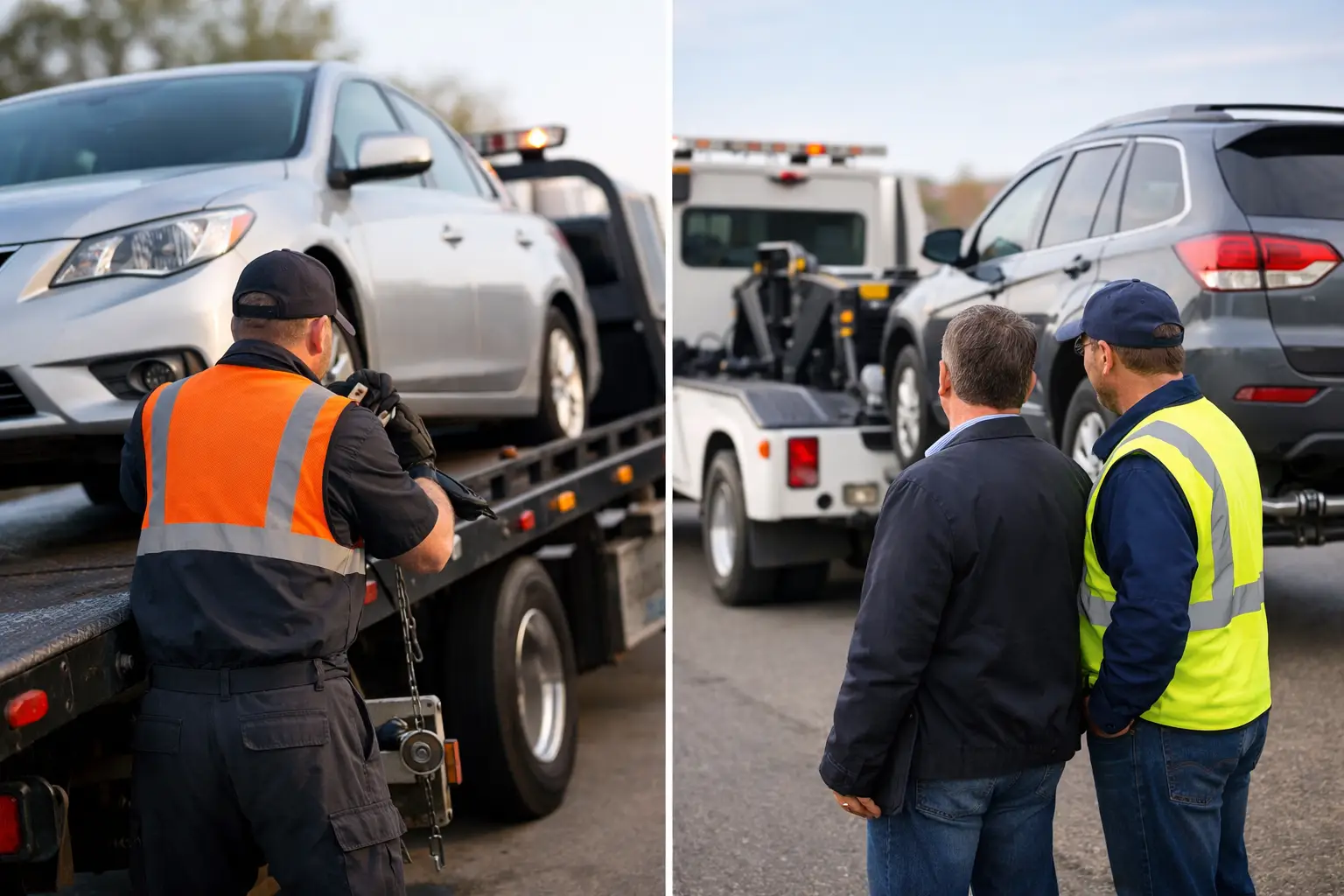
The tow truck you call after a breakdown can change how quickly you get help, how much you pay out of pocket, and how much control you have over where your vehicle goes. That is why private towing versus insurance towing is not just a billing question - it is a decision that affects your time, stress level, and next steps when you are stuck on the road in Kenner or New Orleans.
If your car will not start in a parking lot, you have a flat on the shoulder, or you have been in a minor crash, you usually have two paths. You can call a private towing company directly, or you can go through your insurance company or roadside assistance provider. Both can get the job done. The difference is how the process works, how fast a truck is assigned, and how much say you have in the details.
What private towing versus insurance towing really means
Private towing means you contact a towing company yourself and request service directly. You tell dispatch where you are, what kind of vehicle you have, what happened, and where the vehicle needs to go. The towing company gives you the service terms, pricing, and estimated arrival time, then sends the appropriate truck.
Insurance towing usually means your auto insurer, roadside assistance membership, or coverage add-on arranges the tow through its network. In some cases, you pay nothing at the scene if the tow is covered. In other cases, you pay first and submit a reimbursement claim later. That detail matters, because many drivers assume insurance towing is always fully handled in real time, and that is not always true.
The biggest difference is control. With private towing, you are hiring the provider directly. With insurance towing, there is often a third party in the middle deciding eligibility, limits, and dispatch.
Speed is often the first deciding factor
When you are stranded on I-10, in a hotel lot, or outside your home before work, speed matters more than theory. A private towing company can often move faster because you are speaking directly with local dispatch. There is no separate claims workflow, no benefits verification delay, and no need to wait for a call center to locate a contractor.
That does not mean insurance towing is always slow. Sometimes it works fine, especially during normal demand periods and when the insurer has a nearby provider available. But if wait times are long, weather is bad, or there is a regional spike in breakdowns, the extra layer can become a problem.
For many drivers, private towing is the better fit when the priority is immediate action. You call, confirm the details, and get a truck on the way.
When insurance towing may take longer
Insurance-arranged towing can slow down for a few common reasons. Coverage has to be confirmed. Mileage limits may need to be checked. The dispatch center may assign from a network that is not based as close to you as a local independent operator. If there is confusion about your exact location, vehicle condition, or destination, the back-and-forth can add more time.
That delay feels even longer when you are stranded with kids, in heavy rain, late at night, or in an unsafe spot.
Cost is not always as simple as free versus paid
A lot of drivers hear “insurance towing” and think “free tow.” Sometimes that is true, but only within the terms of your policy or roadside plan. There may be mileage caps, dollar limits, or restrictions on where the vehicle can be taken. If your preferred repair shop is farther away, or if your vehicle needs special handling, you may still owe extra charges.
Private towing is more straightforward. You are quoted for the service based on the vehicle, location, towing method, and destination. You know who is providing the service and what you are paying for. There is less guesswork about what will or will not be approved later.
That transparency can matter more than chasing reimbursement. A lower upfront price through insurance is not always the better value if it comes with a long wait, limited destination options, or added hassle.
Watch the fine print on coverage
Not all roadside coverage is the same. Some policies cover only breakdown-related towing, not post-accident towing. Some cover a short tow radius but not long-distance transport. Some include service for standard passenger cars but not larger trucks, RVs, trailers, or specialty vehicles.
If you need a flatbed for an all-wheel-drive vehicle, careful recovery from a ditch, or transport for a motorcycle or SUV, it is worth confirming whether your plan covers that exact service. If not, private towing may be the cleaner option.
Control over destination matters more than most people expect
One of the most overlooked parts of private towing versus insurance towing is where your vehicle ends up. If you call a private company directly, you can usually choose the destination as long as it is a reasonable and serviceable request. That might be your mechanic, your dealership, your home, a tire shop, or another location that makes sense for you.
With insurance towing, the destination may be limited by policy rules, mileage limits, preferred networks, or approved repair channels. That may be fine if the assigned location matches what you need. It becomes a problem when it does not.
This is especially important if you already know who should work on your vehicle. If your transmission shop, collision center, or trusted mechanic is not the closest option, direct towing gives you more flexibility.
Private towing is often better for unusual situations
Not every tow is a simple hook-and-go call. Some vehicles need flatbed transport to prevent damage. Some are stuck in tight parking decks, soft ground, or flooded areas. Some need local towing now and long-distance hauling later. Some drivers are not dealing with a breakdown at all - they just need planned vehicle transport.
Insurance towing is usually built for standard roadside events. Private towing tends to be more adaptable when the situation falls outside the basic script. If you need a trained operator with the right equipment and clear handling instructions, calling a licensed and insured local company directly often gives you better results.
That includes cases involving lowered cars, motorcycles, work trucks, SUVs, and vehicles that cannot roll safely. The more specific the job, the more valuable it is to speak directly with a dispatcher who understands towing operations rather than a general call center.
Safety and vehicle handling should not be an afterthought
Price and wait time get the attention, but handling quality is what protects your vehicle. A cheap or covered tow is not a good deal if the wrong truck shows up or your vehicle is moved carelessly.
With private towing, you can ask the right questions up front. Is the company licensed and insured? Do they have trained operators? Are they sending a flatbed or wheel-lift? Can they handle your vehicle type safely? Those are practical questions, not sales questions.
Insurance networks can include excellent providers, but the customer often has less visibility into who is being assigned until the process is already moving. If your car has low clearance, mechanical damage, or accident-related issues, direct communication with the tow company can reduce mistakes.
How to decide in the moment
If you are in a safe location, have time to wait, and know your policy includes towing that fits your exact situation, insurance towing may work well. It can reduce upfront cost and may be convenient if the process moves quickly.
If you need fast response, want control over the destination, have a vehicle that needs special handling, or do not want to deal with coverage uncertainty while stranded, private towing is often the better call.
There is also a middle ground. Some drivers call a private towing company first to get an ETA and price, then compare that with what insurance can offer. That approach makes sense when time allows. But if you are on the roadside in traffic, in bad weather, or in an unsafe area, the fastest reliable dispatch usually matters most.
The best option depends on what you need right now
Private towing versus insurance towing is not about one option being universally better. It is about what matters most in your situation - speed, out-of-pocket cost, destination control, coverage limits, or special handling. A direct tow can be the fastest and clearest path. Insurance towing can help when your coverage is strong and the dispatch process is moving.
For drivers in high-stress moments, the smartest move is the one that gets the right truck to the right location without adding confusion. If your vehicle is disabled and you need help now, focus on response time, safe handling, and clear terms first. Everything feels more manageable once you know exactly who is coming and where your vehicle is going.
Need help right now?
Zain Towing runs 24/7 in Kenner, New Orleans, Metairie, Harahan and Gretna. Call (504) 666-9099 or see our towing service, roadside assistance and New Orleans pages.