
Recovery Towing in Kenner: What Happens Next
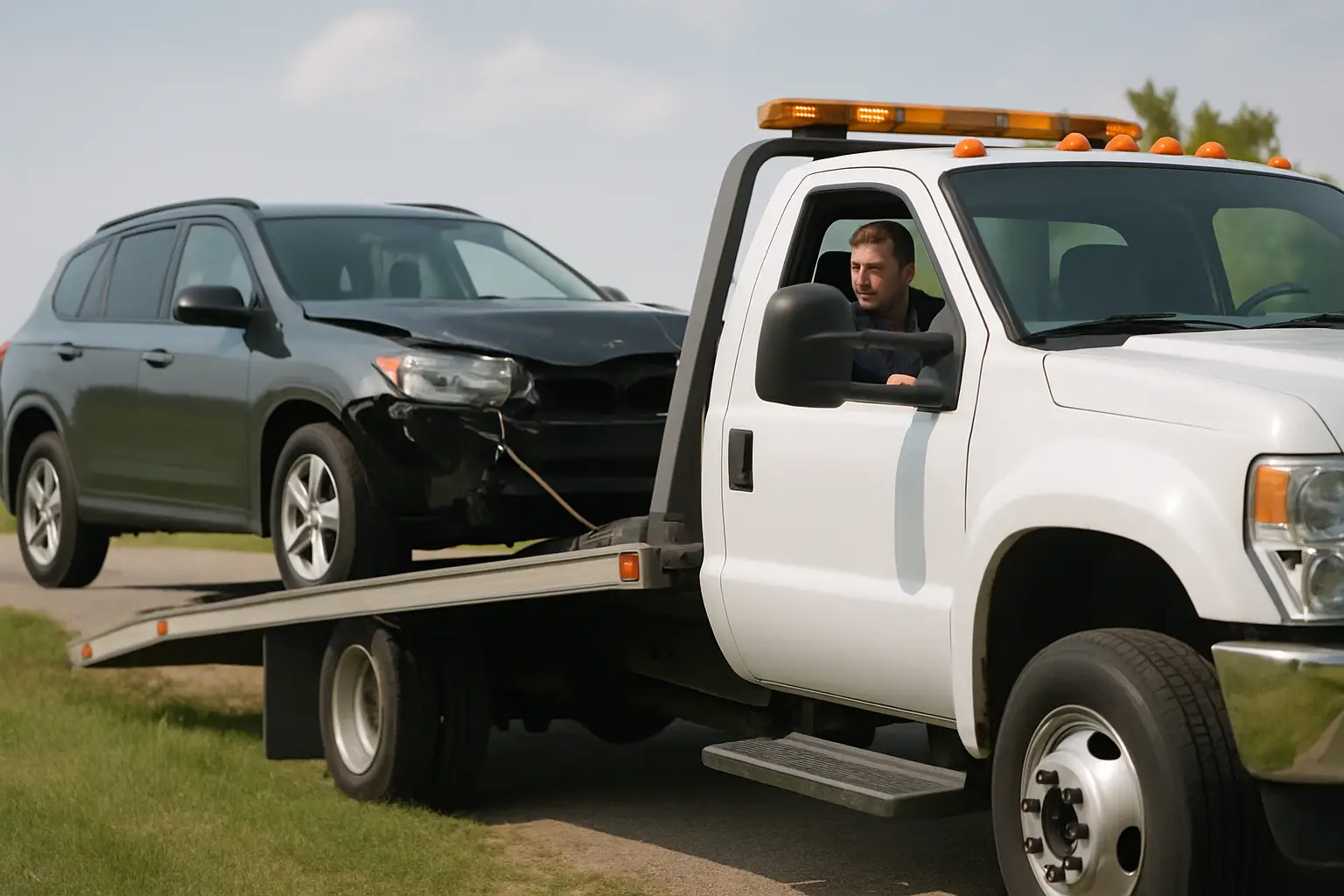
If your car is sitting in a ditch off Williams Blvd or stuck in the mud on a rainy night near the lake, the first problem is not “getting a tow.” It’s getting your vehicle safely back to a spot where it can be towed without ripping a bumper off, tearing a CV axle, or dragging it on the frame. That’s recovery towing - and in Kenner, it’s the difference between a stressful situation and a damaged vehicle.
What “recovery towing” actually means (and why it matters)
Recovery towing is what you need when a standard hook-up and pull-away is not possible. Your vehicle might be off the roadway, angled awkwardly, stuck on a curb, down an embankment, or immobilized in a way that requires controlled winching or repositioning before any transport happens.
A regular tow is mostly about transport. Recovery is about stabilization and extraction first, then transport if needed. That “recovery first” step is where experience and the right equipment matter, because the wrong pull angle can bend steering components, scrape oil pans, or cause secondary damage that’s more expensive than the original incident.
In Kenner, recoveries are common after heavy rain, fender benders that push a car onto a median, parking lot mishaps, and breakdowns in tight spots where traffic and space make a normal tow unsafe.
When you need recovery towing in Kenner vs a standard tow
If you’re not sure what you need, that’s normal. Most drivers just know the car won’t move and they want help fast.
You typically need recovery when your vehicle is not sitting flat and accessible on pavement. If one or more wheels are off the road, you’re high-centered on a curb, you slid into a drainage area, or the car is stuck in mud or grass and the tires just spin, you’re in recovery territory.
You may also need recovery after an accident when the vehicle can’t roll freely, the steering is locked at an angle, or there’s debris around the car. Even in a simple collision, a vehicle can end up positioned in a way that makes loading it safely the main challenge.
On the other hand, if your car is in a normal parking spot with a dead battery, a flat tire, or it simply won’t start but it’s easy to access, that may be roadside assistance or a straightforward tow.
The trade-off is speed versus protection. A quick pull by the wrong method can create expensive damage. A careful recovery can take a few extra minutes, but it’s designed to reduce the chance of making things worse.
What a safe recovery looks like on scene
A professional recovery starts with a quick assessment. The operator is looking at vehicle position, ground conditions, traffic, and where the safe pull points are. They’re also thinking about what could shift when tension is applied - especially if the vehicle is on a slope or one side is lower than the other.
For many recoveries, winching is the key step. The goal is controlled movement, not brute force. Controlled winching helps guide the vehicle back onto stable ground, keeping the pull angle as clean as possible and preventing sudden jerks that can snap components or cause the vehicle to slide unpredictably.
Once the vehicle is back to a safe position, the next step depends on condition. If it can roll and the wheels track correctly, it may be loaded for transport. If there’s suspension damage, locked wheels, or a risk of scraping, a flatbed is often the safer choice because it keeps the vehicle fully supported.
Flatbed vs wheel-lift for recovery situations
A lot of drivers ask for “a flatbed” because they’ve heard it’s safer. Many times, they’re right - but it depends on the situation.
A wheel-lift tow is efficient when the vehicle can be accessed easily and the wheels can roll. It’s often faster for simple tows and can be the right option after a minor incident once the car is repositioned.
A flatbed tow is usually the safest option when the vehicle has low clearance, possible drivetrain damage, a locked wheel, or needs to be transported without any rolling. After a recovery, a flatbed also reduces the risk of additional damage because the car is loaded and secured rather than dragged.
In real-world Kenner recoveries, the best approach is the one that matches the vehicle and the conditions. Your dispatcher should ask a couple of questions so the right truck shows up the first time.
What impacts the cost of recovery towing in Kenner
Recovery pricing isn’t one-size-fits-all because recoveries aren’t one-size-fits-all. A standard tow is mostly mileage and hookup. Recovery adds variables.
The biggest cost drivers are the complexity of the extraction, the time on scene, and equipment needs. A simple winch-out from a soft shoulder is different from a vehicle down an embankment or wedged against a curb at an odd angle. If the operator has to reposition multiple times, deal with limited access, or coordinate a careful pull to prevent damage, that usually increases time and labor.
Other factors include vehicle size and weight (SUVs, trucks, and loaded vehicles can require more controlled handling), ground conditions (mud and water complicate traction), and whether the vehicle needs a flatbed after extraction.
If you’re price-shopping while stranded, the best question is not just “how much?” It’s “what does that quote include?” You want clarity on recovery vs tow, any winching charges, and whether the quoted price assumes a standard hookup or an actual extraction.
What to do right now if you’re stuck or off-road
If your vehicle is in a bad position, your safest move is usually to pause and call for help instead of trying a DIY rescue. Spinning tires in mud can dig you deeper. Trying to “power out” over a curb can rip plastic, crack a splash shield, or worse.
If you can, move yourself and passengers to a safe location away from traffic. Turn on hazard lights. If you have cones or triangles, set them out with enough distance for approaching drivers to react. If you’re on or near an active roadway, safety is the priority before the vehicle.
When you call for service, be ready to describe what you see in plain language. Are the front wheels off the pavement? Is the car high-centered? Is it in a ditch? Is there visible damage? If you can safely take a couple of photos and text them to the dispatcher, that can help match the right equipment.
One more “it depends” scenario: if you’re in standing water and you suspect flooding, don’t try to start the vehicle. Water ingestion can destroy an engine. A recovery is cheaper than an engine replacement.
Choosing a recovery towing company in Kenner that won’t make it worse
When you’re stressed, it’s tempting to call the first number that answers. But recovery is where professionalism shows.
You want a company that is licensed and insured, sends trained operators, and has equipment suitable for light- and medium-duty work. You also want clear communication - a dispatcher who asks questions, sets expectations, and doesn’t treat every call like the same basic tow.
Response time matters in Kenner because traffic keeps moving and conditions can change. A vehicle partially off the roadway can become a bigger hazard as visibility drops or rain picks up. Fast dispatch is not just a convenience - it reduces risk.
If you need recovery towing in Kenner at any hour, Zain Towing LLC provides 24/7 dispatch with a focus on safe handling, secure transport, and rapid response so you can get out of the situation without added damage.
Common Kenner recovery scenarios we see
Kenner has its own mix of conditions that trigger recoveries. Rain can turn shoulders soft fast. Busy corridors and tight turns can leave a car perched on a curb after a minor slide. Parking lots can hide deep edges and drainage dips that catch low-clearance vehicles.
Accidents are another big one. Even when the impact is minor, the final position of the vehicle can be awkward - nose-in against a median, one wheel stuck, or the car angled in a way that needs a controlled pull before loading. In those moments, recovery is about getting the car back to a stable position while keeping the scene safe for everyone nearby.
How to help the tow operator help you
Small details can speed up the right response. If you can share your exact location (nearest intersection, business name, or a clear landmark), that reduces delay. If you know whether the car is front-wheel drive, rear-wheel drive, or all-wheel drive, mention it - it can affect the safest way to move the vehicle after extraction.
If the vehicle is in a garage, under a carport, or in a tight space, say so. And if you have a preferred destination - your home, a body shop, a dealership, or another city - bring that up early so the operator plans the right setup.
If you’re a rideshare driver or traveling through, you may just need the vehicle moved to a safe lot or shop quickly. If it’s your family vehicle, you may care more about damage prevention than shaving five minutes. There’s no wrong priority - just be clear so the service matches your situation.
If you’re stuck in Kenner, the best next step is simple: focus on safety, communicate what you’re seeing, and let a trained recovery operator do the controlled work. Getting out of the ditch is one problem. Getting out without adding a new one is the goal.
Need help right now?
Zain Towing runs 24/7 in Kenner, New Orleans, Metairie, Harahan and Gretna. Call (504) 666-9099 or see our towing service, roadside assistance and New Orleans pages.