
RV Towing Service Guide for Fast Help
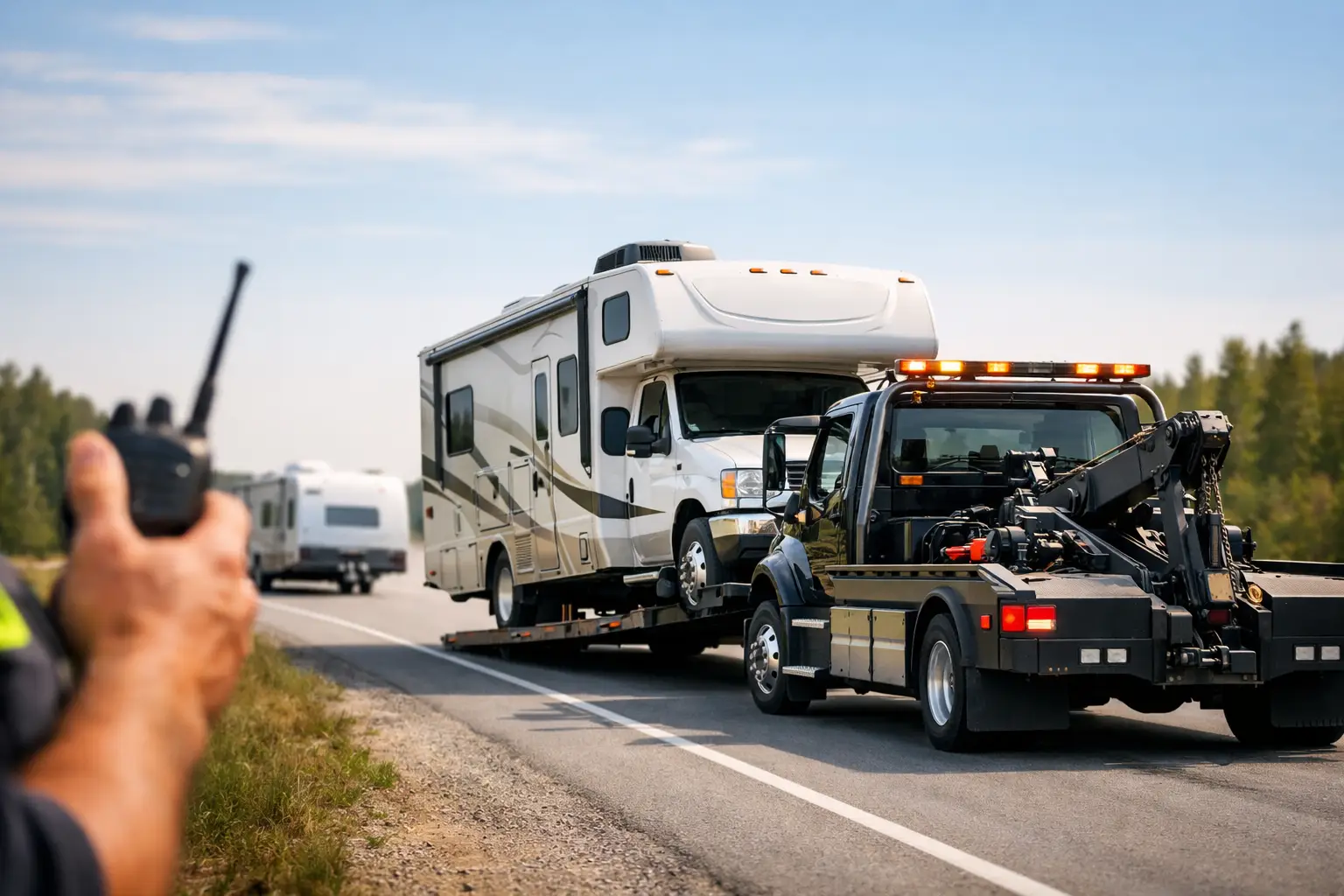
A disabled RV on I-10 or a campground access road is not the time to guess what kind of tow truck you need. This rv towing service guide is built for drivers who need clear answers fast - what to ask, what to avoid, and how to get your RV moved without adding damage, delay, or stress.
Why RV towing is different
An RV is not just a bigger car. It has more weight, more height, more length, and more systems that can be damaged during recovery or transport. That includes slide-outs, awnings, leveling jacks, low rear overhang, roof equipment, and storage compartments that may shift if the unit is handled carelessly.
That is why RV towing has to start with the right truck and the right operator. In many cases, a standard light-duty tow setup is not enough. Depending on the size and condition of the RV, the job may call for medium-duty towing, flatbed transport for certain towable units, winching, or recovery equipment if the vehicle is stuck off-road, in mud, or on a soft shoulder.
When people call in a panic, they often say, "I just need a tow." What actually matters is whether the provider can move your specific RV safely. That starts with a few details.
What to tell dispatch in an RV towing service guide call
The fastest way to get the correct truck sent out is to give dispatch useful information right away. If you are calling for immediate help, start with your exact location, whether you are in a safe spot, and whether the RV is blocking traffic.
Next, be ready to share the RV type. A motorhome, travel trailer, fifth-wheel, camper van, and toy hauler all create different towing needs. If you know the make, model, and approximate length, that helps. So does the gross vehicle weight rating, if available.
You should also explain what happened. A mechanical failure, flat tire, engine issue, dead battery, collision, overheating problem, or soft-ground recovery can all affect the equipment needed. If the RV has suspension damage, locked wheels, front-end damage, or drivetrain issues, say that clearly. Those details can change the tow plan.
If you have passengers, pets, or a trailer attached, mention that too. The more accurate the dispatch information is, the fewer surprises there are when the operator arrives.
Not every RV problem means a full tow
Sometimes the best solution is roadside assistance, not transport. That depends on the issue. A dead chassis battery, lockout, minor tire problem, or other quick-fix situation may be handled on site if the RV can be safely put back into service.
But if the problem involves steering, brakes, major tire failure, transmission trouble, engine overheating, accident damage, or a location that makes driving unsafe, towing is usually the smarter move. Trying to limp a damaged RV to the next exit can turn a manageable repair into a much bigger bill.
This is where an experienced 24/7 towing company matters. A trained operator can help assess whether your RV should be serviced roadside, recovered, or transported to a repair shop, storage facility, dealership, or another destination.
The right equipment matters more than speed alone
Fast response is important, especially when you are stuck near traffic or stranded after hours. But speed without the right equipment is not enough. The goal is quick dispatch and safe handling.
A proper RV tow may require wheel-lift support, underlift equipment, flatbed capability for certain units, winch-out service, dollies, or a medium-duty truck rated for the load. Clearance issues also matter. Low-hanging components, long rear overhang, and uneven ground can create a risk of scraping or structural damage during hookup.
That is why licensed and insured service is not just a nice extra. It tells you the company is operating professionally and takes responsibility for vehicle handling. For RV owners, that matters. One bad tow can damage body panels, undercarriage components, axles, or tires before the unit ever reaches the repair shop.
Common RV towing situations around Kenner and New Orleans
The local area creates its own towing challenges. Tight parking lots, hotel access roads, narrow shoulders, bridge approaches, heavy rain, and traffic congestion all affect how an RV recovery is handled. In and around Kenner and New Orleans, timing and route selection matter almost as much as the tow itself.
A breakdown near the airport, on a busy highway, or in a flooded or soft-shoulder area may require quicker scene management and more caution during loading. If your RV is stuck at a campground, storage lot, residence, or event site, access limitations may determine which truck can enter and how the unit can be positioned for removal.
For longer units, turning radius and road clearance become a real issue. That is another reason to choose a towing company that regularly handles different vehicle types instead of treating every call like a standard passenger car tow.
How pricing usually works
Most RV owners want the same answer first: how much will it cost? Fair question. The honest answer is that pricing depends on the unit, the problem, the distance, and the complexity of the job.
A short local transport for a smaller towable RV is different from recovering a larger motorhome from an unsafe shoulder at night. Price may be affected by vehicle size and weight, whether recovery or winching is needed, after-hours timing, required equipment, hookup difficulty, and total mileage.
The best towing companies are transparent about this. They explain what is included and what could change the quote. If the situation is urgent, ask for the expected arrival window, the type of truck being dispatched, and any known pricing factors based on the information you provide.
Cheap service can get expensive fast if the operator shows up unprepared, damages the RV, or delays transport because they brought the wrong equipment. With RV towing, the lowest number is not always the lowest real cost.
How to protect your RV before the tow
If you are in a safe place and have a few minutes before help arrives, take simple steps to reduce risk. Turn on your hazard lights and move yourself and passengers away from traffic if possible. If you can do so safely, secure loose items inside the RV and close compartments, steps, and slide-outs.
If the RV is towable and you know the manufacturer's procedure, be ready to share any towing notes with the operator. Not every owner has that information on hand, and that is okay. What matters is not guessing. If you are unsure, say so.
It also helps to take photos of the RV's condition before transport. That is just smart practice for any tow, especially with larger vehicles. Keep your phone available in case dispatch or the operator needs help locating you.
Choosing the right provider in an emergency
A good rv towing service guide is not just about the vehicle. It is about the company you trust when things go wrong. In a real roadside situation, you want a provider that answers 24/7, dispatches quickly, and can clearly explain what happens next.
Look for a towing company that is licensed and insured, handles light- and medium-duty jobs, and has trained operators with the equipment to move large vehicles safely. It also helps when the company can support both emergency towing and related roadside needs, since not every RV call ends the same way.
In the Kenner and New Orleans area, drivers need a service that understands urgency. If your RV is disabled on the roadside, in a parking lot, or at a property where access is limited, response time and local routing knowledge can make a big difference. Zain Towing LLC focuses on exactly that kind of fast, professional dispatch with safe transport at the center of the job.
When to call right away
If your RV is creating a traffic hazard, has visible wheel or axle damage, is leaking fluids, will not restart after a serious mechanical issue, or feels unsafe to move under its own power, call right away. The same goes for situations involving accidents, stuck conditions, or any breakdown that leaves you exposed near traffic.
Waiting too long can make recovery harder. A soft shoulder can get softer. A minor overheating event can turn into engine damage. A stranded RV in a bad location can quickly become a safety issue for everyone nearby.
The right move is usually the simple one: give your location, describe the RV, explain the problem, and get the proper truck dispatched.
If your RV breaks down, stay calm and focus on the next step. Fast help matters, but safe help matters more - and the best tow is the one that gets your RV where it needs to go without making a bad day worse.
Need help right now?
Zain Towing runs 24/7 in Kenner, New Orleans, Metairie, Harahan and Gretna. Call (504) 666-9099 or see our towing service, roadside assistance and New Orleans pages.