
Flooded Car in New Orleans? Tow It the Right Way
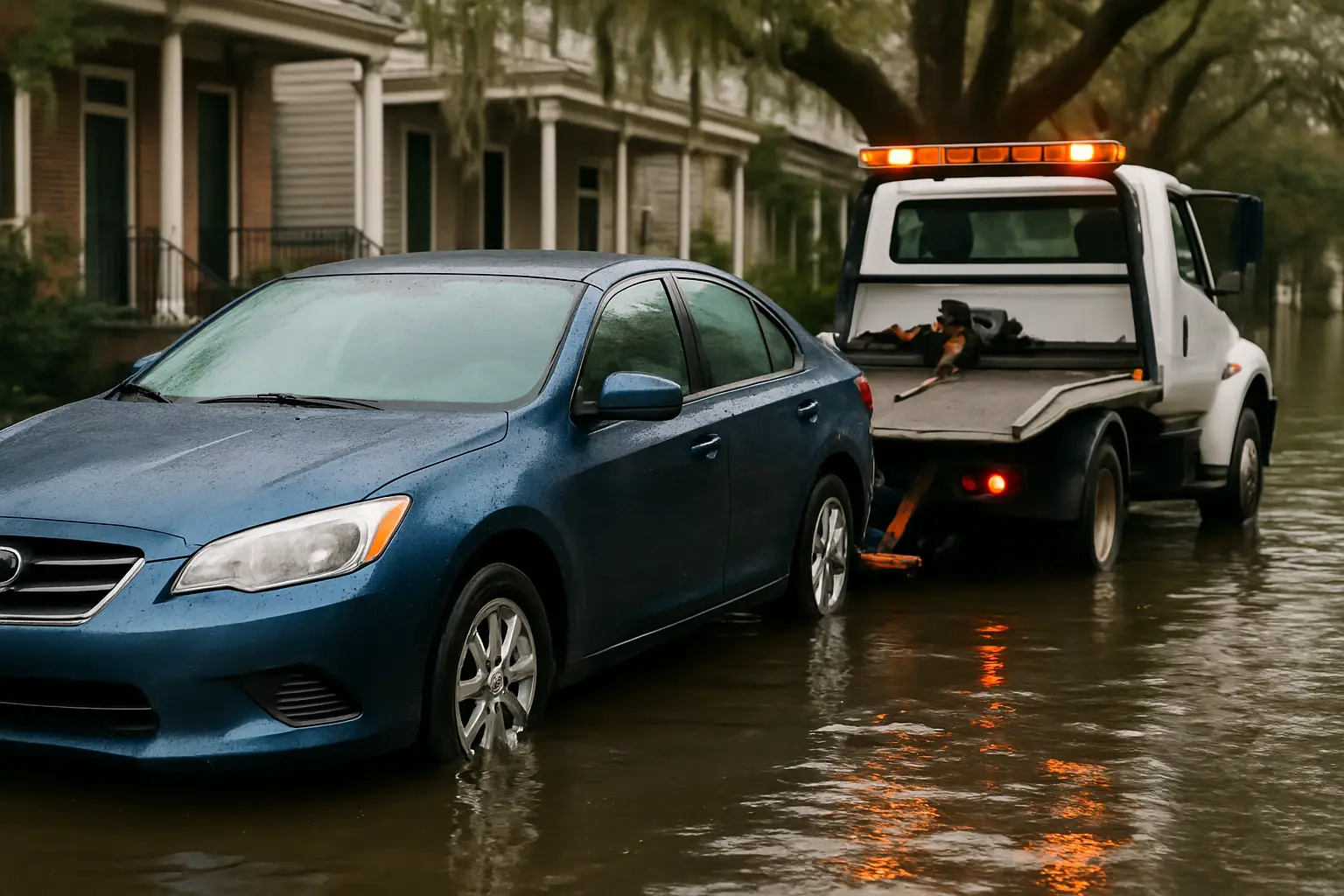
You step outside in New Orleans after a hard storm and the street looks like a canal. Your car is sitting lower than it should, waterline marks on the doors, and the inside smells like swamp. The worst move you can make right now is turning the key “just to see if it starts.” After flood water exposure, the goal is simple: prevent more damage, get the vehicle moved safely, and keep the next steps clean for insurance.
What makes flood towing different in New Orleans
Floodwater here is rarely clean. It is often a mix of rainwater, street runoff, brackish water, and whatever else the storm pushed around. That matters because water does not just “get things wet.” It carries grit and contaminants into bearings, brakes, electrical connectors, and undercarriage cavities. Even shallow water can cause expensive problems if it reaches wiring harnesses or the air intake.
Towing after flood water damage New Orleans drivers deal with is also different because conditions are messy. There may be downed lines, stalled vehicles blocking lanes, soft shoulders, and neighborhoods where a standard pickup angle can drag a car through water again. The tow method and how the operator approaches the vehicle can either protect what is left of it or make the situation worse.
First 10 minutes: what to do before you call a tow
If your vehicle has been in standing water, treat it like a “do not start” situation. Even if the water looks shallow, you do not know what reached the intake, the electrical system, or the transmission vent.
Do this first: move yourself and passengers to a safe, dry area and check for hazards around the vehicle. If there is any chance of electrical danger, or water is still rising, back off and call for help from a safe location.
Next, take quick photos. Capture the waterline on the exterior, the interior if it is wet, the dash if warning lights are on, and the license plate. If possible, take a wider photo that shows where the car is sitting and the surrounding water level. These pictures help with insurance and also help dispatch understand what equipment is needed.
Then leave the vehicle off. Do not try to “dry it out” by running the engine. Hydrolock can happen fast, and even if it cranks, water in the system can ruin sensors and electronics.
When you should not drive at all (even if it starts)
Some cars will start after flood exposure, especially if the water level stayed below the doors. That does not make driving a good idea. The risk is that you drive a few blocks and then the vehicle dies in a worse spot, or you cause damage that an adjuster later labels as avoidable.
If any of these are true, plan on towing instead of driving: the water reached the floorboards, the car stalled in water, the engine bay was submerged, the dash lit up like a Christmas tree, or the brakes feel soft or inconsistent. Also, if the vehicle was sitting in floodwater for more than a brief pass-through, corrosion starts working immediately.
The safest towing method after flood exposure
For flood-damaged vehicles, a flatbed tow is usually the safest move because it keeps the tires and drivetrain from turning and prevents additional water-contaminated friction from spreading through components. It also reduces the chance of dragging the vehicle through more water or mud while loading.
A wheel-lift tow can work in some situations, but it depends. If you have an all-wheel-drive vehicle or you cannot confirm the drivetrain is safe to roll, a flatbed is the better call. If the vehicle is stuck in a soft shoulder, ditch, or deeper water pocket, recovery equipment and careful winching may be needed before loading can even happen.
A professional operator will also pay attention to where the straps and hooks go. After flooding, undercarriage plastics can be loose, splash shields can be hanging, and there may be debris lodged under the car. The loading angle, tie-down points, and winch line placement all matter when your goal is damage prevention.
What to tell dispatch so the right truck shows up
Flood calls go smoother when dispatch has the right details. Start with your exact location and whether the vehicle is in a lane, driveway, parking lot, or shoulder. Then describe the water level in a clear way: “up to the bottom of the doors,” “halfway up the wheels,” or “it reached the seats.” Mention if the car stalled in the water or if it was parked and later flooded.
Also share vehicle basics: make, model, whether it is AWD/4WD, and any special considerations like low ground clearance or a locked steering wheel. If the car is in a garage or tight area, say that too. Access issues change the plan.
If you have a destination in mind, tell dispatch whether you want it delivered to your home, a body shop, or a repair facility that handles flood evaluations. If insurance is involved, ask if they have a preferred drop-off process.
What happens during a flood-damage tow
On arrival, the operator should do a quick visual assessment, focusing on access, safety hazards, and the best loading path. In flood conditions, operators often need to choose higher ground for the truck, use boards or traction aids, and keep the recovery as controlled as possible.
The vehicle should be loaded without starting it. If the car is in neutral electronically and the battery is compromised, there are ways to handle that safely. The goal is controlled movement, not improvisation that can break components.
Once on the bed, proper securement is key. Flood-soaked tires and brakes can behave differently, and a car with interior water can be heavier than normal. A careful tie-down prevents shifting during turns and stops, especially on uneven New Orleans roads after a storm.
Floodwater damage and insurance: towing choices that help your claim
Insurance companies tend to look for a clear timeline and evidence of what happened. That is why photos and a clean tow process matter. If you try to start the car repeatedly or drive it after it was flooded, you may accidentally add mechanical damage that complicates the claim.
It also helps to keep simple records: who towed it, when it was picked up, and where it was dropped off. If you have to leave the vehicle before the tow arrives, communicate with dispatch so the operator knows where the keys are, whether the car is locked, and any access instructions.
If your car was in a public area and needs to be moved quickly to avoid additional risk, towing sooner is usually better than later. Floodwater sitting in a vehicle accelerates mold growth and interior damage, and corrosion does not wait.
“It depends” situations: shallow water, hybrids, and older cars
Not every flood exposure is total loss, and not every car requires the exact same approach. If water only touched the tires and you did not drive through it, you may be dealing with minimal issues. But if you drove through water and felt a loss of power, you are in a higher-risk category even if the engine never fully died.
Hybrids and EVs bring extra caution. High-voltage systems are designed with safety in mind, but after flooding, you should avoid assuming everything is normal. Towing and inspection by qualified technicians is the safer path.
Older vehicles can be a mixed bag. They may have fewer sensitive electronics, but they also have more opportunities for water to enter through worn seals, and corrosion can spread fast.
Where to tow it: home, shop, or storage
The best destination depends on your situation. If you have insurance involved, you may want the vehicle delivered to an approved facility or a location your adjuster can access easily. If you are paying out of pocket and you have a trusted shop that understands flood assessment, towing directly there can speed up decisions.
Towing it home can be fine if you have a safe driveway and you are waiting on the next step, but keep in mind that a wet interior can turn into a mold problem quickly, especially in Louisiana humidity. If the vehicle is visibly wet inside, the clock is already running.
Getting help fast in Kenner and New Orleans
Flood situations create a surge in calls, and that is exactly when you want a towing company that can dispatch quickly and bring the right equipment the first time. If you need 24/7 towing or recovery in the Kenner and New Orleans area, Zain Towing LLC is set up for rapid response with trained operators and secure transport focused on damage prevention.
If you are calling during active flooding or right after the water drops, be ready to share your location, water level, vehicle type, and destination. Clear info helps dispatch match you with the correct truck and reduces delays.
A practical mindset after a flood: protect the vehicle you still have
Flood damage is stressful because it feels sudden and out of your control. The part you can control is what happens next. Do not start it, do not gamble on “one quick drive,” and do not let a rushed tow turn into extra damage. Get it moved safely, document what you can, and give yourself the best shot at a clean repair decision or an easier insurance process.
Need help right now?
Zain Towing runs 24/7 in Kenner, New Orleans, Metairie, Harahan and Gretna. Call (504) 666-9099 or see our towing service, roadside assistance and New Orleans pages.