Towing for All Wheel Drive Vehicles Safely
When an AWD vehicle breaks down, gets a flat, or ends up in a ditch, the wrong tow can turn one problem into a much bigger repair bill. That is why towing for all wheel drive vehicles has to be handled carefully from the first call. If you drive in Kenner or New Orleans and need help now, the safest move is to get a trained tow operator with the right equipment on the way.
Why towing for all wheel drive vehicles is different
All-wheel drive systems send power to all four wheels, either full-time or when the vehicle senses a loss of traction. That setup helps in rain, on uneven pavement, and during sudden road changes, but it also changes how the vehicle should be moved when it cannot drive under its own power.
With many AWD vehicles, the wheels are mechanically connected through the drivetrain. If one end of the vehicle is lifted and the other wheels stay on the road, drivetrain components can keep turning in ways they were not designed for during a tow. That can put stress on the transfer case, transmission, differential, or other parts. In plain terms, a quick tow done the wrong way can cause expensive damage.
That is the main reason flatbed towing is usually the preferred option. Keeping all four wheels off the ground is the safest method for many AWD models, especially when there is any uncertainty about the manufacturer requirements or the vehicle's condition after a breakdown or accident.
The safest method for towing for all wheel drive vehicles
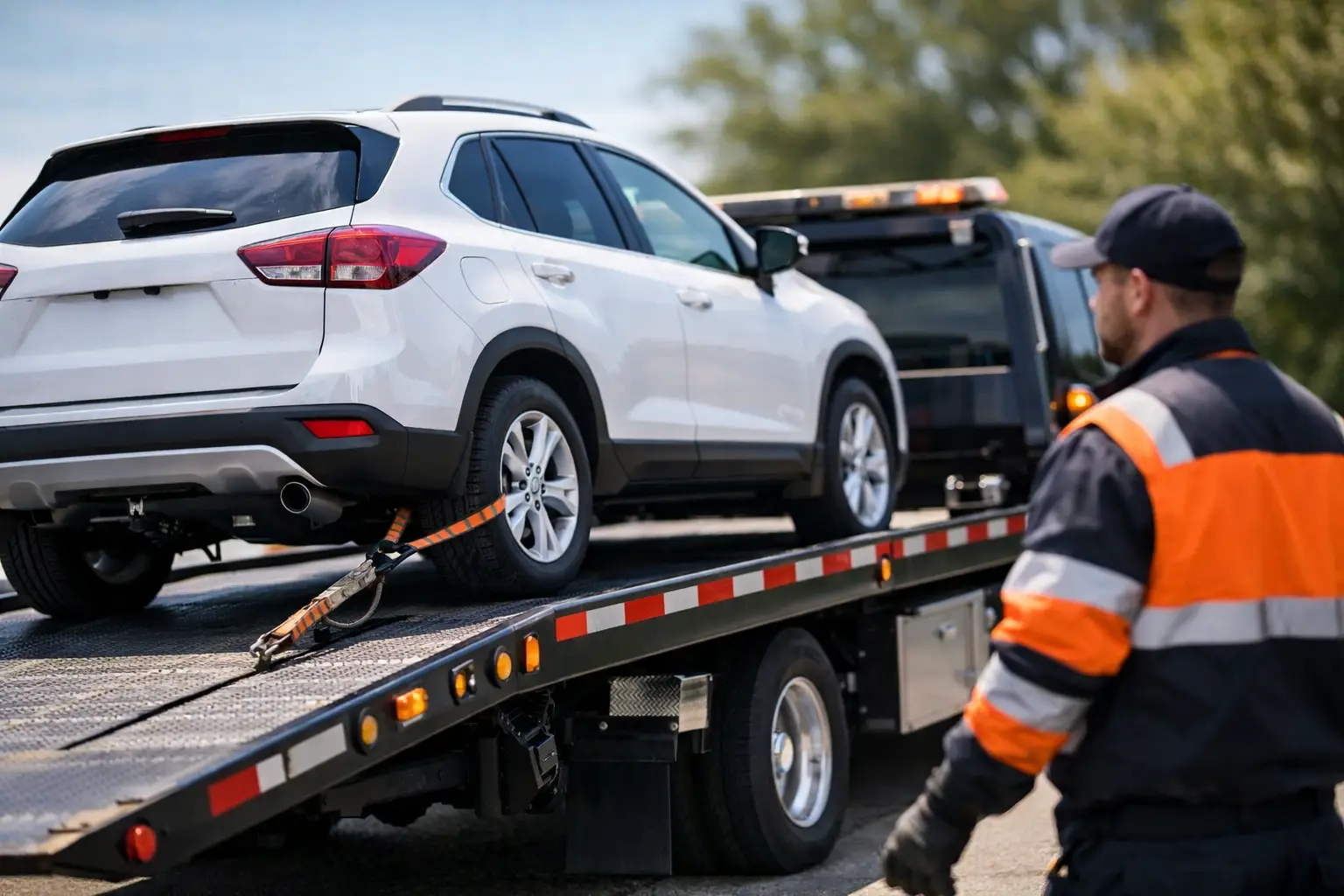
In most cases, a flatbed tow truck is the right answer. The vehicle is loaded fully onto the bed, secured at the proper tie-down points, and transported without the tires rolling on the road. This reduces the risk of drivetrain wear and avoids the guesswork that causes problems.
There are situations where tow dollies or wheel-lift methods may be discussed, but this is where details matter. Some AWD vehicles have very specific manufacturer instructions. Some can only be moved short distances in limited ways. Others should not be towed with any wheels on the ground at all. If the vehicle has collision damage, suspension damage, or a locked wheel, the safest plan becomes even more equipment-dependent.
For stranded drivers, the practical answer is simple. Do not assume every tow method is safe for your vehicle just because it is quick or cheap. Ask for an operator who understands AWD handling and can dispatch the right truck.
What can go wrong with the wrong tow
A lot of drivers do not think about towing until the moment they need it. That is normal. But with AWD vehicles, mistakes can get costly fast.
If an unqualified operator pulls an AWD vehicle with two wheels on the ground when the vehicle is not designed for it, the result may not be obvious right away. You might get the car home or to the shop, then later notice warning lights, driveline noise, rough shifting, or handling problems. In some cases, the damage shows up as overheating in the transfer case or internal wear that shortens the life of major components.
There is also the issue of physical handling. Improper winching, poor tie-down placement, and rushed loading can damage bumpers, underbody panels, wheels, or suspension parts. That is why licensed and insured towing matters. Training and equipment are not extras here. They are part of protecting the vehicle during a stressful situation.
When you should call for professional AWD towing
Some towing calls are obvious after an accident or a complete breakdown. Others are less clear, and drivers try to push through when they should stop.
If your AWD vehicle has a warning light related to the drivetrain, transmission, or traction system and the vehicle is not moving normally, it is smart to avoid forcing it. The same goes for severe tire damage, steering issues, or any condition where one wheel may not rotate freely. Trying to limp it down the road can make the problem worse before a tow truck even arrives.
You should also call for professional towing if the vehicle is stuck in mud, a soft shoulder, standing water, or a ditch. AWD helps with traction, but it does not make a vehicle immune to getting stuck, and aggressive attempts to self-recover can create underbody damage or worsen the recovery angle. A trained operator can assess the safest pull and loading method instead of turning a recovery into a repair job.
What to tell dispatch when your AWD vehicle needs a tow
A fast response starts with clear information. When you call, say that the vehicle is all-wheel drive right away. That helps dispatch send the proper truck and avoid delays.
It also helps to share the year, make, and model, your exact location, whether the vehicle starts, and whether it has crash damage, a flat tire, or is stuck off-road. If you are in traffic or in an unsafe area, mention that first. The operator needs to know both what kind of tow is required and whether there is an urgent roadside hazard.
If you know your owner's manual has towing instructions, mention that too. If not, do not worry. A professional towing company should already understand that AWD vehicles require extra care and should approach the job accordingly.
Flatbed towing and peace of mind
For most drivers, the real benefit of flatbed towing is not just technical safety. It is peace of mind during a moment when everything already feels off schedule and expensive.
When your vehicle is fully loaded onto a flatbed, secured correctly, and handled by trained operators, there is less risk of avoidable drivetrain damage during transport. That matters whether you are sending the vehicle to a repair shop, your home, a dealership, or another city.
This is especially important for newer SUVs, crossovers, luxury vehicles, and performance models with advanced AWD systems. Those drivetrains are often more complex, more expensive to repair, and less forgiving of improper towing methods.
Local conditions make fast, proper towing matter
In the Kenner and New Orleans area, drivers deal with heavy traffic, sudden weather changes, flooded streets, construction zones, and tight roadside spaces. Those conditions can make a bad towing decision even worse.
If your AWD vehicle is disabled on a busy road or shoulder, speed matters, but so does sending the correct equipment the first time. A fast arrival only helps if the truck can safely transport the vehicle without creating more damage. That is why experienced dispatch and trained operators matter as much as the tow truck itself.
For local drivers, commuters, families, and travelers passing through, the goal is simple: get the vehicle out of danger, get it moved safely, and keep the situation from getting more expensive than it already is.
Choosing the right towing company for an AWD vehicle
Not every towing call is the same, and not every vehicle should be handled the same way. When you need help with an AWD vehicle, look for a company that is licensed and insured, available 24/7, and equipped for flatbed towing and recovery. Ask whether they handle all-wheel drive vehicles regularly. That question matters.
You also want a company that can respond quickly, explain the process clearly, and transport the vehicle securely to the destination you choose. Whether you are dealing with a breakdown, accident, roadside issue, or planned transport, the right tow should reduce stress, not add to it.
That is the standard at Zain Towing LLC - fast dispatch, professional operators, and safe handling designed to protect your vehicle from pickup to drop-off. If your AWD vehicle is stranded and you need help now, call for service right away or request a quote at https://zaintowing.net/.
One smart move can save a major repair
AWD vehicles give drivers confidence on the road, but they demand more care when they have to be towed. If there is any doubt, do not gamble on a quick hookup and hope for the best. Getting the right truck and the right operator from the start is often the difference between a routine tow and a costly drivetrain repair.
Need help right now?
Zain Towing runs 24/7 in Kenner, New Orleans, Metairie, Harahan and Gretna. Call (504) 666-9099 or see our towing service, roadside assistance and New Orleans pages.