Towing for Lowered Cars and Body Kits
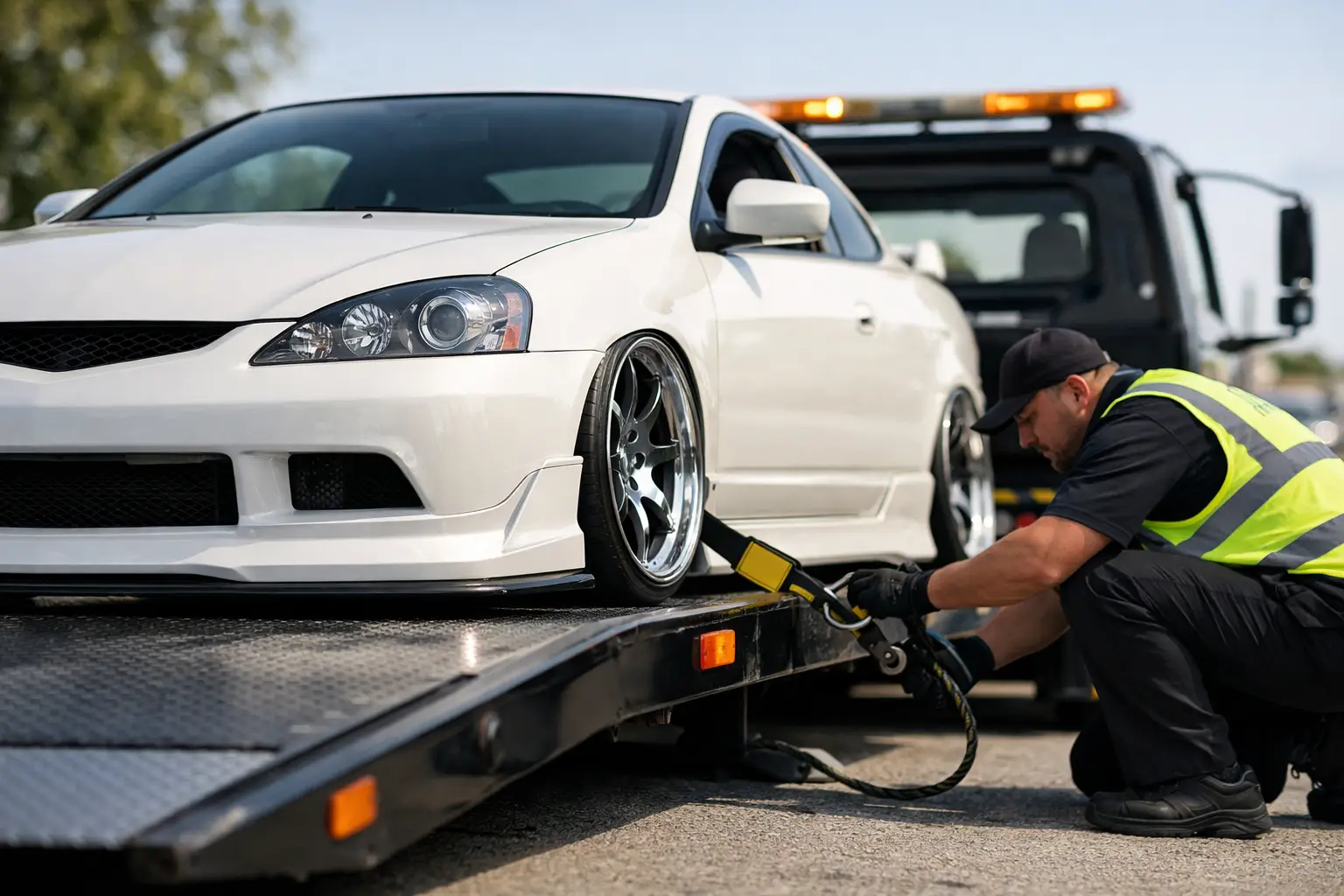
A lowered car can look perfect in the driveway and become a problem the second it needs a tow. If your front bumper sits inches from the ground or your side skirts and lip kit leave almost no clearance, the wrong truck or loading angle can crack, scrape, or pull parts loose fast. That is why towing for lowered cars and body kits is not standard towing - it takes the right equipment, the right approach, and an operator who knows how to load low-clearance vehicles without causing more damage.
Why lowered vehicles need a different towing approach
Most towing damage on modified cars happens before the vehicle is even fully on the truck. The issue is simple: approach angle. A standard rollback or wheel-lift setup may work fine for a stock sedan, but a lowered car has less room between the ground and the bumper, splitter, exhaust, and side skirts.
If the ramp angle is too steep, the front end scrapes. If the operator pulls too quickly, the car can hang up at the bumper or midsection. If tie-down points are chosen carelessly, straps can press against aftermarket body parts, suspension components, or wheels in the wrong way.
That risk gets even higher after a breakdown or accident. A flat tire, suspension failure, or collision damage can reduce clearance even more. What looked towable a minute ago may need a slower, more controlled load than usual.
Towing for lowered cars and body kits starts with the right truck
For low-clearance vehicles, flatbed towing is usually the safest option. It keeps all four wheels off the road and gives the operator more control during loading, transport, and unloading. That matters for cars with front lips, side skirts, diffusers, aftermarket bumpers, coilovers, air suspension, or custom wheel setups.
Just as important as the truck is the loading equipment. Extended ramps, wood planks, ramp skids, and careful winching can reduce the angle enough to protect the front end. In some cases, the driver may need to approach at a slight angle or use extra clearance tools to avoid contact.
This is where experience matters. Not every tow call is the same, and not every lowered vehicle sits the same way. A car with a mild drop and stock bumper is one job. A vehicle with a deep front splitter and body kit is another. Safe towing depends on reading the setup before loading starts.
What can go wrong with improper towing
When a low car is handled like a standard car, damage adds up quickly. The most common issue is scraping on the front bumper or lip, but that is far from the only concern.
Body kits can crack at mounting points. Side skirts can catch while the vehicle transitions from pavement to ramp. Rear bumpers can drag on unload if the angle is not managed both ways. On some cars, underbody panels, exhaust components, and even oil pans are exposed to contact if the operator is not careful.
There is also the suspension and wheel factor. Lowered cars often have stiffer suspension, wider wheels, lower-profile tires, and less tolerance for rough handling. If the vehicle is secured incorrectly, straps can rub painted wheels or shift against custom parts during transport.
That is why cheap, rushed towing usually costs more in the end. Saving a few dollars is not worth replacing a bumper, lip kit, or side skirt.
What to tell dispatch before the truck arrives
If you drive a lowered vehicle, the best thing you can do is give clear information upfront. Tell dispatch that the car is lowered and mention any body kit parts that sit especially low. If the car has air suspension, say whether it can still raise. If one tire is flat, a wheel is damaged, or the car was hit, say that too.
Photos help when available, but even a quick description can make a big difference. Let the company know if the car has a front splitter, side skirts, custom bumper, or unusually low exhaust. That allows the right truck and equipment to be sent from the start instead of figuring it out after arrival.
For drivers in the Kenner and New Orleans area, this matters during busy hours, storms, and late-night breakdowns when every minute counts. The more accurate the dispatch details, the faster the operator can load safely and get you moving.
How professional operators protect body kits and low-clearance cars
A trained operator does more than hook up and pull. First, they check ride height, front and rear overhang, wheel condition, and any existing damage. Then they plan the loading path. Sometimes the safest move is straight on. Sometimes a slight angle reduces risk. Sometimes extra ramp support is needed before the winch starts pulling.
Controlled winching is a big part of safe loading. Instead of forcing the car up quickly, the operator brings it on slowly and watches every transition point. That includes the first bumper approach, the breakover point in the middle, and the rear angle as the car settles onto the bed.
Securement also matters. A professional tow operator avoids unnecessary contact with body kit components and uses proper tie-down methods for the vehicle type. The goal is simple: no scraping, no shifting, no surprises on delivery.
Flatbed vs. wheel-lift for lowered cars
In most situations, flatbed towing is the better choice for lowered vehicles. It gives better clearance control and keeps the car fully supported during transport. For show cars, performance cars, custom imports, and any vehicle with expensive body modifications, that is usually the standard.
A wheel-lift may be usable in limited situations, but it depends on the vehicle’s height, damage condition, and tow distance. If clearance is extremely tight, wheel-lift towing can create too much risk at the bumper, valance, or undercarriage. That is why the safe answer is often the more cautious one.
If your car is low enough that you are worried about speed bumps, you should be just as cautious about what type of tow you accept.
When emergency towing gets more complicated
Breakdowns rarely happen in ideal places. A lowered car may be stuck in a parking garage entrance, angled driveway, shoulder lane, or street with uneven pavement. Those details change the loading plan.
A dead battery might seem simple, but if the car is parked nose-down on a slope with a front lip inches from the pavement, loading still requires care. After an accident, suspension damage can make the vehicle sit lower on one side, which raises the chance of scraping during recovery. Even a basic roadside move can become a precision job.
That is why fast response should not mean rushed handling. You want a company that can get there quickly and still take the extra minute to load the vehicle the right way.
Choosing a towing company for a lowered car
If you own a lowered vehicle, ask direct questions. Do they offer flatbed towing? Have they handled lowered cars and body kits before? Are they licensed and insured? Can they dispatch the right truck without guessing? Those answers matter more than a vague promise to “be careful.”
A dependable company should be able to explain the plan clearly and set expectations before loading begins. That is especially important if your car is modified, your suspension is damaged, or the pickup location is tight.
In the Kenner and New Orleans area, Zain Towing LLC provides 24/7 towing with trained operators, professional equipment, and secure transport for vehicles that need extra care. When the goal is damage prevention, the right dispatch and the right truck make all the difference.
What to do while you wait for the tow truck
If the vehicle is in a safe location, do not try to force it onto improvised ramps or move it farther than necessary. Avoid adding more risk to the bumper or undercarriage. If the car has adjustable suspension and it still functions, raise it only if doing so is safe and normal for your setup.
Have your destination ready, remove loose items near low body parts if needed, and be prepared to point out any especially fragile areas when the operator arrives. A quick conversation at pickup can prevent expensive mistakes.
Lowered cars get attention for how they sit on the road. When they need a tow, that same low stance needs attention from the first minute of the job to the last. If your vehicle has limited clearance, ask for a towing company that treats it that way before the loading even starts.
Need help right now?
Zain Towing runs 24/7 in Kenner, New Orleans, Metairie, Harahan and Gretna. Call (504) 666-9099 or see our towing service, roadside assistance and New Orleans pages.