
What Does Roadside Assistance Cover in New Orleans?
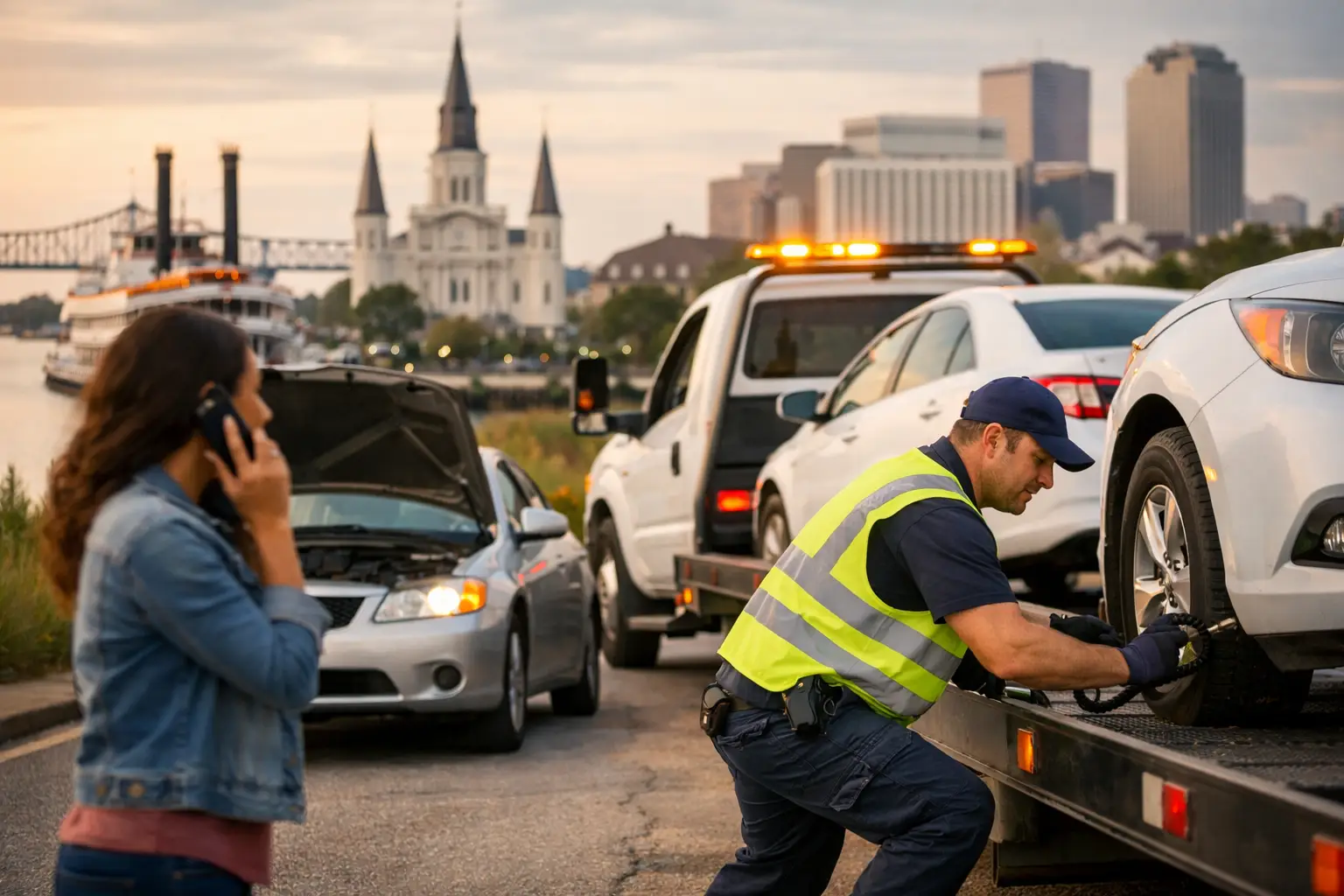
A dead battery in a grocery store lot, a flat on I-10, or keys locked inside your car can stop your day fast. So, what does roadside assistance cover? Usually, it covers the on-the-spot help needed to make a disabled vehicle safe, mobile, or ready for transport. The exact service depends on the problem, your vehicle, and whether a quick repair is safe to attempt.
For drivers in Kenner and the New Orleans area, the goal is simple: get help dispatched quickly, avoid additional vehicle damage, and make the right call between roadside service and towing. A trained operator can assess the situation when they arrive and provide practical next steps without leaving you stranded.
What roadside assistance typically covers
Roadside assistance is designed for common, unexpected vehicle problems that can often be handled where the vehicle sits. It is not a replacement for a full repair shop visit, but it can solve a minor issue or get your vehicle to a safe location for repairs.
Jump-starts for dead batteries
A jump-start is one of the most common roadside calls. Headlights left on, a weak battery, extreme heat, corroded battery terminals, or a charging-system issue can all leave a vehicle unable to start.
A roadside operator can use proper equipment to jump-start your car, truck, SUV, motorcycle, or other eligible vehicle. If it starts, you may be able to drive to a nearby shop or home. But if the vehicle dies again, a battery, alternator, or electrical problem may be involved. In that case, towing is usually the safer choice than repeatedly trying to jump-start it.
Flat tire help
Roadside tire service generally means installing your usable spare tire. The operator will check that the spare is accessible and suitable to install, then safely change the damaged tire when conditions allow.
There are limits. A roadside provider usually cannot mount a new tire, repair a sidewall blowout, or supply a replacement tire at the scene. If you do not have a spare, the spare is flat, wheel damage is present, or your vehicle has a tire setup that cannot be safely serviced roadside, your vehicle may need a tow to a tire shop.
Lockout service
Lockouts happen to careful drivers every day. Roadside lockout assistance uses professional entry tools and techniques to help regain access without breaking a window or damaging the door.
Modern vehicles can be more complicated than older models. Some have advanced security systems, electronic keys, or locks that require a specific approach. A professional operator will use the safest available method and explain if dealership or locksmith support is needed for key programming or replacement.
Fuel delivery
Running out of gas is stressful, especially on a busy road, during bad weather, or late at night. Fuel delivery brings a limited amount of fuel so you can reach the nearest gas station. It is meant to get you moving again, not fill the tank.
Before calling, confirm the vehicle is actually out of fuel. A faulty fuel gauge, ignition issue, or mechanical problem can look similar. If fuel is delivered and the vehicle still will not start, the next step may be a tow and diagnostic service.
Minor roadside help
Some situations call for basic assistance beyond a jump-start, tire change, lockout, or fuel delivery. This may include checking an obvious issue, helping move a vehicle out of an immediate hazard when possible, or determining that a tow truck is needed.
The key word is minor. Roadside crews are there to provide safe emergency support, not perform extensive mechanical repairs in traffic, on a narrow shoulder, or in a flooded area. Conditions matter as much as the mechanical issue.
What roadside assistance may not cover
Coverage is not the same with every provider, motor club, insurance plan, or vehicle warranty. A service plan may include a set number of calls per year, a mileage limit for towing, or limits on labor, fuel, and specialty equipment. Independent roadside service is typically quoted based on your location, vehicle, and the work required.
Roadside help may not include replacement parts, a new battery, tire purchases, repairs requiring a shop, key cutting or programming, accident repairs, or extended towing beyond a plan's mileage allowance. Charges may also change when a vehicle is unusually difficult to access, parked in a garage with low clearance, heavily loaded, or requires recovery equipment.
For example, a simple passenger-car lockout is different from opening a commercial van with specialized locks. Changing a tire in a safe parking lot is different from assisting a vehicle on an active interstate shoulder. Ask what is included before service begins so there are no surprises.
When roadside service should become a tow
Not every disabled vehicle should be driven after roadside help. If there is smoke, a fuel smell, overheating, leaking fluids, steering trouble, brake problems, severe tire damage, or warning lights that affect safe operation, do not try to push your luck. Request a tow.
The same applies after a collision, even when the vehicle appears drivable. Damage underneath the vehicle, a bent wheel, a compromised cooling system, or a loose bumper can become worse once the vehicle is moving. A flatbed tow may be the best option for low-clearance vehicles, all-wheel-drive vehicles, motorcycles, vehicles with significant damage, or any vehicle that needs extra protection during transport.
Zain Towing LLC can dispatch 24/7 roadside assistance or the appropriate light- or medium-duty tow truck based on your location and vehicle needs. The right equipment helps protect your vehicle and gets it moving toward a repair shop, home, or another destination with less risk of additional damage.
How to make a roadside call go faster
The fastest way to get the right help is to provide clear information from the start. Tell dispatch your exact location, including nearby cross streets, mile markers, business names, or landmarks. If you are on a highway, share the direction of travel and which side of the road you are on.
Describe the vehicle by year, make, model, color, and whether it is a car, SUV, truck, motorcycle, RV, or another type of vehicle. Then explain what happened: flat tire, keys locked inside, no-start condition, empty tank, collision, or mechanical issue. Mention anything that affects access, such as a parking garage, a blocked driveway, a wheel that will not roll, or a vehicle in mud or standing water.
While waiting, move to a safe area if you can do so without crossing traffic. Turn on hazard lights. Keep children and passengers away from the roadway, and do not stand between your vehicle and moving traffic. On a busy highway or bridge, personal safety comes before trying to inspect the problem yourself.
A quick decision guide for stranded drivers
Call for roadside assistance when the issue is likely simple and your vehicle is otherwise safe: a dead battery, accessible spare tire, lockout, or empty fuel tank. Call for a tow when the problem could damage the vehicle, make it unsafe to drive, or cannot be fixed at the roadside.
If you are unsure, describe the symptoms honestly and let dispatch send the service that fits the situation. A few accurate details before the truck rolls can save time, prevent an unnecessary second dispatch, and help protect your vehicle.
When your vehicle lets you down, focus on getting yourself to a safe spot and getting professional help on the way. Fast, careful roadside service can solve the small problems, while secure towing gives bigger problems the attention they require.
Need help right now?
Zain Towing runs 24/7 in Kenner, New Orleans, Metairie, Harahan and Gretna. Call (504) 666-9099 or see our towing service, roadside assistance and New Orleans pages.