What to Expect During an Accident Tow
The crash itself happens fast. The part after it can feel slow, confusing, and hard to follow - especially if your vehicle is disabled, traffic is building, and multiple people are giving instructions at once.
That is why it helps to know what happens during an accident scene tow before you ever need one. When you understand the process, you can make better decisions, avoid extra stress, and help protect your vehicle from further damage.
What happens during an accident scene tow at the roadside
An accident scene tow starts with safety, not the truck hookup. If police, fire, or EMS are on site, the tow operator usually waits until the scene is secure and the vehicle is cleared to move. That matters because a damaged vehicle may be leaking fluid, blocking lanes, or sitting in a dangerous position.
Once the tow company is dispatched, the operator arrives with the truck type that best fits the situation. In many accident calls, that means a flatbed because it keeps all four wheels off the ground and gives better control for damaged vehicles. In other cases, a wheel-lift or recovery setup may be used first if the vehicle is in a ditch, against a curb, or wedged in a way that makes a standard load impossible.
The operator will assess the vehicle before touching it. They are looking at tire condition, suspension damage, steering problems, fluid leaks, body damage, and whether the car can roll freely. This first inspection helps determine the safest way to recover and transport it.
The scene has to be cleared before the vehicle moves
A lot of drivers assume the tow starts the moment the truck pulls up. Usually, it does not. If law enforcement is investigating the crash, taking statements, or documenting vehicle positions, the tow may be delayed for good reason.
The tow operator may coordinate directly with the officer on scene to confirm when the vehicle can be removed and where it should go. If the car is evidence in a serious crash, there may be different handling requirements. If it is a routine collision, the goal is often to clear the roadway as quickly and safely as possible.
This is one of those situations where speed matters, but so does control. Rushing a damaged vehicle off the road without proper clearance can create bigger problems.
How the vehicle is recovered and loaded
This is the part most people picture when they think about an accident tow. But recovery and loading are not one-size-fits-all.
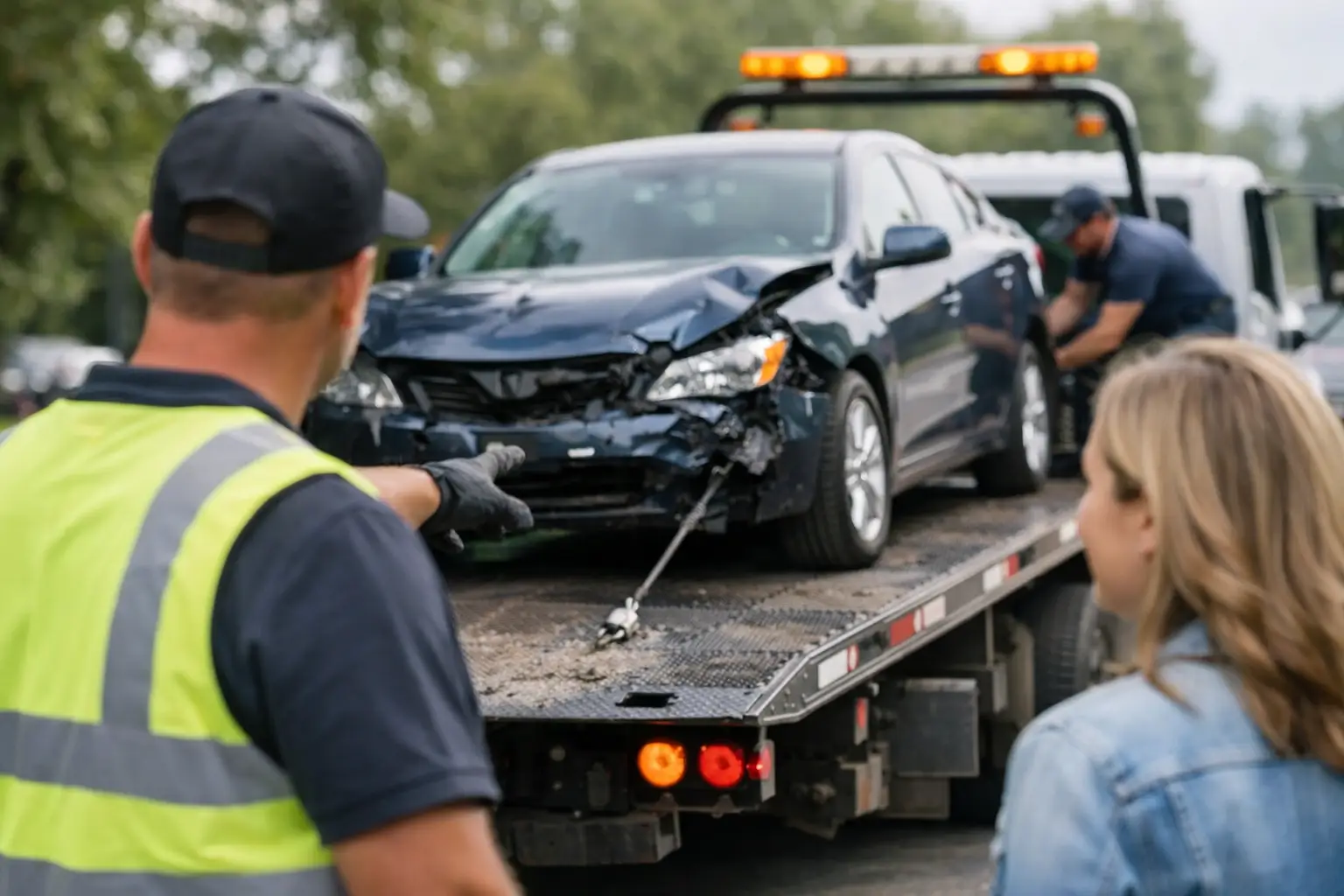
If the vehicle is upright and accessible, the operator may winch it onto a flatbed. That allows controlled movement, which is especially important when the car has front-end damage, bent wheels, or deployed airbags. If the vehicle cannot roll normally, skates or dollies may be used to reduce drag and prevent more damage during loading.
If the vehicle is off the road, stuck in mud, or resting at an awkward angle, recovery comes first. That may involve careful repositioning, stabilization, and pulling the vehicle to a safer loading point. A trained operator will avoid sudden force whenever possible because damaged parts can shift quickly.
For motorcycles, SUVs, pickup trucks, and medium-duty vehicles, equipment choice matters even more. Weight, clearance, and damage points all affect how the vehicle should be secured.
Damage prevention is a big part of the job
A professional accident tow is not just about moving a vehicle. It is about moving it without making a bad situation worse.
That means choosing proper tie-down points, avoiding contact with damaged panels when possible, checking whether bumpers or undercarriage parts are loose, and watching for fluid leaks during the load. If a wheel is broken, the operator may need to change the loading angle or use extra equipment to keep the vehicle stable.
This is also why licensed and insured towing matters. Accident scenes are unpredictable. A trained operator knows how to handle damaged vehicles, work around traffic hazards, and transport the vehicle securely from pickup to drop-off.
What you may be asked at the scene
If you are able to speak with the tow operator, expect a few direct questions. They may ask where the vehicle is going, whether you need a body shop or storage lot, whether the car is front-wheel, rear-wheel, or all-wheel drive, and whether there are mechanical issues beyond the visible crash damage.
You may also be asked to remove valuables and personal items before transport. That is smart to do whenever it is safe. Phones, wallets, bags, paperwork, and medication should not stay in the vehicle if you can help it.
If the car is not drivable but you want it taken to a repair facility instead of a tow yard, say that early. In some situations, the destination can be decided on scene. In others, police procedures, insurance instructions, or crash severity may affect where the vehicle goes first.
Where the vehicle goes after the accident tow
After an accident, your vehicle usually goes to one of three places: your home, a repair shop, or a storage facility. The right destination depends on the damage, your insurance process, and whether the car is safe to release.
If the damage is minor and you already know your repair plan, direct transport to a body shop may save time. If the damage is severe or the insurer needs to inspect the vehicle first, storage may be the better option. In a more urgent roadway clearance situation, the nearest secure lot may be the fastest and safest destination.
This is where clear communication helps. A good dispatcher and operator should tell you what options are available and what happens next.
Insurance, payment, and paperwork
People often focus on the vehicle and forget the paperwork until later. That can create headaches.
Depending on the situation, you may need to authorize the tow, confirm the drop-off location, provide identification, and get a receipt or service record. If your insurer covers towing after an accident, keep all paperwork. If law enforcement ordered the tow, ask where the vehicle is being taken and how to retrieve it.
Some drivers assume insurance automatically handles everything at the scene. Sometimes that happens. Sometimes it does not. Coverage depends on your policy, who requested the tow, and whether the tow is considered emergency recovery, roadside transport, or post-accident storage.
If you are unsure, ask two basic questions right away: where is the vehicle going, and who is paying for this part of the process right now.
What happens during an accident scene tow if the vehicle is badly damaged
Severe damage changes the process. A vehicle with broken axles, collapsed suspension, locked wheels, or major front-end impact may need extra time and specialized handling. If airbags have deployed and the battery system is compromised, the operator may also take additional safety precautions before transport.
For electric vehicles and hybrids, accident towing can be even more specific. Battery damage, high-voltage systems, and manufacturer transport guidance may affect how the vehicle is handled and where it can be stored. That is not something to guess about at the roadside.
The same applies to larger vehicles like work trucks, vans, or loaded SUVs. Weight distribution and recovery angles matter. The fastest-looking option is not always the safest one.
What you should do while the tow is happening
If you are not injured and authorities have not told you otherwise, stay clear of the loading area. Let the operator work. Damaged vehicles can shift unexpectedly, and traffic around the scene may still be moving too close for comfort.
Use that time to call a family member, take photos if needed, gather your belongings, and confirm the destination. If you need fast local help in Kenner or New Orleans, https://zaintowing.net/ provides 24/7 dispatch for accident towing and recovery.
Most of all, do not feel pressured to pretend you understand every step. Ask simple, direct questions. A professional tow operator should be able to explain what they are doing and why.
The real goal of an accident tow
At an accident scene, the tow truck is there to do more than remove a vehicle from the road. The real job is to protect the scene, prevent further damage, and get your vehicle where it needs to go with as little added stress as possible.
When the process is handled correctly, it feels organized even in a bad moment. You get a safe recovery, secure transport, and clear next steps - which is exactly what you want when everything else has already gone sideways.
If you ever need one, the best accident tow is the one that shows up fast, handles your vehicle carefully, and gives you a straight answer about what happens next.
Need help right now?
Zain Towing runs 24/7 in Kenner, New Orleans, Metairie, Harahan and Gretna. Call (504) 666-9099 or see our towing service, roadside assistance and New Orleans pages.