Wheel Lift Versus Flatbed Transport Explained
A tow truck is on the way, but the type of truck matters more than many drivers realize. In the wheel lift versus flatbed transport decision, the right choice depends on your vehicle, its condition, where it is parked, and how far it needs to go. Both methods are professional towing options when used correctly. The goal is simple: get your vehicle loaded securely, prevent further damage, and deliver it where it needs to be.
For drivers in Kenner and New Orleans, the quickest safe option may be different after an accident on I-10 than it is for a dead battery in a tight apartment lot. A trained operator evaluates the situation before loading, then uses the equipment that fits the vehicle and recovery conditions.
What Wheel Lift Towing Is Best For
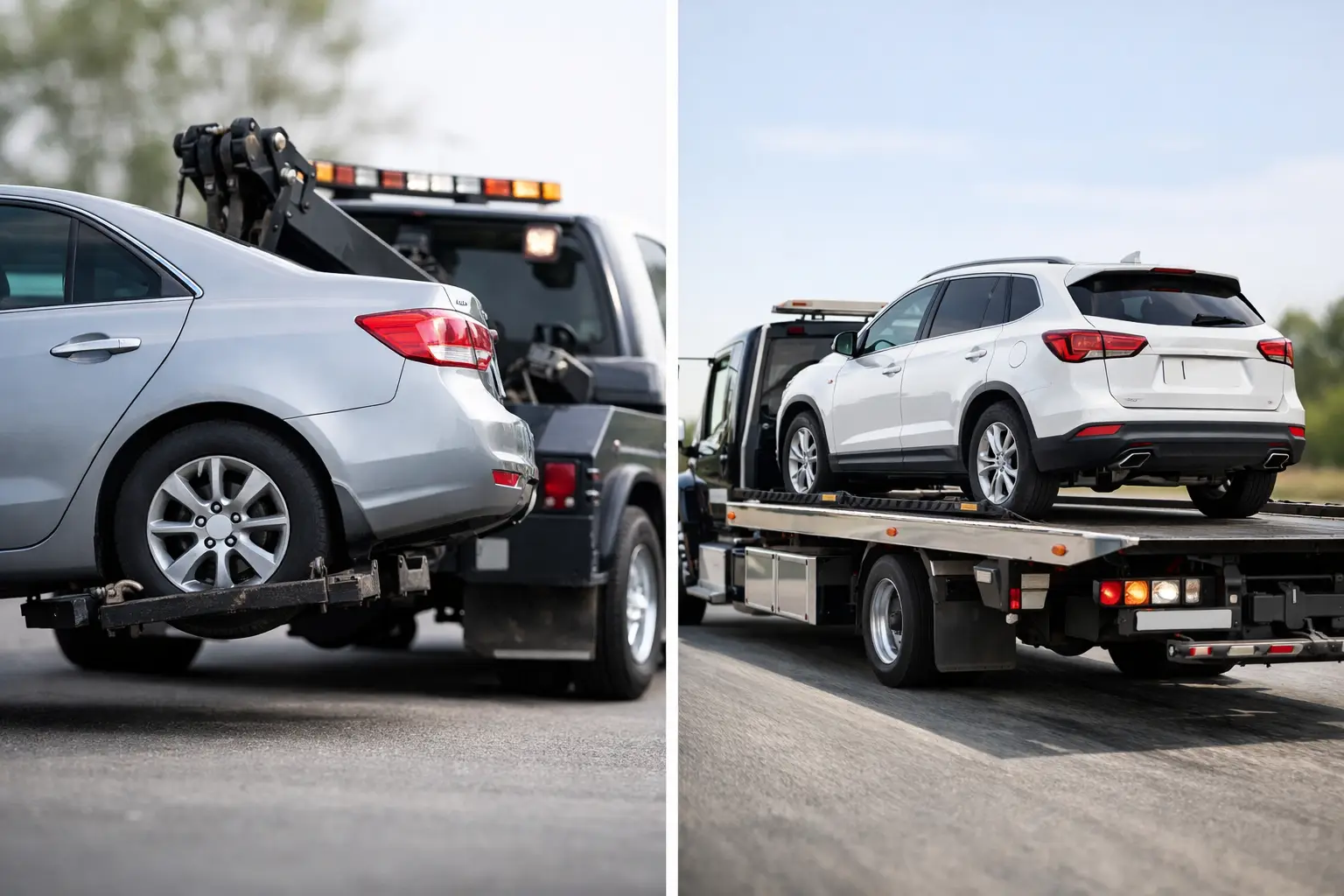
A wheel lift tow truck uses a metal yoke that slides under two tires, usually the front or rear tires. The lifted end rides above the road while the opposite end rolls behind the truck. Modern wheel lifts are designed to contact the tires rather than hook onto a bumper, axle, or frame the way older towing methods sometimes did.
Wheel lift towing is often a practical choice for standard front-wheel-drive or rear-wheel-drive cars, SUVs, and light trucks when the undriven wheels can safely remain on the road. It is especially useful when a vehicle is parked in a cramped garage, narrow street, or busy lot where a flatbed may not have enough room to line up and load.
Speed and access are major advantages. When the vehicle is operable enough to position safely and the drivetrain allows it, a wheel lift can be loaded efficiently. That can help reduce roadside exposure when traffic is moving fast or a breakdown is blocking a lane.
Wheel lift service can also be a cost-conscious option for short local tows. The truck setup is efficient, and loading may take less space than a full flatbed operation. Still, lower cost should never be the only factor. The vehicle's drivetrain, damage, clearance, and condition always come first.
When a Wheel Lift May Not Be the Right Call
A wheel lift is not automatically suitable for every car. All-wheel-drive and four-wheel-drive vehicles often need all four tires off the ground unless the manufacturer specifically permits another towing method. Towing these vehicles incorrectly can damage the transmission, transfer case, drivetrain, or differential.
The same caution applies when the vehicle has serious suspension damage, locked wheels, severe tire damage, or accident damage that makes it unsafe to roll. A vehicle that cannot be shifted into neutral, has a compromised axle, or is sitting unusually low may also require a flatbed or specialized recovery approach. Your tow operator should ask about these conditions before dispatch whenever possible.
Wheel Lift Versus Flatbed Transport: The Main Difference
Flatbed transport carries the entire vehicle on a level truck bed. The operator lowers or tilts the bed, loads the vehicle using a winch or by driving it on when safe, secures it at multiple points, and raises the bed for transport. None of the vehicle's tires remain in contact with the road during the tow.
That full support is the biggest difference in wheel lift versus flatbed transport. With a wheel lift, two tires generally roll during transit. With a flatbed, the entire vehicle rides above the road. This makes flatbed towing the preferred choice for many vehicles with drivetrain restrictions, extensive damage, low ground clearance, or added value.
Flatbed service is commonly recommended for all-wheel-drive vehicles, many luxury cars, classic cars, motorcycles, electric vehicles, and vehicles that have been in an accident. It is also a strong option for long-distance transport because it eliminates road contact, tire wear, and exposure from rolling behind the tow truck.
That does not mean every vehicle needs a flatbed. A properly matched wheel lift tow is safe and effective for many local situations. The best method is the one that follows the vehicle manufacturer's towing guidance and accounts for the real conditions at pickup.
When Flatbed Towing Gives You More Protection
Flatbed towing is often the safer answer when there is any doubt about whether a vehicle can roll. If a collision has damaged steering, suspension, wheels, or the underside of the car, loading it fully onto a bed reduces the risk of creating more problems on the way to a repair shop.
It is also valuable for vehicles with low front bumpers, lowered suspensions, specialty bodywork, or limited ground clearance. Professional operators use the right loading angle, winching technique, and securement process to avoid scraping or putting unnecessary strain on the vehicle. This matters for sports cars, custom vehicles, and newer cars with sensitive components under the body.
For a non-running vehicle, flatbed loading provides control. The operator can winch the vehicle onto the bed rather than relying on it to drive, steer, or roll normally. If the car is parked in a difficult position, the operator may need additional recovery equipment or a different approach, but flatbed transport is often still the final transport method.
Long-distance moves are another common reason to request a flatbed. Whether you are taking a vehicle to another city, moving a project car, or transporting a vehicle that should not accumulate mileage, keeping all four wheels off the pavement offers added peace of mind.
How to Choose the Right Tow for Your Vehicle
You do not need to be a towing expert before calling for help. Give dispatch clear information so the right truck can be sent the first time. Start with the year, make, model, and whether the vehicle is front-wheel drive, rear-wheel drive, all-wheel drive, or four-wheel drive if you know it.
Then explain what happened. Tell the dispatcher if the vehicle was in an accident, has a flat tire, will not shift into neutral, has locked wheels, sits low, leaks fluids, or will not start. Mention your exact location, including parking garage restrictions, narrow driveways, or traffic hazards. These details help determine whether wheel lift towing, flatbed towing, or recovery equipment is needed.
If you are unsure about the drivetrain, say so. Do not guess. Many drivers do not know whether their SUV is all-wheel drive, and that is completely normal. A professional towing company can verify the vehicle requirements and choose a safe loading plan.
Questions Worth Asking Before Dispatch
When you need a tow, ask whether the provider has the right equipment for your vehicle and whether flatbed service is available if needed. You can also ask for an estimated arrival time, pricing information, and whether the company is licensed and insured.
The operator should not rush past the inspection step. Before transport, they should check the vehicle's condition, assess access and traffic conditions, use proper securement, and confirm the destination. Fast response matters, but safe handling matters just as much.
What Affects Towing Cost and Arrival Time
The towing method can affect price, but it is only one part of the estimate. Distance, vehicle size, condition, pickup location, recovery difficulty, time of day, and destination all matter. A flatbed may cost more in some cases because of equipment and loading requirements, while a wheel lift can be more efficient for a straightforward local tow.
A difficult recovery may require more than either standard method. For example, a vehicle stuck in a ditch, blocked by another car, or disabled in a low-clearance garage may need specialized positioning or recovery work before it can be transported. Accurate information upfront helps avoid delays and gives you a clearer quote.
For emergency calls, response time also depends on traffic, weather, location, and the truck type required. A company that dispatches around the clock should prioritize getting the correct truck to you quickly, not simply sending the nearest truck if it cannot handle the job safely.
Safe Transport Starts With the Right Truck
The choice between a wheel lift and a flatbed is not about one method being good and the other being bad. It is about matching the tow to the vehicle. A wheel lift can be fast, efficient, and safe for the right local tow. A flatbed provides full vehicle support and is often the better choice for all-wheel-drive, damaged, low-clearance, non-running, or long-distance vehicles.
Zain Towing LLC provides 24/7 towing and recovery service across the Kenner and New Orleans area, with trained operators who assess the vehicle before loading. If you are stranded, tell dispatch what you drive, what is wrong, and where you are. The right information helps send the right truck, protect your vehicle, and get you moving toward a safe destination.
Need help right now?
Zain Towing runs 24/7 in Kenner, New Orleans, Metairie, Harahan and Gretna. Call (504) 666-9099 or see our towing service, roadside assistance and New Orleans pages.