When Should a Car Be Towed?
A car stalled in traffic on I-10, a blowout on Veterans Memorial Boulevard, or a warning light that suddenly turns your normal drive into a shoulder-side stop - these are the moments drivers ask, when should a car be towed? The short answer is simple: if driving the vehicle puts you, your passengers, or the car itself at risk, it is time to stop and call for professional help.
That said, not every breakdown means you need a tow truck. Some situations can be handled with roadside assistance, and some cannot wait another minute. Knowing the difference can save you from bigger repair bills, secondary damage, and a dangerous roadside situation.
When should a car be towed right away?
There are clear cases where towing is the safest option, not the cautious option. If the vehicle has been in a collision, has visible damage underneath, is leaking fluids, overheated badly, lost steering, lost braking power, or will not start after an obvious mechanical failure, it should not be driven.
The same goes for a car that starts but does not move correctly. If it jerks, grinds, lurches, will not shift, or feels unstable, trying to "make it home" can turn a repairable problem into a major one. A short drive on a damaged transmission, bent suspension, or compromised axle can do far more harm than the original issue.
Towing is also the right call if your car is stuck in mud, a ditch, standing water, or an unsafe position on the road. Recovery work is not a DIY job when traffic, vehicle weight, and roadside conditions are involved. A trained operator with the right equipment can remove the vehicle without adding damage.
When roadside assistance may be enough
Some problems do not require a tow if the vehicle is otherwise safe to drive once the issue is fixed. A dead battery, a lockout, an empty fuel tank, or a flat tire often fall into that category. If the battery can be jump-started and the charging system seems normal, you may be able to continue your trip. If the tire can be changed safely and the spare is in good condition, you may not need transport.
But this is where drivers get tripped up. A flat tire is not always "just a flat tire." If you have wheel damage, shredded rubber, multiple flats, missing lug nuts, or no usable spare, towing is the better choice. The same is true if the battery dies again immediately after a jump-start. That points to a bigger issue, and driving farther may leave you stranded in a worse location.
The rule is straightforward: if roadside service fully fixes the problem and the car is safe to operate, you may be able to drive. If the problem comes back, cannot be fixed on the spot, or creates a safety concern, tow it.
Warning signs you should not ignore
A lot of towing calls happen because drivers hoped the problem would hold together for a few more miles. Sometimes it does. Sometimes it ends with a complete breakdown in a travel lane or a repair bill that could have been avoided.
Pull over and arrange towing if you notice smoke from the engine bay, a strong burning smell, steam from overheating, sudden loss of power, metal-on-metal noises, repeated stalling, or dashboard warnings tied to oil pressure, temperature, braking, or charging. These are not "watch it and see" symptoms.
Low oil pressure is especially serious. If that light comes on and stays on, shutting the engine off quickly matters. Driving with low oil pressure can ruin an engine in minutes. Overheating can do the same. A temporary temperature spike in traffic may settle down, but if the gauge keeps climbing or steam appears, continuing to drive is a gamble that often does not pay off.
The problem with "it still runs"
Many damaged cars still run. That does not mean they should be driven. A vehicle can start and idle while still having unsafe steering, failing brakes, a broken belt, a transmission issue, or undercarriage damage. Running is not the same as roadworthy.
This matters after pothole hits, curb strikes, and minor crashes. If the steering wheel is off-center, the car pulls hard to one side, or you hear scraping underneath, have it towed. Even if it moves, it may not be safe at normal road speeds.
After an accident, should you drive or tow?
After any accident, safety comes first. If there is injury, a fire risk, or the car is blocking traffic, call emergency services as needed and move only if it is safe and legally appropriate. Once the immediate danger is handled, the vehicle still needs a realistic assessment.
If airbags deployed, fluids are leaking, lights are broken, tires or wheels are damaged, or the vehicle feels different in steering or braking, towing is the right move. Hidden damage is common, especially to suspension components and the frame area. A bumper can look minor while the structure behind it is not.
Even after a low-speed crash, professional towing protects the vehicle from added damage during transport. That is one reason many drivers choose a licensed and insured tow company instead of taking chances on a short drive after impact.
Mechanical failures that usually require towing
Some failures almost always mean the vehicle should be hauled instead of driven. Transmission failure is a major one. If the car will not shift, slips badly, or refuses to engage, forcing movement can lead to more internal damage.
Brake failure is another immediate tow situation. If the pedal goes soft, the car pulls hard while braking, or stopping distance changes suddenly, do not test your luck on city streets or the interstate. Steering problems, broken axles, snapped belts, seized engines, and severe overheating also belong in the tow-now category.
Electric vehicle and hybrid owners should be careful here too. Not every disabled EV should be moved the same way as a gas-powered car. In some cases, flatbed towing is the safest method to prevent drivetrain damage. The same applies to many all-wheel-drive vehicles.
Why flatbed towing can be the safer choice
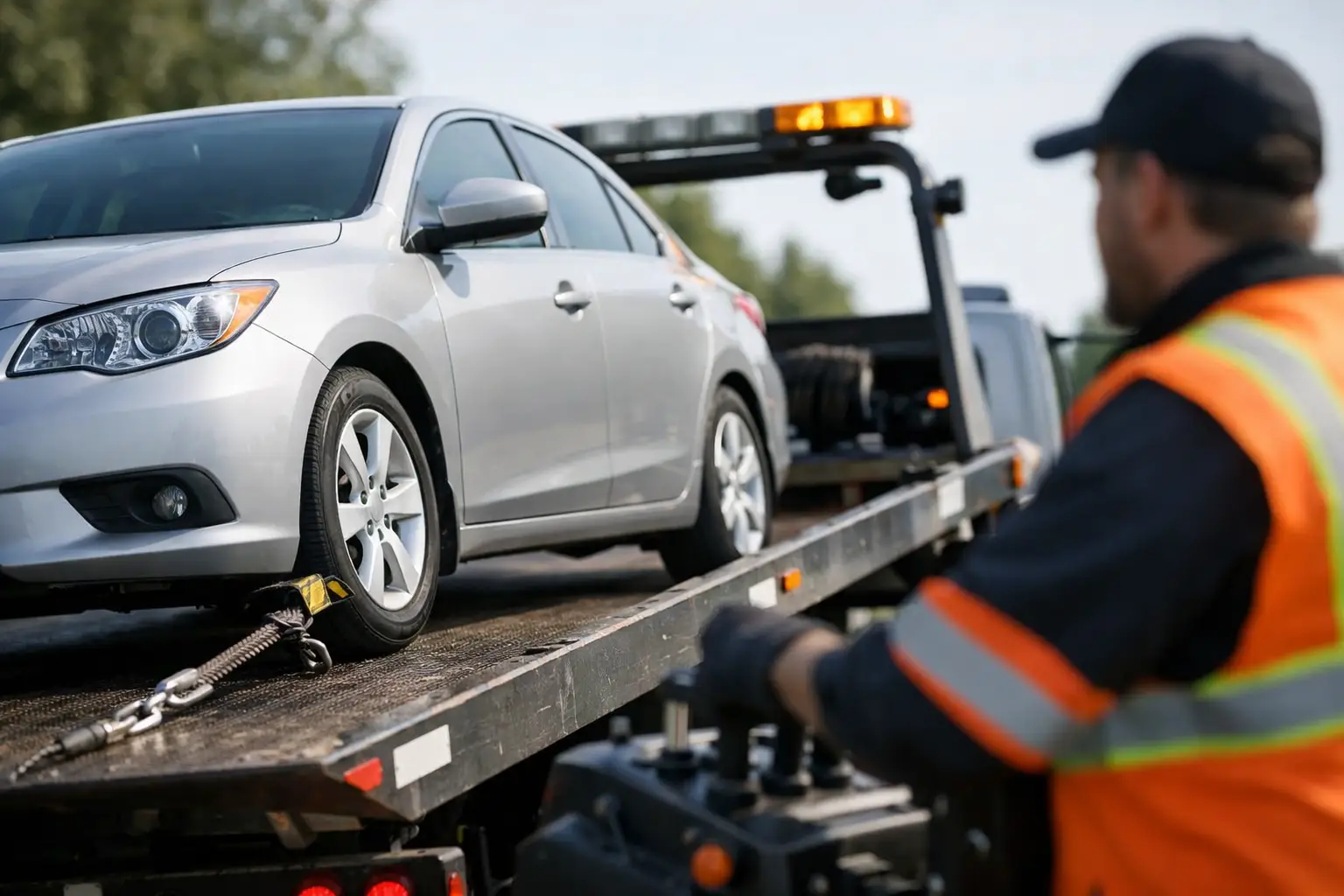
When the vehicle is low-clearance, luxury, all-wheel drive, heavily damaged, or not rolling properly, flatbed towing is often the safest transport method. It keeps the car fully off the ground, reduces wear during transport, and helps prevent secondary damage.
That does not mean every car needs a flatbed every time. It depends on the condition of the vehicle, the drivetrain, and where it needs to go. What matters most is sending the right truck for the situation. A professional dispatch team will ask the right questions so the operator arrives prepared.
What to do before the tow truck arrives
If you are in a safe place, turn on your hazard lights and move as far from traffic as possible. Stay inside the vehicle if exiting would put you near moving cars. If you are on the shoulder at night or in poor visibility, being visible matters, but staying out of traffic matters more.
Have your location ready, along with the make, model, and condition of the vehicle. Be clear about what happened: accident, no-start, flat tire, overheating, stuck vehicle, or mechanical failure. If the car is in a garage, parking structure, mud, or a ditch, say that upfront so the correct equipment is dispatched.
If you are in the Kenner or New Orleans area and need fast help, a 24/7 provider like Zain Towing can dispatch the right truck based on your vehicle type and the condition you describe. That speeds up arrival and helps avoid delays from sending the wrong equipment first.
When should a car be towed instead of driven to a shop?
If you are asking yourself whether the car can "probably make it," that usually means there is enough uncertainty to justify towing. The safe answer is to tow when the vehicle has a major warning light tied to engine health or braking, will not track straight, leaks fluid, overheats, has collision damage, or cannot maintain normal operation without noise, shaking, or repeated stalling.
Driving to the shop only makes sense when the issue is minor, fixed on-site, and the car is clearly safe afterward. A jump-start that holds, a successful tire change, or a lockout service are good examples. Anything beyond that deserves caution.
A tow bill can feel like an extra expense in the moment. Compared with engine replacement, transmission damage, roadside exposure, or causing another accident, it is usually the cheaper decision.
The best rule to remember is this: if safety is in doubt, do not force the drive. Protect yourself first, protect the vehicle second, and let trained professionals handle the transport.
Need help right now?
Zain Towing runs 24/7 in Kenner, New Orleans, Metairie, Harahan and Gretna. Call (504) 666-9099 or see our towing service, roadside assistance and New Orleans pages.