
Can Tow Truck Move Car With Flat Tire Safely?
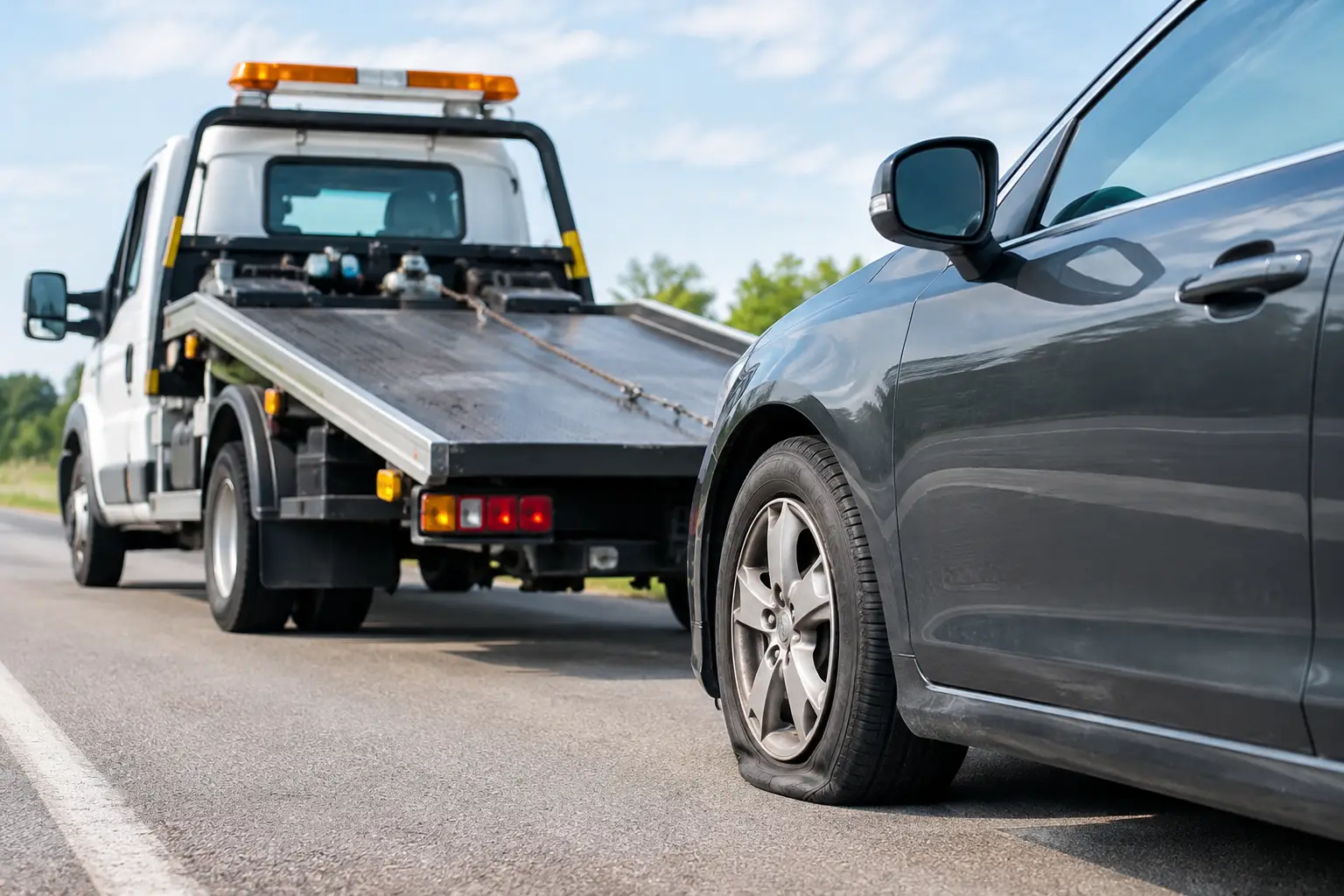
A flat tire can turn a normal drive through Kenner or New Orleans into a stressful roadside stop fast. Can tow truck move car with flat tire? Yes - but the right answer depends on where the flat is, the vehicle’s drivetrain, wheel damage, and how far it needs to travel. A professional operator will choose equipment that moves your vehicle without creating a second, more expensive problem.
Can a Tow Truck Move a Car With a Flat Tire?
A tow truck can safely move most cars with one flat tire, especially when the vehicle is loaded onto a flatbed. With all four wheels off the ground, the damaged tire does not have to roll, and the vehicle can be secured for local or long-distance transport.
That is usually the safest choice when the tire is completely flat, shredded, separated from the wheel, or paired with possible suspension or body damage. It is also the preferred method for many all-wheel-drive vehicles, low-clearance cars, luxury vehicles, and cars involved in an accident.
A wheel-lift tow may work in certain situations, but only when the undamaged wheels can roll safely and the vehicle can be towed according to manufacturer guidance. For example, lifting the correct end of a front-wheel-drive or rear-wheel-drive vehicle can prevent drivetrain damage. The operator may also use dollies to keep a damaged wheel from contacting the road.
The key point is simple: do not assume every tow is handled the same way. A trained tow operator should inspect the situation and use the method that protects your tires, wheels, drivetrain, and undercarriage.
Why Driving on a Flat Tire Is Usually the Bigger Risk
If you are wondering whether you can slowly drive to a tire shop, stop before you do more damage. Even a short drive on a flat tire can destroy the tire’s internal structure and turn a repairable puncture into a required replacement. It can also damage the wheel, especially after the tire loses all air pressure.
Driving on a flat can affect more than the tire itself. The vehicle may pull hard to one side, handle unpredictably, or lose braking and steering stability. On busy New Orleans-area roads, bridges, or highways, that risk is not worth taking.
Pull into a safe location if possible. Turn on your hazard lights, avoid standing near traffic, and do not crawl along on the rim unless moving a few feet is necessary to get out of immediate danger. Then request tire help or a tow.
When Roadside Tire Service May Be Enough
Not every flat requires towing. If you have a usable spare tire, the wheel is not damaged, and the vehicle is parked in a safe, accessible place, roadside tire service may get you moving again. This can be a practical option for a simple puncture caused by a nail or screw.
However, a spare does not solve every situation. Compact temporary spares have speed and distance limits. Some vehicles do not include a spare at all. If the tire sidewall is torn, the wheel is bent, multiple tires are damaged, or your vehicle was in a collision, transport is the safer call.
Roadside assistance is also less practical when traffic is moving close to your vehicle, the ground is soft or uneven, weather is severe, or you are stopped on a narrow shoulder. In those cases, loading the vehicle onto a flatbed reduces the amount of time spent working beside traffic.
What Tow Method Is Best for a Flat Tire?
Flatbed Towing
Flatbed towing is the most protective option for a car with a flat tire. The vehicle is winched or driven carefully onto the truck bed, then secured at multiple points. Because no wheels roll on the pavement during transport, it avoids further damage to the flat tire, wheel, and drivetrain.
Flatbeds are especially useful for all-wheel-drive vehicles, electric vehicles, vehicles with transmission trouble, lowered cars, and cars with more than one damaged tire. They are also a strong choice when you want the vehicle delivered directly to a repair shop, dealership, home, or another destination without adding miles to the damaged tire.
Wheel-Lift Towing With Dollies
Wheel-lift towing can be safe when the operator lifts the correct axle and the remaining wheels are in good condition. If the flat tire is on a wheel that would otherwise roll, tow dollies may be placed under that end of the vehicle.
This option can be effective for short local moves, but it requires the right setup. The operator needs to account for the vehicle’s drivetrain, parking brake, steering position, clearance, and tire condition. It is not a situation for improvised chains, ropes, or a friend’s pickup truck.
Recovery Before Towing
If your vehicle is off the roadway, stuck in mud, parked in a difficult garage position, or damaged after an accident, it may need recovery work before transport. Recovery equipment helps reposition and secure the car before loading it safely. Tell dispatch if the vehicle is in a ditch, blocked by another vehicle, or unable to roll at all so the right truck arrives.
What to Tell Dispatch Before the Tow Truck Arrives
Clear details help dispatch send the proper equipment and avoid delays. You do not need to be a mechanic. Just share what you can see and what happened.
Let the dispatcher know your exact location, vehicle year, make, and model, whether the tire is flat or blown out, and which tire is affected. Mention if the wheel looks bent, if the car was in an accident, or if it is all-wheel drive, electric, lowered, or unable to shift into neutral.
Also explain where you want the vehicle taken. A tire shop may be the right destination for a simple flat, while a repair facility or dealership may make more sense if the wheel, suspension, or alignment could be damaged. If you are unsure, an experienced operator can help you choose the safest next step.
What to Do While You Wait
Your first job is staying safe, not diagnosing the tire. If you can safely exit the vehicle, move away from traffic and stand in a protected area. On a highway or busy street, stay well clear of the travel lanes. Keep children and pets secured and away from the roadside.
Leave your hazard lights on. If it is dark, rainy, or visibility is poor, use interior lights or a flashlight only if doing so does not put you near moving traffic. Do not place warning triangles or attempt a tire change where traffic makes it unsafe.
If you have roadside coverage through your insurer, vehicle manufacturer, or motor club, you can check your benefits. But when you need immediate local help, a direct towing dispatch may be faster and gives you more control over the destination.
Can You Tow a Car With Two Flat Tires?
Yes, but two flat tires make flatbed transport even more appropriate. A vehicle with two flats should not be driven, and it may not be suitable for a standard wheel-lift setup without dollies or additional equipment. If tires are flat on the same side, the vehicle may sit low and require extra care during loading.
The same applies if a tire came off the wheel entirely or the wheel is scraping the ground. Tell dispatch exactly what you see. Accurate information allows the operator to arrive prepared to load the vehicle securely instead of trying to make unsuitable equipment work.
Fast Help for a Flat Tire in Kenner and New Orleans
A flat tire does not always mean your day is over, but it does mean the vehicle needs the right handling. Zain Towing LLC provides 24/7 roadside tire help and professional towing for drivers throughout the Kenner and New Orleans area. Licensed, insured operators can assess whether a spare-tire change, wheel-lift with dollies, or secure flatbed tow is the best option for your vehicle.
If the tire is damaged beyond a simple change, the wheel is bent, or you do not feel safe where you are stopped, request a tow rather than risking more damage. A quick call with your location, vehicle details, and tire condition helps get the right truck headed your way. Protect the vehicle now, and let a trained operator get it safely where it needs to go.
Need help right now?
Zain Towing runs 24/7 in Kenner, New Orleans, Metairie, Harahan and Gretna. Call (504) 666-9099 or see our towing service, roadside assistance and New Orleans pages.