
Can Towing Move Electric Vehicles Safely?
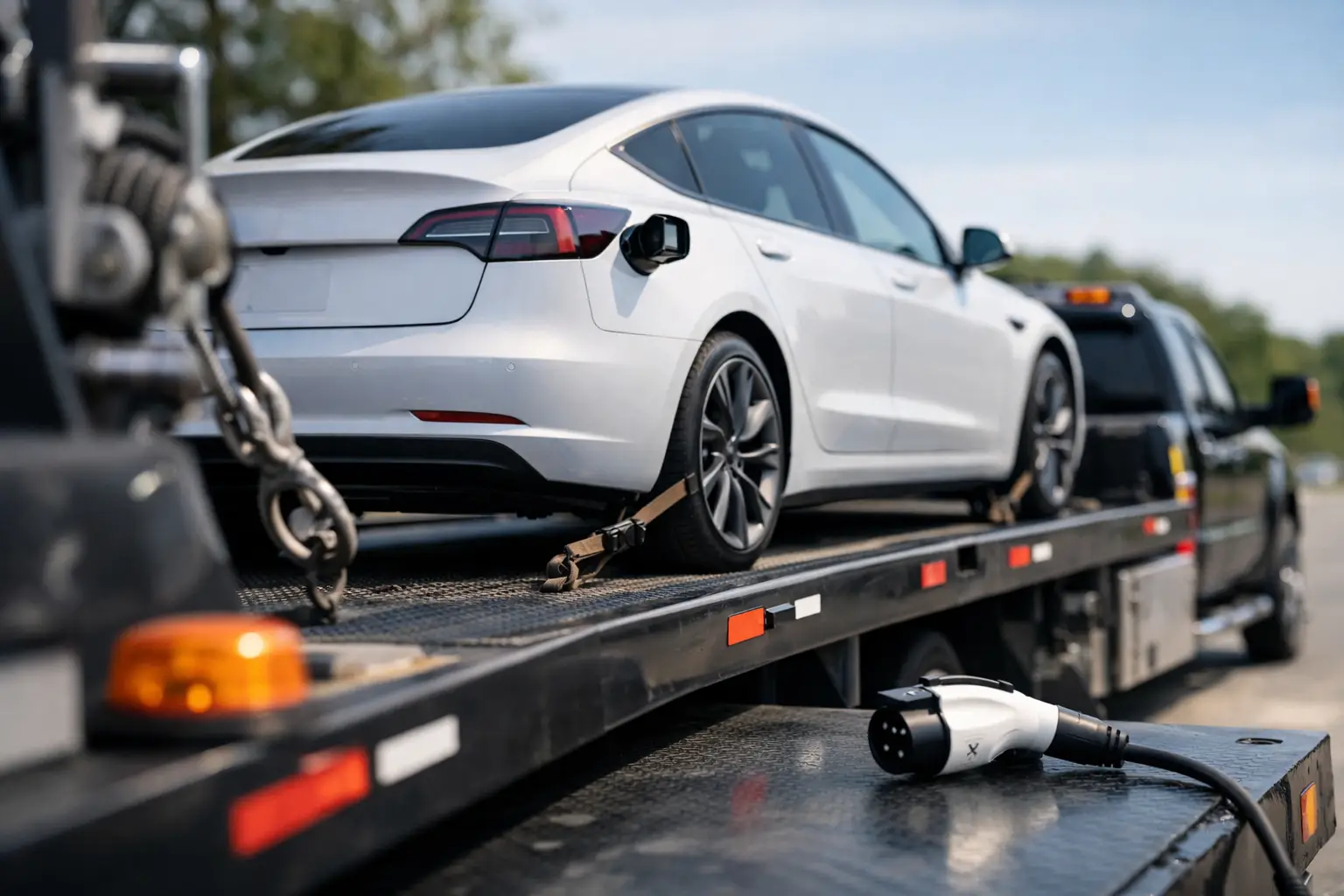
A dead EV on I-10, a parking garage exit, or a flooded New Orleans street can raise one immediate question: can towing move electric vehicles without damaging them? Yes, a trained towing operator can move an EV safely, but the method matters. Electric vehicles are heavier than many gas-powered cars, use high-voltage battery systems, and may have towing restrictions that make a quick hook-and-go tow the wrong choice.
For most EV breakdowns, the safest answer is a flatbed tow truck. The vehicle is loaded fully off the ground, secured at approved points, and transported without turning the drive wheels. That protects the drivetrain, tires, underbody battery pack, and electronics while getting you to a charger, repair shop, dealership, or safe destination.
Can Towing Move Electric Vehicles? Yes, With the Right Equipment
Electric vehicles can be towed, recovered, and transported. What they should not be is treated exactly like every other stranded car. A conventional tow that leaves drive wheels on the pavement can force an EV's electric motors to spin in a way the manufacturer did not intend. Depending on the model, that can create drivetrain damage or electrical system issues.
A flatbed is the preferred option because all four tires ride on the truck. The operator can winch the vehicle onto the bed when it will not power on, cannot shift normally, or has a damaged wheel. Once loaded, the EV is secured for stable transport rather than pulled down the road with part of the vehicle still rolling.
There are exceptions. Some manufacturers permit limited towing with wheel-lift equipment, tow dollies, or specific recovery procedures. Those rules vary by make, model, drivetrain, and vehicle condition. The owner's manual is the final authority, which is why professional dispatch should know the year, make, model, and reason the vehicle is disabled before sending a truck.
Why EV Towing Is Different
The biggest difference is not simply that an EV has a battery. It is where that battery sits and how the vehicle responds when it loses power. Many electric vehicles carry a large lithium-ion battery pack low in the chassis. That design improves handling, but it also means underbody damage must be taken seriously after a crash, curb impact, road debris strike, or flood exposure.
EVs also tend to weigh more than comparable gas vehicles. A tow company needs the right truck capacity, loading angle, winch setup, and securement equipment for the vehicle. Using undersized equipment is not a shortcut worth taking. Proper handling protects the vehicle, the operator, and everyone sharing the road.
Another issue is the electronic parking brake and shift system. When the 12-volt battery is weak or the vehicle has lost power, an EV may not enter tow mode or neutral in the normal way. Forcing a locked wheel, dragging the vehicle, or improvising around a disabled parking brake can cause expensive damage. A trained operator assesses the condition first and uses the appropriate loading procedure.
When a Flatbed Tow Is the Best Choice
A flatbed is the smart call for nearly every electric vehicle transport situation, especially when the EV has stopped unexpectedly. It is particularly important after an accident, a tire blowout with wheel damage, a dead 12-volt battery, a high-voltage system warning, or a no-start condition.
Flatbed transport also makes sense when your EV has run out of charge. Roadside charging is not always available or practical, and a portable jump-start will not recharge the main drive battery. If the nearest working charger is too far away, towing the vehicle there is safer than attempting to stretch the remaining range or leaving the vehicle in an unsafe location.
For planned transport, flatbeds are equally useful. Whether you are moving an EV between repair facilities, taking a recently purchased vehicle home, or transporting it across the metro area, keeping all wheels off the ground avoids unnecessary wear and follows the safest general practice.
What about a short-distance tow?
A short distance does not automatically make a wheel-lift tow safe. Even a few blocks can be too far if the drive wheels are turning against manufacturer guidance, the vehicle cannot be placed in the proper mode, or there is possible battery damage. The right question is not, "How close is the destination?" It is, "What does this vehicle require to be moved safely?"
What to Do When Your EV Breaks Down
If your vehicle is stopped in traffic or on a shoulder, focus first on visibility and personal safety. Turn on hazard lights. If you can safely move the vehicle out of an active lane, do so. If you cannot, stay clear of traffic and follow local emergency guidance.
When calling for towing, provide the exact location, your EV's year, make, and model, and a clear description of what happened. Tell dispatch whether the vehicle was in a crash, struck underneath, entered deep water, displayed a battery or high-voltage warning, has a flat tire, or simply ran out of charge. Those details help send the appropriate truck and let the operator prepare for the right recovery method.
Do not try to push a heavy EV into traffic, attach a rope to an unapproved point, or let an untrained driver pull it with another vehicle. EVs have designated recovery points for a reason. Improper attachment can damage the body, suspension, or battery enclosure.
If the vehicle has smoke, unusual heat, hissing sounds, a chemical odor, or visible damage beneath the battery area, move away from it and call 911. A damaged high-voltage battery requires additional precautions. Do not reconnect charging equipment or attempt to restart the vehicle until emergency responders or qualified technicians have assessed it.
EVs After Flooding or Water Exposure
In the New Orleans and Kenner area, heavy rain and standing water can turn an ordinary roadside call into a more complicated recovery. If an EV has been submerged or driven through water deep enough to reach the underbody, do not assume it is safe because it still starts. Water exposure can affect electrical components, connectors, brakes, and the battery enclosure.
The safest move is to park away from structures when possible, avoid charging it, and arrange professional transport for inspection. Let the towing operator know about the water exposure before arrival. That allows the team to use the proper recovery plan and avoid treating the call as a routine no-start or lockout.
Choosing a Tow Company for an Electric Vehicle
Fast response matters when you are stranded, but the first available truck is not always the right truck. Ask whether the company can provide flatbed transport and whether the operator can handle an electric vehicle that will not shift, roll, or power on. Licensed and insured service matters too, particularly after a collision or when a high-value vehicle needs careful transport.
A professional operator should inspect the vehicle's condition, identify safe loading points, use suitable securement methods, and avoid dragging it onto the truck. You should not have to diagnose the recovery procedure yourself. Give clear information during dispatch, then let trained personnel handle the loading and transport.
Zain Towing LLC provides 24/7 towing and roadside assistance for drivers across Kenner and the New Orleans area, with flatbed service available for EVs and other vehicles that require careful handling. If your electric vehicle is stranded, request the right equipment from the start and explain the condition of the vehicle before dispatch.
An EV breakdown is stressful enough without worrying about whether the tow will create a second repair bill. When the vehicle needs to move, choose safe, fully supported transport and get it to a qualified destination without taking chances on the roadside.
Need help right now?
Zain Towing runs 24/7 in Kenner, New Orleans, Metairie, Harahan and Gretna. Call (504) 666-9099 or see our towing service, roadside assistance and New Orleans pages.