
Does Towing Require a Key? What Drivers Need
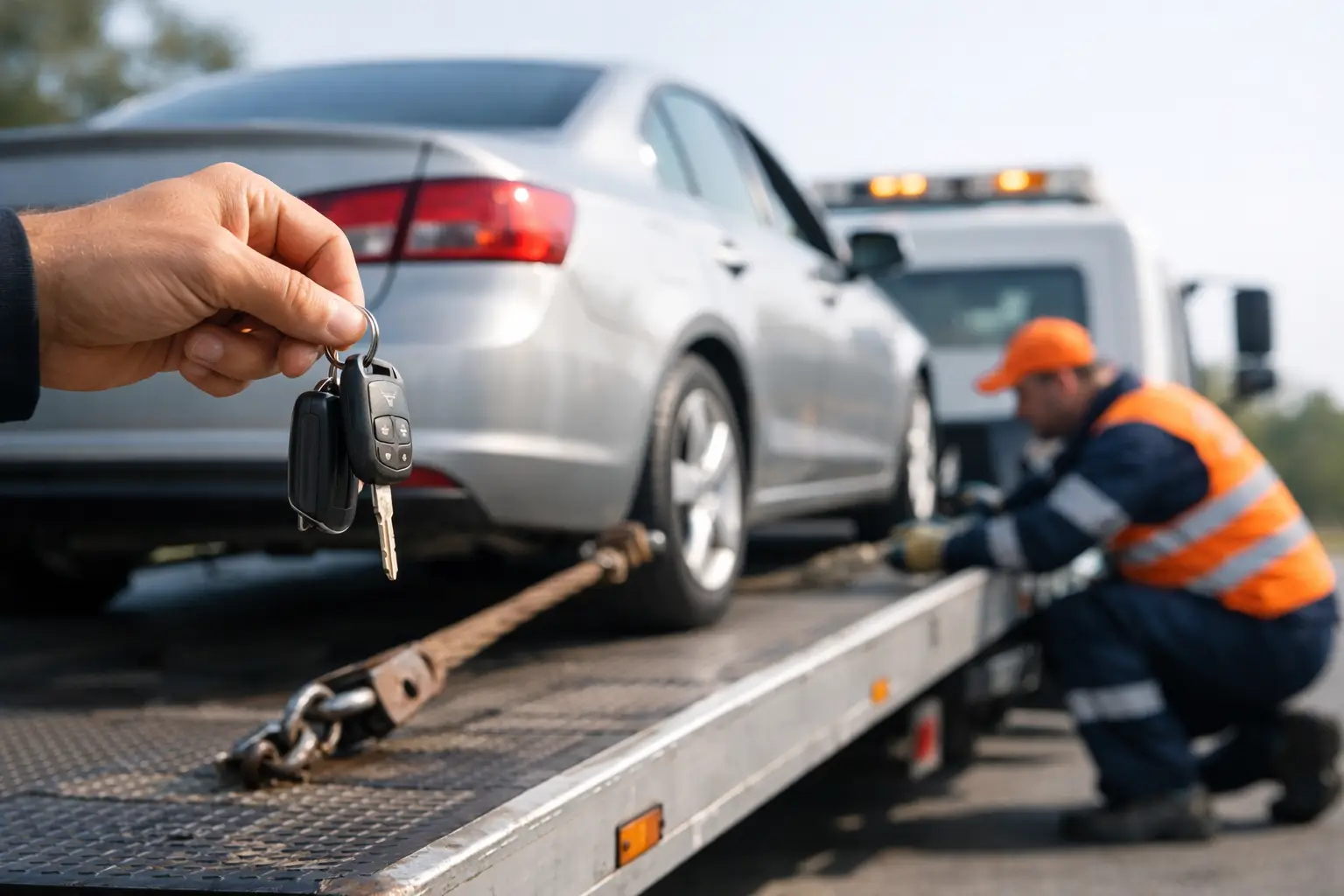
A dead battery, a locked car, or an accident can leave you asking one practical question: does towing require a key? Usually, having the key makes towing faster and safer, but it is not required in every situation. A trained tow operator can often move a vehicle without keys, especially with the right flatbed equipment. The best method depends on whether the vehicle can roll, where it is parked, and whether the wheels are locked.
Does Towing Require a Key?
A tow company does not always need your key to transport your vehicle. However, access to the key or key fob gives the operator more options and can reduce the risk of damage. With the key, the operator may be able to unlock the steering wheel, place the transmission in neutral, release the parking brake, and safely load the vehicle onto the appropriate truck.
Without a key, a professional operator must treat the vehicle as non-running and potentially non-rolling. That may require wheel dollies, skates, specialized loading tools, or a flatbed tow truck. These tools are designed to move disabled vehicles while protecting the tires, drivetrain, suspension, and body panels.
The key point is simple: do not assume your car cannot be towed because the keys are missing, locked inside, or unavailable. Tell dispatch exactly what happened so the right truck and equipment can be sent.
When a Tow Operator Usually Needs the Key
Keys are most useful when the vehicle is drivable but needs transport due to a mechanical concern, a flat tire, an overheating issue, or a planned move. If the engine starts, the vehicle can be positioned more easily for loading. Even if it will not start, a key can still allow the operator to shift the transmission into neutral and release steering or brake locks.
Modern vehicles make key access especially helpful. Many cars, trucks, and SUVs use electronic parking brakes, push-button ignitions, electronic steering locks, and shift-by-wire transmissions. In some models, a dead battery or missing key fob can make it difficult to place the vehicle in neutral. That does not stop a tow, but it can change the loading plan.
If you have the key, hand it directly to the tow operator when they arrive. Let them know about any issues with the ignition, key fob, shifter, parking brake, alarm, or aftermarket security system. A quick explanation can prevent delays and help protect your vehicle during transport.
When Towing Can Be Done Without a Key
Towing without a key is common in roadside emergencies. A driver may have lost the keys, locked them inside, left them with another person, or been taken from an accident scene for medical care. Vehicles may also be abandoned, blocked in, or unable to start after a collision.
In these situations, the operator chooses a recovery method based on the vehicle's condition. A flatbed is often the safest choice because the vehicle can be loaded with all four wheels off the ground. If the wheels will not turn or the parking brake is engaged, wheel dollies or skates may be used to move it without dragging the tires.
This matters most for all-wheel-drive and four-wheel-drive vehicles. Pulling an AWD vehicle with only two wheels on the ground can damage drivetrain components if it is not handled correctly. A professional towing company will identify the drivetrain and use the right equipment rather than forcing the vehicle into a quick but risky hookup.
A key-free tow can take longer than a standard tow because the operator may need extra setup time. That is a trade-off worth making when the alternative is damage to the transmission, tires, wheels, or steering system.
Locked Keys Inside the Vehicle
If your keys are locked inside the car, you may not need a tow at all. A roadside lockout service can often get you back into your vehicle without breaking a window or damaging the door. This is usually the fastest and most affordable option when the vehicle is otherwise safe to drive.
If the car also has a flat tire, mechanical failure, collision damage, or a dead battery that cannot be resolved on site, the operator can handle the lockout first and then prepare the vehicle for transport. Let dispatch know that the keys are inside the vehicle. This helps them send an operator equipped for both the lockout and the tow.
Do not attempt to force the door open with coat hangers, wedges, or improvised tools. Modern door frames, side airbags, weather seals, wiring, and electronic locks are easy to damage. What starts as a lockout can become an expensive repair.
What to Tell Dispatch Before Your Tow
Clear details help a towing company arrive prepared. When you request service, explain whether you have the key, whether the vehicle is locked, and whether it can roll freely. Mention if the parking brake is on, the wheels are turned, a tire is missing, or the car has collision damage.
You should also provide the year, make, model, and drivetrain if you know it. A front-wheel-drive sedan, a rear-wheel-drive pickup, an AWD SUV, a motorcycle, and an RV do not use the same towing setup. If your vehicle is in a garage, tight parking lot, ditch, apartment complex, or other difficult location, say so at the start.
Have your pickup location, destination, and proof of ownership available. For a standard customer-requested tow, drivers are generally expected to authorize transport of their own vehicle. If the owner cannot be present, dispatch may ask for details to confirm authorization before moving it. Requirements can differ for police-directed, impound, or private-property removals.
What to Do While You Wait
Your safety comes first. If the vehicle is disabled on a busy New Orleans or Kenner roadway, move yourself and passengers to a safe location away from traffic when possible. Turn on hazard lights, but do not stand between your vehicle and approaching traffic.
Keep the key, registration, insurance information, and any needed personal items with you. If the vehicle is being transported to a repair shop after hours, ask the shop where keys should be left and whether they accept after-hours drop-offs. Remove valuables when you can, especially from the center console, glove box, and cargo area.
If you do not have the key, do not worry about solving the mechanical details yourself. Tell the operator the truth about the situation. A professional crew would rather arrive with the proper equipment than discover a locked steering wheel or engaged electronic parking brake after the truck is already there.
Safe Towing Starts With the Right Equipment
The cheapest-looking tow is not always the safest one. A vehicle without keys may require more than a basic hookup, particularly after an accident or when it cannot be shifted into neutral. Proper loading equipment and trained handling protect the parts that can be expensive to repair.
Zain Towing LLC provides 24/7 towing and roadside help for drivers in Kenner and the New Orleans area, with trained operators who can assess locked, non-running, and keyless-tow situations on arrival. Whether you need a lockout, a flatbed, local transport, or recovery after a breakdown, give dispatch the full picture so the proper truck is on the way.
If your vehicle is in an unsafe location, make the call now, stay clear of traffic, and let a qualified operator handle the move with the care your vehicle requires.
Need help right now?
Zain Towing runs 24/7 in Kenner, New Orleans, Metairie, Harahan and Gretna. Call (504) 666-9099 or see our towing service, roadside assistance and New Orleans pages.