
EV Towing Risks: Protect Your Vehicle
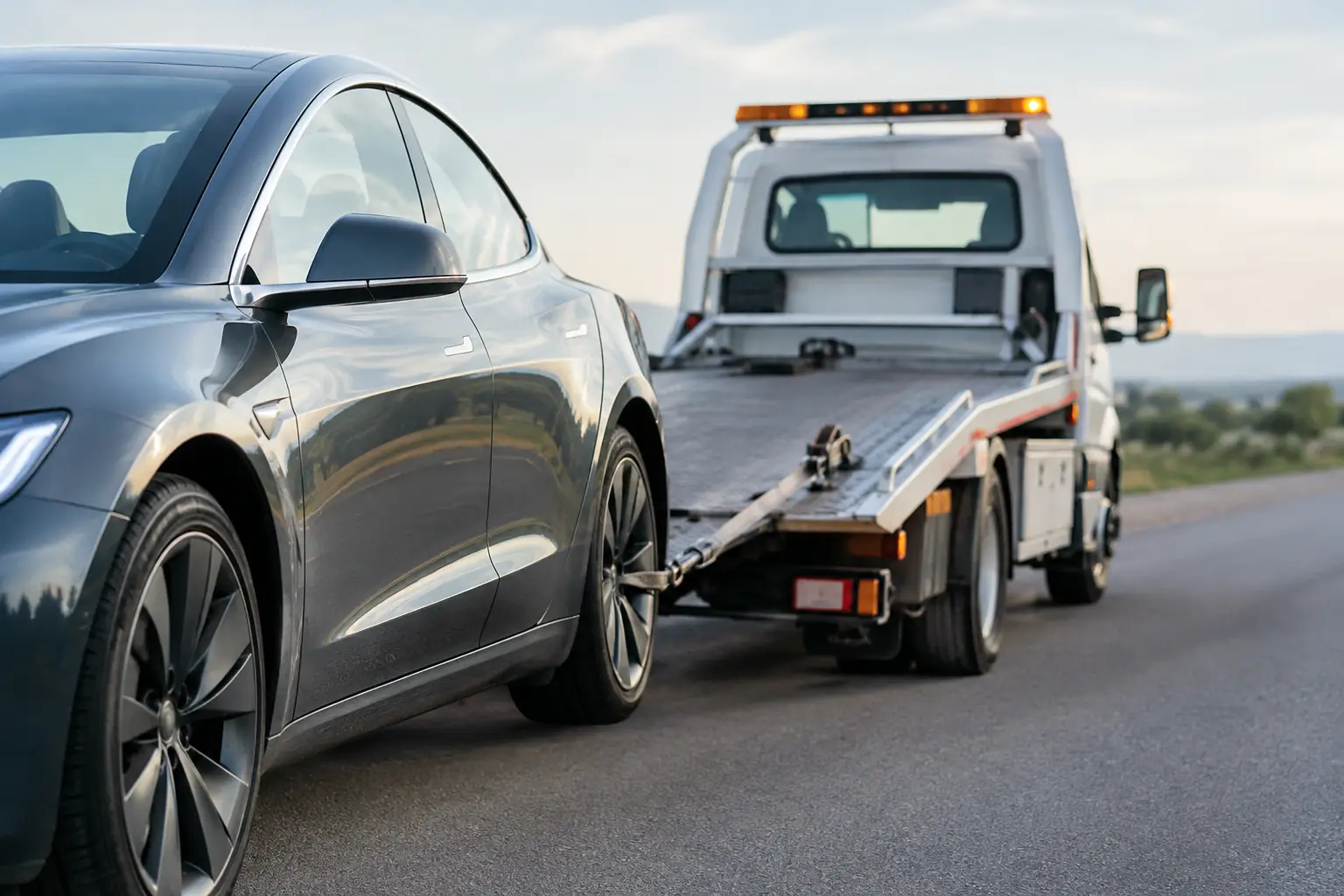
A dead battery, warning light, flat tire, or collision can turn a normal drive through Kenner or New Orleans into a stressful roadside stop. EV towing risks are different from the risks involved with a gas-powered car because many electric vehicles cannot be safely pulled with their drive wheels on the road. The wrong recovery method can damage the electric drive unit, tires, suspension, underbody, or high-voltage battery.
If your EV will not move, the priority is simple: get yourself to a safe location, tell the dispatcher it is an electric vehicle, and request the right equipment. A trained operator using a flatbed can load and transport the vehicle without forcing its wheels to turn or putting unnecessary stress on critical components.
Why EV Towing Risks Are Different
Electric vehicles do not all work the same way, but their drivetrains require more care during towing. A conventional vehicle may be towed with two wheels raised in certain situations. With an EV, that approach may be unsafe unless the vehicle manufacturer specifically allows it and the operator follows the correct procedure.
Many EVs use electric motors connected directly to one or more axles. When the driven wheels rotate while the vehicle is powered down, the motor can generate electricity. That energy may have nowhere safe to go, creating heat or electrical stress in the system. In some models, spinning the wheels can also harm internal drivetrain components.
All-wheel-drive EVs deserve extra attention because they may have motors at both the front and rear axles. Lifting only one end of the vehicle can leave another set of driven wheels turning on the pavement. That is why a flatbed tow is generally the safest choice for a disabled EV.
The vehicle's low-mounted battery pack is another concern. EV batteries are heavily protected, but they sit beneath the passenger compartment. Improper lifting, dragging after a crash, or loading a vehicle with underbody damage can create a much bigger problem than a routine tow.
The Most Common EV Towing Risks
The biggest risk is drivetrain damage from towing the vehicle in the wrong position. This can happen when an EV is pulled with its drive wheels on the ground, especially when the vehicle is off, locked, or unable to enter its manufacturer-approved transport mode.
There is also a real risk of underbody damage. EVs often have lower ground clearance and substantial battery protection underneath. A steep loading angle, incorrect tie-down placement, or a vehicle dragged over debris can scrape or strike the battery area. The operator must assess the angle, the condition of the tires, and any crash damage before loading.
Incorrect recovery points can cause damage as well. Tow hooks, suspension parts, steering components, and body panels are not interchangeable attachment points. A professional operator uses the proper manufacturer-designated recovery location and avoids attaching equipment to components that were not designed to carry the load.
A damaged EV battery requires even more caution. After a significant collision, flood exposure, or undercarriage impact, the battery may be compromised even when there is no visible smoke or fire. The vehicle should be handled carefully, kept away from structures when possible, and transported by a team that understands the need for secure loading and monitoring.
What to Do When Your EV Breaks Down
First, get out of traffic if the vehicle can still move safely. Turn on hazard lights and move to a shoulder, parking lot, or other safe area. If you are on a busy New Orleans-area roadway and cannot move the vehicle, stay aware of traffic and follow emergency guidance for your exact location.
Next, place the vehicle in Park if possible. Use the parking brake only if your owner's manual directs you to do so for a disabled vehicle. Some EVs have a tow mode, transport mode, or neutral override, but that setting does not automatically mean the vehicle can be towed like a standard car. It is a tool for loading or limited movement, not permission to use any towing method.
When requesting service, provide clear details: the make and model, whether it is front-wheel drive, rear-wheel drive, or all-wheel drive if you know it, the reason it is disabled, and whether it was involved in a collision. Mention flat tires, locked wheels, a parking garage, floodwater, or visible damage underneath. These details help dispatch send the proper truck and equipment the first time.
Do not let a friend pull the vehicle with a rope, chain, or strap. Do not assume a wheel-lift tow is acceptable because it worked for another vehicle. Avoid trying to push an EV with locked wheels or force it into neutral. A fast decision made under pressure can lead to expensive repairs that insurance may not fully cover.
Why Flatbed Towing Is Usually the Safer Choice
For most disabled EVs, flatbed towing keeps all four wheels off the road. That eliminates the concern of powered wheels turning during transport and provides a stable platform for the entire vehicle. It is also the preferred option for many low-clearance vehicles, luxury EVs, collision-damaged cars, and vehicles traveling longer distances.
Safe flatbed service is about more than placing a vehicle on a truck. The operator needs to use an appropriate loading angle, follow the vehicle's recovery instructions, secure it at approved points, and check that it is stable before transport. If the vehicle cannot roll freely, specialized equipment may be needed to move it onto the bed without dragging it.
A flatbed also helps protect your EV from avoidable road exposure. The vehicle is not rolling behind a truck through potholes, standing water, or traffic. That matters in South Louisiana, where sudden heavy rain and flooded streets can complicate an already difficult roadside situation.
Crash, Flood, and Battery-Damage Situations Need Extra Care
If an EV has been in a crash, do not focus only on visible bumper or body damage. Tell the tow operator if the impact involved the underside of the vehicle, a curb, deep pothole, road debris, or another object that could have contacted the battery enclosure.
After flood exposure, do not attempt to charge or start the vehicle until it has been inspected. Water can affect high-voltage components, wiring, connectors, and safety systems. Even if the vehicle appears normal after water recedes, it may need secure transport to a qualified repair facility.
If you see smoke, hear unusual popping or hissing, smell burning chemicals, or receive a severe battery warning, move away from the vehicle if it is safe to do so and call emergency services. Do not try to open battery components or put yourself at risk to move the vehicle. The tow provider should receive this information before arrival so the response can be planned appropriately.
Choose a Tow Provider That Asks the Right Questions
The right towing company will not treat your EV like every other disabled car. Before dispatch, the team should ask what you drive, where it is located, whether it is damaged, and whether it can roll. Those questions are not delays. They are how the operator arrives prepared to protect your vehicle.
For drivers in Kenner and the New Orleans area, Zain Towing LLC provides 24/7 dispatch for light- and medium-duty towing, recovery, and roadside assistance. A trained, insured tow operator can assess the situation and use the appropriate equipment for secure vehicle transport, whether you are stranded at home, in a parking lot, on the highway, or after an accident.
Your EV is a major investment, and a breakdown should not turn into preventable drivetrain or battery damage. When you need help, request a flatbed, share the vehicle details clearly, and let a professional handle the loading and transport. A careful tow gets your vehicle where it needs to go while giving you one less thing to worry about.
Need help right now?
Zain Towing runs 24/7 in Kenner, New Orleans, Metairie, Harahan and Gretna. Call (504) 666-9099 or see our towing service, roadside assistance and New Orleans pages.