
Flooded Car Recovery After Louisiana Flash Flooding
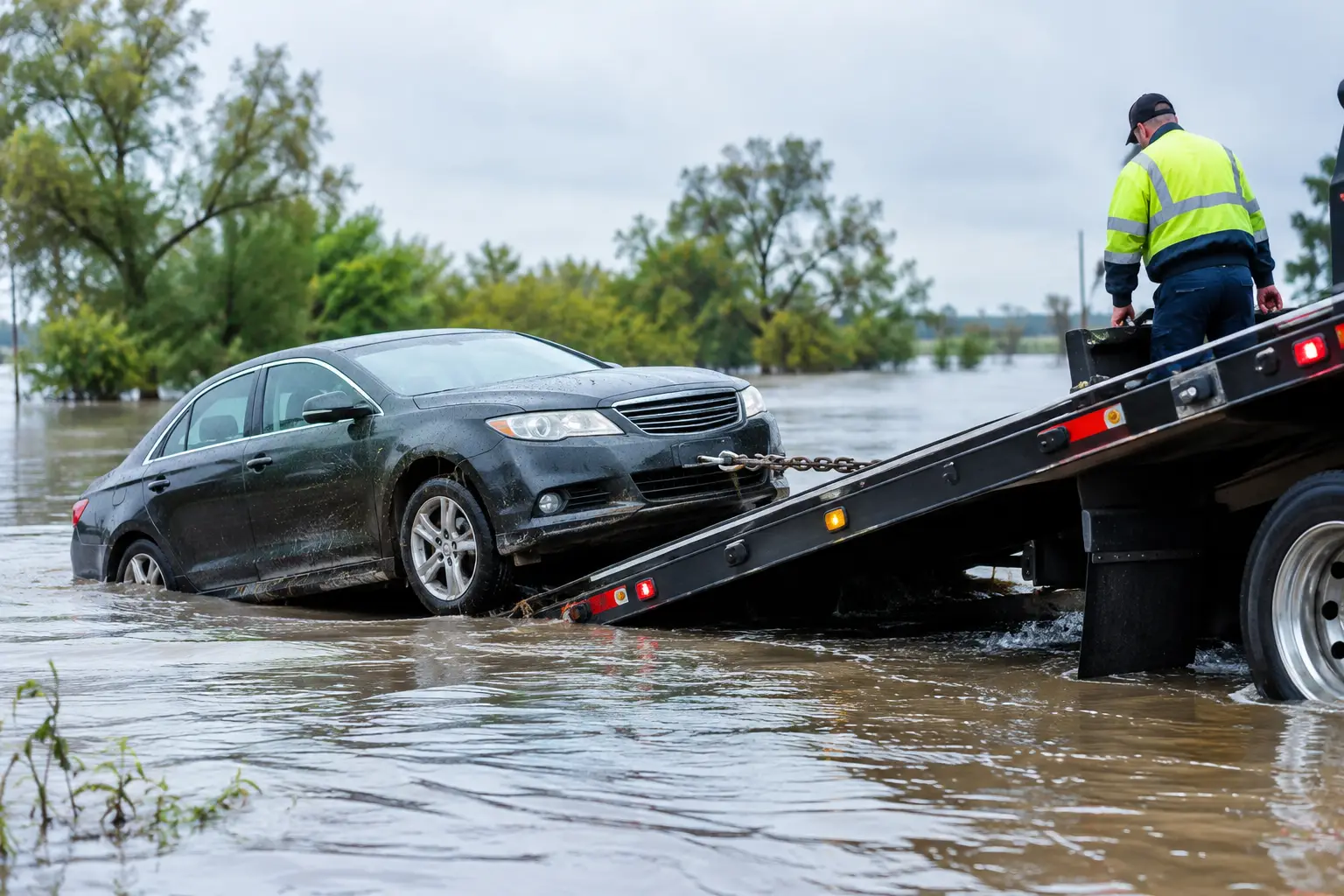
Water can rise over a curb, into a parking lot, and around your vehicle faster than most drivers expect in the Kenner and New Orleans area. When that happens, flooded car recovery is not just about getting the vehicle moving again. It is about keeping people out of danger, preventing avoidable damage, and getting the right towing equipment to the scene without delay.
A vehicle that has been sitting in floodwater may have water in the engine, transmission, electrical system, interior, or fuel system. Even if it starts, driving it can turn a recoverable situation into a much more expensive repair. The safest move is to stop, assess the situation from a dry location, and arrange professional recovery.
First, Get Yourself Out of Danger
If water is actively rising, your personal safety comes before your car. Do not stay inside a vehicle surrounded by moving water, and do not attempt to push a vehicle through a flooded street. Floodwater can hide washouts, open drains, debris, and sudden drops in the pavement.
If you can safely leave the vehicle and move to higher ground, do so. Call emergency services if anyone is trapped, injured, or at immediate risk. Once everyone is safe, a towing professional can evaluate how to remove the vehicle without putting you or the operator in harm's way.
Do not walk into deep or moving water to inspect the car. A few inches of fast-moving water can be enough to knock someone off balance, especially at night or during a storm when visibility is poor.
Do Not Start a Flooded Vehicle
The most costly mistake after a flood is trying to start the engine. If water entered the intake, cylinders, or exhaust system, cranking the engine can cause internal damage. This is sometimes called hydrolock, and it can bend engine components or lead to complete engine failure.
Avoid turning the ignition on just to check whether the dashboard lights work. Water and electrical systems do not mix well, and a powered-up system can create additional problems. Leave the vehicle off, remove the key or keep the key fob away from the vehicle, and wait for a qualified technician or tow operator.
A car that only had shallow water around its tires may still be drivable after inspection. A car with water above the floorboards, over the hood, or into the cabin should be treated as a no-drive situation until it has been professionally checked.
When You Need Flooded Car Recovery
Not every wet vehicle requires the same response. The right recovery method depends on where the vehicle is located, how high the water reached, the type of vehicle, and whether the ground beneath it is stable.
A sedan stuck in a flooded parking lot may need a careful winch-out followed by flatbed transport. An SUV stranded near a ditch, soft shoulder, or drainage canal may require specialized recovery equipment and a controlled pull. If the vehicle is in moving water, partly submerged, or near a hazardous roadway, recovery should wait until conditions allow operators to work safely.
Flatbed towing is often the preferred choice for a flood-affected vehicle. Keeping all four wheels off the ground helps prevent additional drivetrain stress and avoids running a possibly damaged engine. It is also a practical option for vehicles with low clearance, all-wheel drive, severe electrical issues, or unknown mechanical damage.
What to Tell the Tow Dispatcher
Clear information helps dispatch send the appropriate truck and equipment the first time. When requesting service, be ready to provide your exact location, including nearby cross streets, a parking lot name, or a visible landmark. Let the dispatcher know whether the road is still flooded and whether the vehicle is on pavement, grass, mud, a shoulder, or in a ditch.
It also helps to describe the water level. Was it below the tires, at the doors, inside the cabin, above the hood, or fully submerged? Mention the vehicle's make, model, and condition, including whether it is blocked in, locked, has flat tires, or cannot be shifted into neutral.
If you need the vehicle taken to a repair shop, home, dealership, or another location, have that destination ready. Fast dispatch depends on accurate details, especially during heavy rain when several drivers may need help at once.
What Happens During a Professional Recovery
A trained tow operator begins by evaluating the scene rather than immediately attaching a cable. The operator checks access, traffic conditions, water depth, vehicle position, and possible hazards such as downed power lines, unstable ground, or debris beneath the water.
For a vehicle on firm ground, the operator may use a winch to pull it to a safe loading area. For a vehicle with suspected flood damage, secure loading onto a flatbed is usually the best approach. Proper attachment points matter because pulling from the wrong location can damage a bumper, suspension component, or underbody panel.
The goal is controlled removal, not speed at the expense of the vehicle. A professional recovery team uses the right equipment for the conditions, secures the vehicle for transport, and delivers it where you need it with as little additional damage as possible.
After Your Vehicle Is Out of the Water
Once the vehicle is safely transported, document its condition before cleaning or repairing it. Take photos of the exterior, interior, waterline, visible debris, and any warning lights if the battery is still connected. This information may help with insurance claims and repair estimates.
Contact your insurer as soon as possible. Flood damage may fall under comprehensive coverage, but your policy, deductible, and coverage limits determine what applies. Do not assume a vehicle is totaled or repairable based only on how it looks. Water damage can be hidden in wiring harnesses, connectors, seat components, modules, carpet padding, and safety systems.
A qualified repair facility should inspect the engine, transmission fluids, brakes, electrical components, wheel bearings, interior, and airbag-related systems. Saltwater, brackish water, and dirty floodwater are especially concerning because corrosion can continue long after the vehicle appears dry.
If water reached the cabin, do not delay. Mold and odor can develop quickly in carpet, insulation, and seat foam. Opening doors or windows may help ventilation if conditions are safe, but do not attempt to remove interior panels or reconnect the battery unless a technician advises you to do so.
Why Fast Towing Matters After a Flood
Flooded roads create unpredictable conditions, but waiting too long can make recovery harder. Water levels can rise again, mud can soften around the tires, and access roads can close. Prompt transport also gets the vehicle to a secure location where it can be inspected instead of leaving it exposed to more rain, traffic, or vandalism.
For drivers in Kenner and New Orleans, Zain Towing LLC provides 24/7 towing and recovery support with trained operators, professional equipment, and secure vehicle handling. Whether your car, truck, SUV, motorcycle, or RV is stranded after heavy rain, the right response starts with a safe recovery plan and the proper truck for the job.
If you are standing near a flooded vehicle right now, stay out of the water, do not start the engine, and keep clear of traffic. A quick call with your location and vehicle details can help get your vehicle out of danger and on its way to a safe destination.
Need help right now?
Zain Towing runs 24/7 in Kenner, New Orleans, Metairie, Harahan and Gretna. Call (504) 666-9099 or see our towing service, roadside assistance and New Orleans pages.