
Guide to Roadside Dispatch Process in Kenner
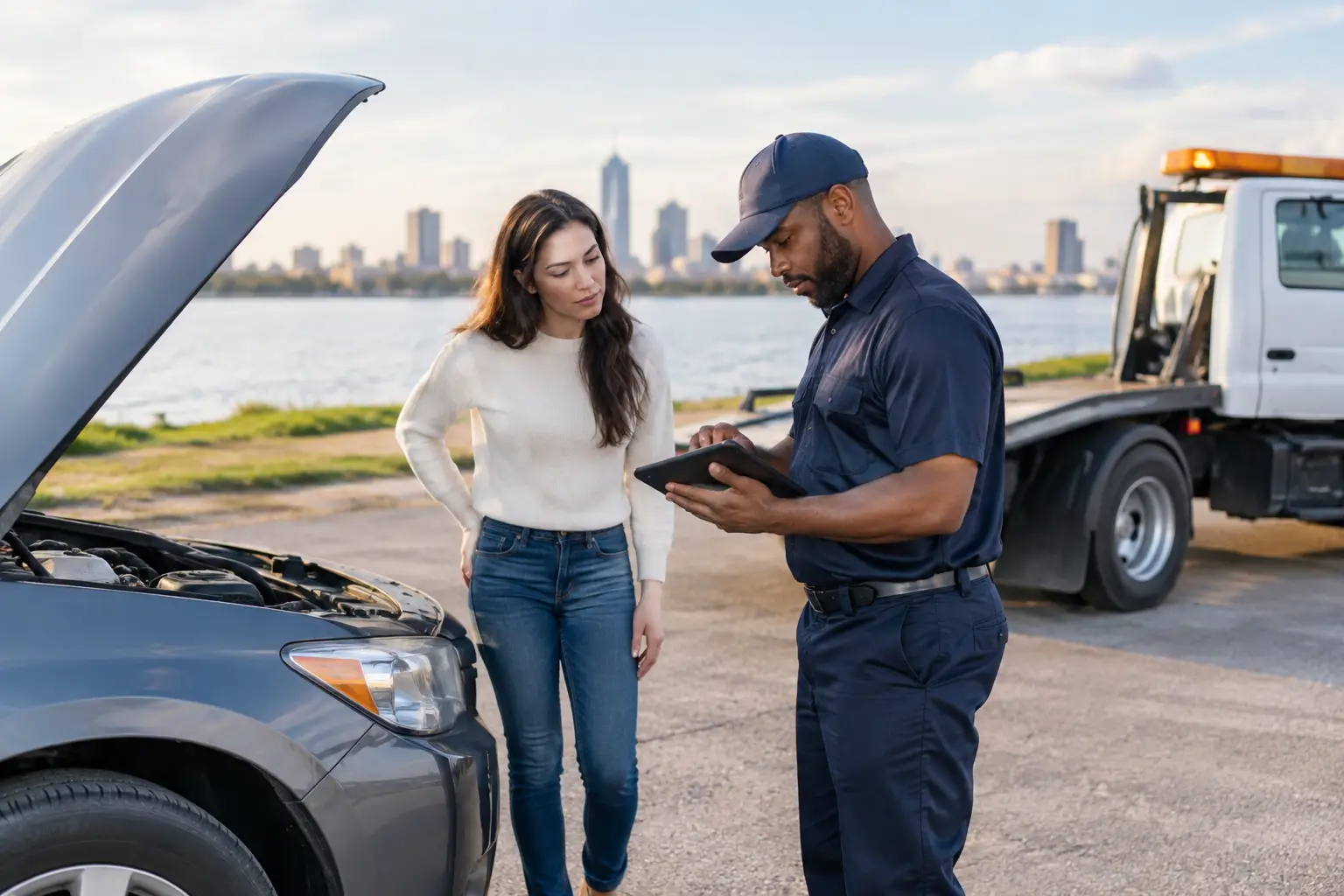
A breakdown on I-10, a dead battery outside a Kenner store, or a flat tire on a dark New Orleans side street can make every minute feel longer. This guide to roadside dispatch process explains what happens after you request help, what information matters most, and how to stay safe until a trained operator arrives.
Roadside dispatch is more than sending the closest tow truck. A good dispatcher quickly identifies your location, vehicle, problem, and destination so the right equipment and operator are sent the first time. That helps prevent delays, avoids unnecessary vehicle handling, and gets you moving toward a safe solution faster.
What Happens When You Request Roadside Help
The process begins when you call for towing or roadside assistance. The dispatcher will ask a few direct questions to determine whether you need a jump-start, tire help, lockout service, fuel delivery, accident recovery, or a tow. Be ready to give clear answers, even if you are stressed. Accurate information is the fastest route to the right truck.
Your dispatcher first confirms where you are. A street address is helpful, but it is not always enough, especially near highway exits, airport roads, parking garages, or large shopping centers. Share the nearest cross street, mile marker, exit number, landmark, or business name. If your phone map shows a dropped pin or coordinates, keep it available.
Next, the dispatcher identifies the vehicle. The make, model, year, color, and plate number help the operator find you and prepare for the job. Tell them whether your vehicle is a sedan, SUV, pickup, motorcycle, van, RV, or another type of vehicle. If it is all-wheel drive, lowered, electric, severely damaged, or carrying heavy cargo, say so early. Those details can affect the safest loading method and the equipment required.
The final step is determining the service and destination. A vehicle with a flat tire may only need roadside help. A car that will not start may need a jump-start, diagnostics, or transport to a repair shop. If you need towing, provide the destination address and let the dispatcher know about gate codes, business hours, or a preferred drop-off location.
The Guide to Roadside Dispatch Process: Details That Matter
Dispatchers are trained to ask practical questions because every answer affects safety and response time. You do not need to diagnose your vehicle. Simply describe what happened and what you can see, hear, or smell.
For example, say that the engine will not crank, that a tire is completely flat, that the vehicle is blocked in after an accident, or that you are locked out with keys visible inside. Mention warning lights, smoke, leaking fluids, a broken wheel, or damage underneath the car. If the vehicle is in a ditch, facing the wrong direction, stuck in mud, or unable to roll, that changes the recovery plan.
It also helps to tell dispatch where the vehicle sits in relation to traffic. Are you safely parked in a lot? On a highway shoulder? In a narrow driveway? Blocking a lane? A roadside call near moving traffic may require a different approach than a planned tow from a residence. The operator needs enough room to work, load the vehicle securely, and leave without creating another hazard.
Be clear about passengers, too. Let dispatch know if children, older adults, pets, or multiple riders are with you. Tow truck seating and transport arrangements vary, so this information helps you plan before the truck arrives. If anyone is injured or there is an immediate danger from traffic, fire, or fuel leakage, call 911 first. Towing and roadside service should begin once the emergency scene is safe.
How Dispatch Chooses the Right Truck
Sending any available truck is not the goal. Sending the correct truck is. A dispatcher considers the vehicle’s size, condition, location, and destination before assigning an operator.
A light-duty tow truck may be appropriate for many cars, crossovers, and small pickups. A flatbed is often the preferred option for all-wheel-drive vehicles, luxury cars, motorcycles, vehicles with significant damage, or vehicles that should not have their drive wheels on the road. Medium-duty towing may be needed for larger trucks, vans, commercial vehicles, or heavier loads.
There are trade-offs. A nearby truck may not carry the ideal equipment for a difficult recovery, while a properly equipped operator may be a few minutes farther away. Professional dispatch balances speed with safe handling. Choosing the right setup from the beginning can reduce the chance of damage, re-dispatching, or a longer wait at the scene.
For long-distance hauling, dispatch also confirms where the vehicle is going and whether it needs to be delivered to a repair facility, home, dealership, auction, or another destination. A clear plan protects your vehicle and prevents confusion when the operator arrives.
What to Do While You Wait for the Tow Truck
Once help is dispatched, your first job is to protect yourself. If you can move the vehicle safely out of traffic, do so. Turn on hazard lights. At night or in low visibility, use interior lights or reflective items if available. Do not stand between your vehicle and moving traffic, and do not attempt roadside repairs where passing vehicles create a risk.
On a busy highway, staying inside the vehicle with doors locked can be safer than standing on the shoulder, provided the vehicle is not in immediate danger and you are well away from traffic. If you must exit, move to a protected area well away from the roadway. Use your judgment based on the scene, weather, traffic speed, and vehicle location.
Keep your phone charged if possible and listen for calls or texts from dispatch. Operators may contact you for a more precise location, to confirm the vehicle description, or to let you know they have arrived. If your location changes, such as moving from a highway shoulder into a nearby parking lot, call dispatch immediately. A truck sent to the original location may otherwise lose valuable time searching.
Have your driver’s license, registration, insurance information, and destination details ready. You may not need every document for every service, but having them available helps keep the pickup quick and organized. Remove valuable belongings from the vehicle if it will be towed, and tell the operator if there is a special concern, such as a low front bumper, aftermarket wheels, a parking brake issue, or keys that do not work.
When the Operator Arrives
A professional operator should confirm your identity, vehicle, and requested service before starting work. Explain the problem one more time and point out any damage or mechanical concerns you know about. This is especially useful after an accident, when a vehicle may have loose parts, leaking fluids, or wheels that do not turn freely.
For a tow, the operator will choose the safest loading method, secure the vehicle with the appropriate equipment, and check that it is stable before leaving. Do not stand near cables, winches, ramps, or the loading path unless the operator directs you to do so. Recovery equipment is powerful, and the work area needs to stay clear.
Before departure, confirm the destination and ask how the vehicle will be positioned at drop-off. If it is being taken to a repair shop after hours, make sure the operator has instructions for where to leave it and where to place the keys. A few seconds of confirmation can prevent a frustrating next-day problem.
Why Clear Dispatch Protects Your Time and Vehicle
The best roadside dispatch process is built around accurate information, qualified operators, and equipment matched to the job. It is not just about getting a truck there quickly. It is about getting a trained professional there with a plan to handle your vehicle safely.
Zain Towing LLC provides 24/7 towing, recovery, and roadside assistance for drivers in Kenner and the New Orleans area, with trained operators, a dedicated fleet, and a focus on secure vehicle handling. Whether you need a lockout, jump-start, flatbed tow, local transport, or help after an accident, clear details at the time of dispatch help the team respond efficiently.
If you are stranded, take a breath, get to the safest place available, and make the call with your location and vehicle details ready. The right dispatch decision can turn a stressful roadside stop into a safe next step.
Need help right now?
Zain Towing runs 24/7 in Kenner, New Orleans, Metairie, Harahan and Gretna. Call (504) 666-9099 or see our towing service, roadside assistance and New Orleans pages.