How to Tow Lowered Cars Without Causing Damage
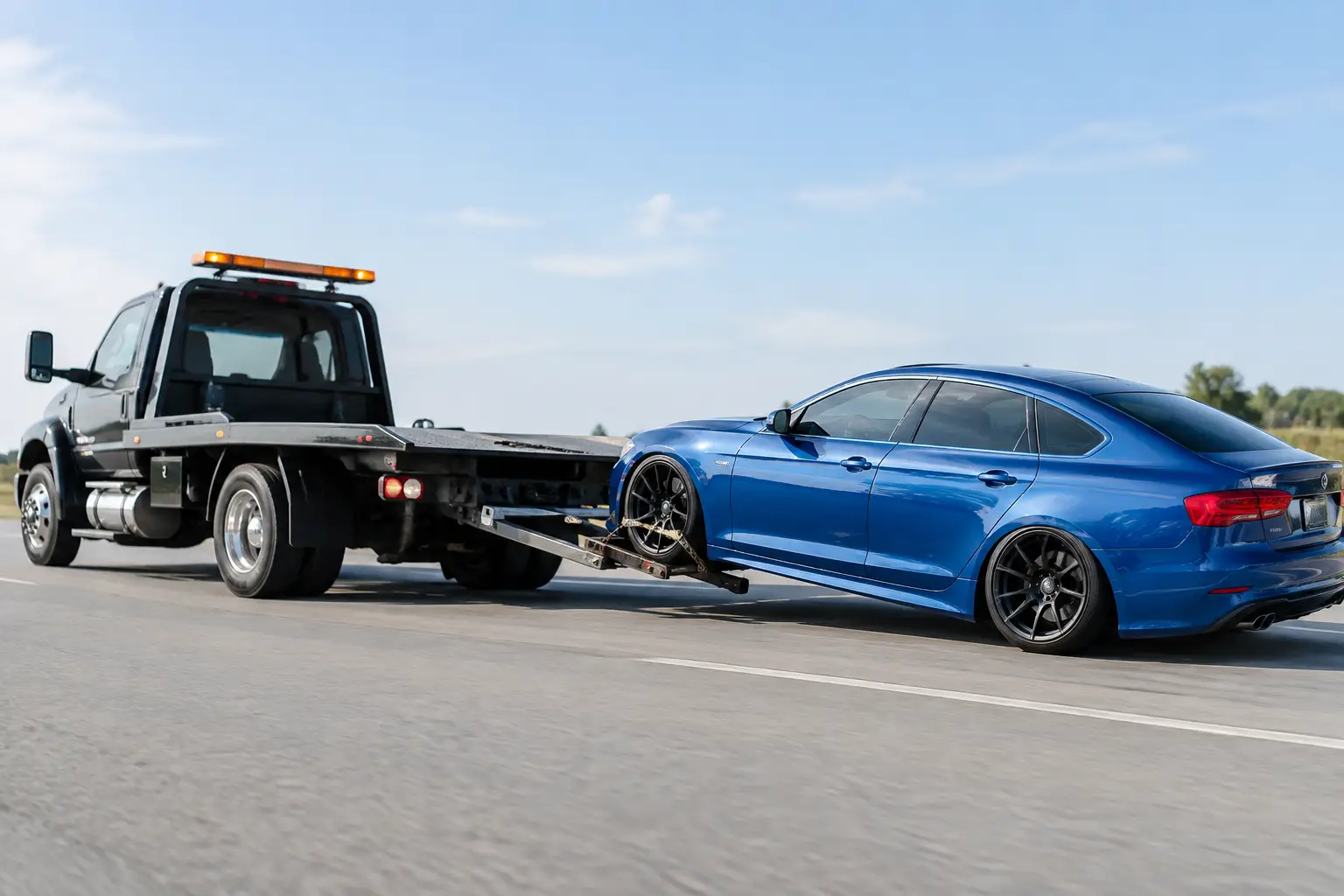
A lowered car can be damaged before it is even fully on the truck. A steep loading angle can scrape a front lip, crack a bumper, bend an exhaust component, or stress the suspension. Knowing how to tow lowered cars starts with one rule: do not treat a low-clearance vehicle like an ordinary tow.
For drivers in Kenner and New Orleans, the safest move is to request a flatbed and tell dispatch that the vehicle is lowered. Share the car's approximate ride height, whether it has a front splitter or side skirts, and whether it can roll and steer. That information helps send the right truck, equipment, and trained operator from the start.
Why Lowered Cars Need Special Towing
Lowered vehicles sit closer to the pavement than factory-height cars. That reduced clearance may improve appearance or handling, but it changes the loading process completely. The front bumper, lip, undertray, rocker panels, exhaust, and oil pan may all be at risk when the car approaches a ramp.
The problem is usually the breakover angle - the point where a car transitions from flat ground to an inclined ramp. If that angle is too sharp, the vehicle's front end or underside can make contact. Even a small scrape can be costly when the car has aftermarket bodywork, air suspension, a performance exhaust, or a low-hanging intercooler.
Wheel-lift towing can also create problems for lowered cars. Lifting one end while the other wheels remain on the ground may put the bumper, valance, or exhaust too close to the road. It may be appropriate in limited recovery situations, but a properly loaded flatbed is generally the preferred option for protecting a low vehicle during transport.
How to Tow Lowered Cars Safely
The safest process begins before the truck arrives. Park the vehicle on the flattest available surface if it is safe to do so. Avoid trying to move it over curbs, deep driveway entrances, parking blocks, or uneven shoulders. If the car is disabled in traffic, turn on the hazard lights, move to a safe location if possible, and wait away from passing vehicles.
When requesting service, be direct: tell the dispatcher the car is lowered and ask for flatbed towing. Mention whether it is static-lowered, on coilovers, or equipped with air suspension. An air-suspension vehicle may need to be raised to a transport setting if the system still functions. If it does not, the operator needs to know before loading begins.
Use a Flatbed With a Low Loading Angle
A flatbed gives the operator control over the loading angle and keeps all four wheels off the road during transport. That reduces the chance of drivetrain damage, road contact, and uneven stress on the vehicle.
For an especially low car, the operator may reduce the loading angle by positioning the bed carefully, using extended ramps, or adding low-profile ramp extensions. Boards, ramp aids, or other purpose-built loading equipment can create a more gradual transition from the pavement to the deck. The exact method depends on the vehicle's clearance, the surface, and the available equipment.
This is not the time to rush. A few extra minutes spent setting the approach can prevent damage to the bumper or undercarriage. A trained tow operator will watch the front lip, wheel path, and center of the vehicle throughout the climb onto the bed.
Keep the Wheels Straight and Follow the Operator's Direction
If the car can be driven, the driver may be asked to slowly guide it onto the flatbed. Keep the steering wheel straight unless the operator gives different instructions. Sharp steering inputs can change clearance at the front corners and cause a splitter or bumper edge to catch.
Use light throttle only. Sudden acceleration can make the car jump forward, while excessive braking can shift weight at the wrong moment. If the vehicle cannot be driven, a winch should pull it steadily and under control. Never stand in front of or directly behind a vehicle being winched.
A car with a locked wheel, flat tire, damaged suspension, or accident damage may require additional equipment. In those cases, forcing it onto a bed can do more harm than good. The operator may use dollies, skates, or a different recovery approach to protect the vehicle and safely clear the scene.
Secure It by the Tires, Not Fragile Components
Once the vehicle is on the flatbed, securement matters as much as loading. The preferred method for many lowered cars is tire-based restraint, such as wheel straps or basket-style tie-downs. These hold the vehicle at the tires instead of placing hooks or chains against vulnerable suspension parts, control arms, body panels, or aftermarket components.
The operator should confirm that the straps are correctly positioned and tight, without rubbing the bumper, brake lines, side skirts, or wheels. A final walk-around helps identify loose items, low-hanging parts, or anything that could shift during transport.
Avoid assuming a parking brake alone is enough. A vehicle must be properly restrained to the flatbed. Secure handling is especially important on New Orleans-area roads, where potholes, bridge transitions, and uneven pavement can create movement during transport.
What Drivers Should Do Before the Tow Starts
You do not need to be a towing expert, but a few details can help protect your vehicle. Remove loose items from beneath the car if they can be safely reached. Take quick photos of the front bumper, side skirts, wheels, and any existing damage. This is useful documentation for any vehicle being transported, especially one with custom paint, carbon-fiber parts, or expensive aftermarket wheels.
Tell the operator about anything unusual: a non-functioning parking brake, an extremely low oil pan, a wide body kit, an air dam, damaged steering, or a transmission that cannot be placed in neutral. If your car has a specific towing mode or transport mode, explain that as well. The owner's manual may contain useful instructions, but do not delay emergency recovery while searching for it.
Do not try to build a homemade ramp setup in an active roadway. Wood planks can slip, crack, or shift under load. A professional operator can assess the angle and use equipment designed for the job.
Common Mistakes That Damage Lowered Vehicles
The most common mistake is requesting the nearest available tow truck without explaining the car is lowered. Dispatch cannot plan for special clearance if they do not have the information. A second mistake is allowing the vehicle to be pulled from a bumper, suspension arm, or other point not intended for recovery.
Another issue is loading too quickly. Low cars can clear the first part of a ramp and still scrape at the transition onto the bed. The operator needs to watch the whole vehicle, not just the front bumper. Ground clearance can also change if the car has a broken spring, a flat tire, suspension damage, or extra cargo inside.
Finally, avoid driving a lowered vehicle onto a conventional tow truck ramp simply because it looks close enough. Clearance is hard to judge from the driver's seat. If there is doubt, stop and let the tow operator adjust the setup.
When a Lowered Car Needs Recovery, Not Routine Towing
A simple transport from a driveway or repair shop is one thing. A collision, ditch, flooded street, parking garage, or busy interstate shoulder is another. Recovery work may involve unstable ground, damaged wheels, fluid leaks, locked steering, or suspension that has collapsed against the tires.
In those situations, the goal is not just to load the car. It is to stabilize it, prevent additional damage, protect surrounding traffic, and move it safely. The equipment and approach may change based on the scene. That is why clear communication about the vehicle's condition matters as much as its ride height.
Zain Towing provides 24/7 flatbed towing and recovery for drivers across the Kenner and New Orleans area. When you call, explain that your car is lowered, where it is located, and whether it can roll, steer, and shift into neutral. The right dispatch details help get the right equipment moving quickly.
A lowered car deserves a careful load, secure transport, and an operator who understands that a few inches of clearance can make all the difference. If your vehicle is stranded or needs planned transport, call for a professional flatbed tow before a minor problem turns into expensive body or suspension damage.
Need help right now?
Zain Towing runs 24/7 in Kenner, New Orleans, Metairie, Harahan and Gretna. Call (504) 666-9099 or see our towing service, roadside assistance and New Orleans pages.