
Nighttime Breakdown Safety Guide for Drivers
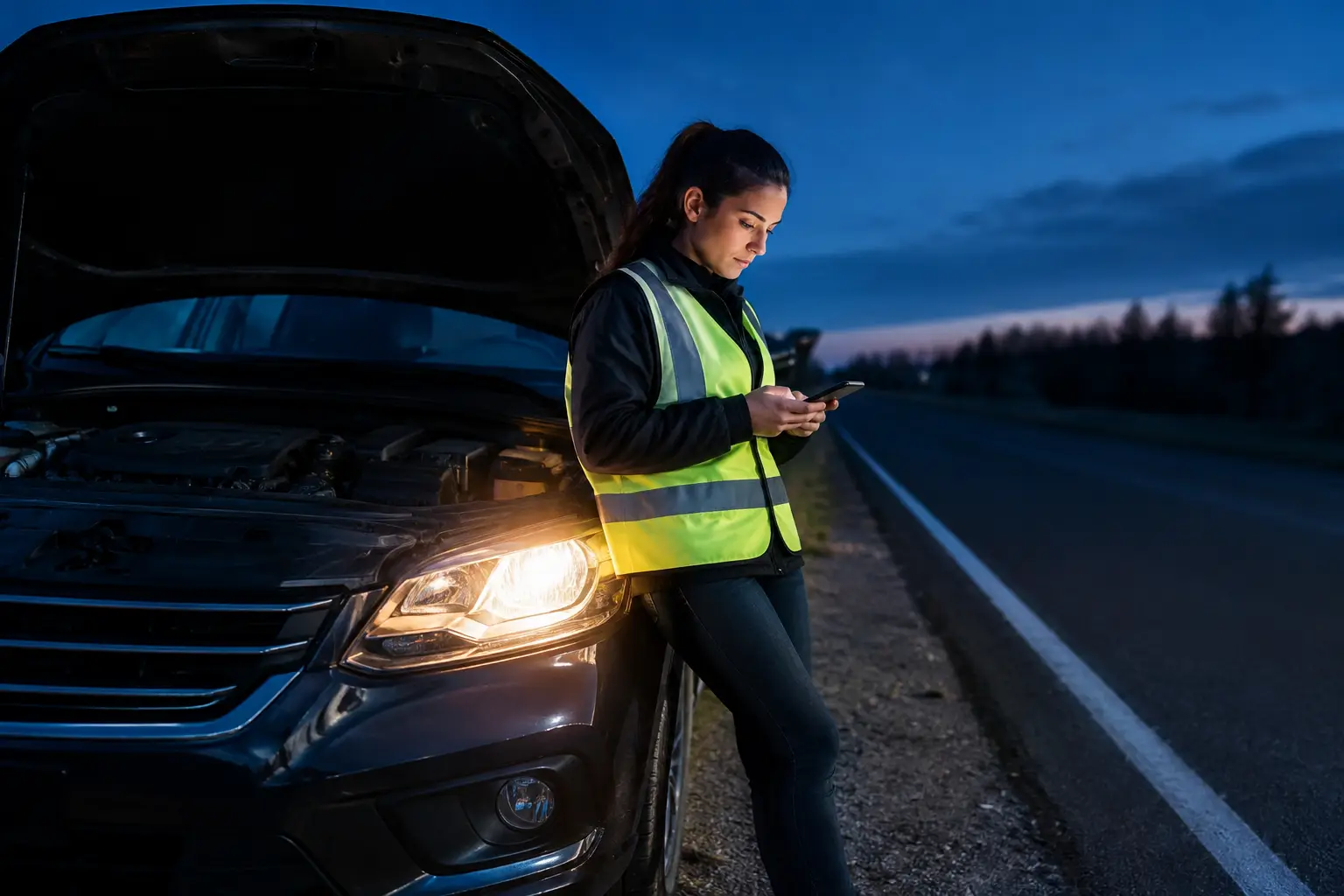
A breakdown after dark can turn from inconvenient to dangerous in minutes. Traffic moves fast on I-10, Veterans Memorial Boulevard, and busy New Orleans-area roads, while low visibility makes a stopped vehicle harder for other drivers to see. This nighttime breakdown safety guide gives you a clear plan: get out of traffic if possible, make your vehicle visible, protect the people inside, and request professional help without taking unnecessary risks.
First: Get to the Safest Possible Location
The moment you notice a warning light, a flat tire, overheating, steering trouble, or a loss of power, reduce speed gradually. Turn on your hazard lights immediately. Avoid sudden braking or sharp lane changes, especially if traffic is close behind you.
If the vehicle can still move safely, aim for a well-lit parking lot, gas station, rest area, wide shoulder, or side street away from through traffic. Do not keep driving a vehicle that is overheating, smoking, has a flat tire that is coming apart, or has major steering or brake problems. Moving a short distance may be safer than stopping in an active lane, but it depends on the condition of the vehicle. Preventing a crash comes before preventing vehicle damage.
On a highway, get as far to the right as you safely can. A narrow shoulder is not ideal, but it is better than being stopped in a travel lane. Keep your wheels turned away from traffic if you are stopped on the shoulder. If another vehicle hits yours from behind, this can reduce the chance of your vehicle being pushed into moving traffic.
Nighttime Breakdown Safety Guide: Stay Visible
Darkness, rain, fog, and glare from headlights all reduce the time other drivers have to react. Your hazards should stay on until help arrives or until you are safely off the roadway. At night, visibility is your first line of protection.
Turn on interior lights only when needed to make a call or find information. Bright cabin lights can make it harder to see outside. If you have a flashlight, use it carefully when exiting or checking your surroundings, but do not stand near moving traffic trying to inspect damage.
Road flares, reflective triangles, and LED emergency beacons can help on a safe, wide shoulder. They are not always the right choice. Do not walk along a narrow highway shoulder or into traffic lanes to place them. If conditions make it unsafe to set out warning devices, stay in the vehicle and let your hazard lights do the work.
Keep a basic nighttime emergency kit in your vehicle. Four items make a practical difference:
- A charged phone and vehicle charging cable
- A flashlight with extra batteries
- Reflective vest or reflective triangles
- Water, a light blanket, and basic first-aid supplies
A battery pack is especially useful after a breakdown, since repeated calls, maps, and hazard lights can drain a weak battery quickly.
Decide Whether to Stay in the Vehicle
For most roadside breakdowns, the safest place is inside your vehicle with the doors locked and seat belts fastened. This is generally true when you are on a highway shoulder, in an unfamiliar area, or near fast-moving traffic. Keep children and passengers inside rather than having them stand outside beside the vehicle.
There are exceptions. Get out and move away from the vehicle if you see flames, smell strong fuel fumes, have smoke filling the cabin, or believe the vehicle is in immediate danger of being hit. Move well away from traffic, ideally behind a guardrail if one is available. Never stand directly in front of or behind the disabled vehicle.
If you are in a parking lot or another secure, well-lit location, you may be able to wait nearby. Stay aware of your surroundings. If a stranger approaches and makes you uncomfortable, keep the doors locked, crack the window only if necessary, and tell them roadside help is already on the way.
Make the Right Call Quickly
Call 911 first if anyone is injured, your vehicle is blocking a live lane, there is a fire, a crash has occurred, or you feel personally unsafe. Law enforcement can help protect the scene and direct traffic when the situation demands it.
For a mechanical breakdown, flat tire, dead battery, lockout, or vehicle that cannot be driven safely, contact a 24/7 roadside assistance or towing provider. Give dispatch clear information from the start. It helps the right truck and equipment reach you faster.
Be ready to provide:
- Your exact location, direction of travel, and nearby exit, cross street, or landmark
- Your vehicle year, make, model, and color
- The problem you are experiencing and whether the vehicle can roll or steer
- Your destination if towing is needed
- A safe callback number
Location sharing on your phone can help, but do not rely on it alone. Check for mile markers, business signs, exit numbers, or street names. If you are on I-10 or another major route, say which direction you are traveling. Eastbound and westbound lanes can be far apart, and that detail saves valuable time.
Zain Towing LLC provides 24/7 towing and roadside assistance across the Kenner and New Orleans area, with trained operators equipped for light- and medium-duty vehicles. Whether you need a jump-start, tire help, lockout service, flatbed towing, or secure transport to a repair shop, clear dispatch details help get the appropriate response moving without delay.
Do Not Attempt a Risky Roadside Repair
A quick fix can become a serious injury when it happens at night near traffic. Changing a tire on a quiet, level street with plenty of room may be reasonable if you know how and have the right equipment. Changing one on a narrow shoulder beside highway traffic is a different situation. In that case, professional tire help is the safer choice.
The same judgment applies to jump-starts. A jump-start may be simple in a secure lot, but it is not worth opening the hood beside moving traffic, in heavy rain, or when you are unsure about battery condition. Swollen batteries, damaged cables, fuel smells, and visible leaks are all reasons to step back and wait for a trained operator.
Never crawl under a vehicle on the roadside. Do not try to push a disabled vehicle across lanes, and do not accept an unmarked tow offer from someone who appears without being requested. Confirm the towing company, the operator, and the destination before releasing your keys or vehicle.
Protect Yourself While You Wait
Keep your phone charged and avoid using the battery for unnecessary entertainment or long calls. If you are waiting in cold or wet weather, run the engine only if the exhaust pipe is clear and the vehicle is in a safe, open area. Never run the engine in an enclosed space, and be alert for exhaust fumes.
If a tow truck is on the way, watch for the vehicle only from a safe position. When the operator arrives, verify the company name and explain any special concerns: low clearance, all-wheel drive, parking brake issues, accident damage, or a vehicle that will not shift into neutral. Those details affect how the vehicle should be loaded and secured.
Before the tow begins, remove valuables, medications, work equipment, and important documents if it is safe to do so. Take a few photos of the vehicle's condition and note where it is being taken. Professional towing should protect your vehicle, not create new damage, so proper equipment and secure loading matter.
Build a Better Plan Before the Next Breakdown
Most drivers do not think about roadside safety until they are already stuck. A little preparation changes the experience. Keep your phone charged on longer trips, maintain your tires and battery, and know who you will call before an emergency happens. If you regularly drive at night for work, rideshare trips, family travel, or commuting, your vehicle kit and roadside contact information are not extras. They are part of getting home safely.
If your vehicle fails after dark, focus on the next safe decision instead of trying to solve everything yourself. Get visible, get out of danger, and get qualified help on the way. That calm, practical response can protect you, your passengers, and everyone sharing the road.
Need help right now?
Zain Towing runs 24/7 in Kenner, New Orleans, Metairie, Harahan and Gretna. Call (504) 666-9099 or see our towing service, roadside assistance and New Orleans pages.