
Tow Bar Versus Trailer: Which Is Safer?
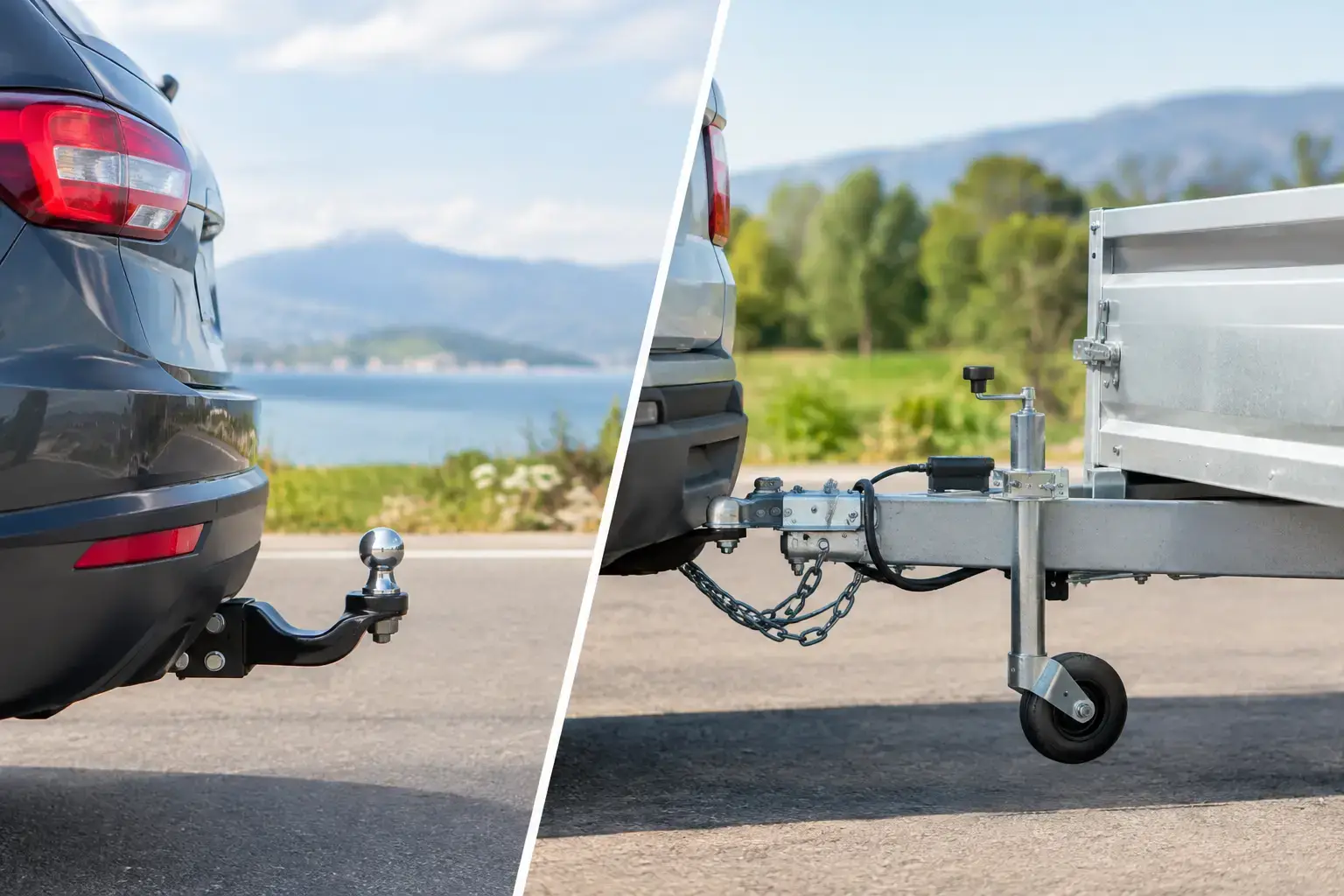
A broken-down vehicle on the I-10 corridor, a car being moved behind an RV, or a planned long-distance transport all raise the same question: tow bar versus trailer, which is the safer choice? The answer depends on the vehicle, the distance, the road conditions, and whether the vehicle can legally and mechanically be towed with its wheels on the ground. Making the wrong call can turn a simple move into drivetrain damage, tire trouble, or an unstable load.
For most drivers who need a vehicle transported after a breakdown, accident, or mechanical issue, a trailer or flatbed tow is the safer option. A tow bar has its place, especially for RV owners with a properly equipped “toad” vehicle, but it is not a universal solution. Here is what separates the two methods and when each one makes sense.
Tow Bar Versus Trailer: The Main Difference
A tow bar connects the front of one vehicle to the rear hitch of another vehicle. The towed vehicle rolls on its own four tires, following behind the towing vehicle. This is commonly called flat towing or four-down towing. It is popular with motorhome owners who want to bring a smaller vehicle along for local transportation after arriving at a campground.
A trailer carries the vehicle rather than asking it to roll behind the tow vehicle. Depending on the setup, the entire vehicle sits on a full trailer, or the front wheels sit on a tow dolly while the rear wheels remain on the road. Professional flatbed towing is effectively a vehicle-specific trailer system mounted on a tow truck.
The key distinction is simple: with a tow bar, the vehicle being moved remains active on the road. With a full trailer or flatbed, the vehicle is secured off the road surface. That difference affects safety, compatibility, setup time, and the risk of damage.
When a Tow Bar Can Be the Right Choice
A tow bar is practical when the vehicle is specifically approved by its manufacturer for four-down towing. Many vehicles are not. Transmission design, transfer case settings, steering lock systems, electronic parking brakes, and battery requirements all matter. Never assume that putting a vehicle in neutral makes it safe to flat tow.
For a compatible vehicle, a tow bar can be convenient for repeated travel. RV owners often appreciate that it takes up less space than a car trailer and does not need to be stored at a campsite. Once the base plate, safety cables, supplemental braking system, and lighting connections are correctly installed, hookup can be relatively quick.
That convenience comes with responsibility. The tow bar must be rated for the vehicle’s weight, mounted to approved attachment points, and kept level within the manufacturer’s recommended range. The towed vehicle’s steering must be unlocked so it can track properly through turns. In many cases, an auxiliary braking system is also required by law or recommended for safe stopping performance.
A tow bar is usually best for experienced RV owners towing the same approved vehicle repeatedly. It is not the first choice for a roadside emergency, an unknown mechanical condition, or a vehicle that has been damaged in a collision.
Tow Bar Risks Drivers Often Miss
The biggest risk is drivetrain damage. Some automatic transmissions and all-wheel-drive systems can be severely damaged when the wheels rotate without the engine running. Even a short distance can cause expensive problems if fluid is not circulating as designed.
Ground clearance is another concern. A low car can scrape at driveway entrances, steep ramps, or uneven pavement. Louisiana roads can bring standing water, potholes, construction zones, and sudden weather changes, all of which make a low, rolling vehicle harder to manage behind another vehicle.
Tow bars also require proper braking and lighting. The towing vehicle’s brake lights do not automatically make the towed vehicle visible to traffic. If the lighting system is not connected and working, other drivers may not see your turns or stops clearly. A loose connection, worn safety cable, or poorly installed base plate can create a serious hazard at highway speed.
Why a Trailer Is Often Safer
A full trailer keeps all four tires of the transported vehicle off the pavement. That reduces concerns about transmission damage, worn tires, damaged suspension components, or locked steering. It is the most flexible choice for moving vehicles that cannot be flat towed, including many front-wheel-drive, all-wheel-drive, luxury, electric, and damaged vehicles.
A trailer also provides better control in many situations. The vehicle is secured using approved tie-down points, wheel straps, chains, or a combination of restraints based on its condition and the transport equipment. Its wheels are not independently reacting to every pothole, curb edge, or uneven stretch of road.
For long-distance moves, a trailer can offer more peace of mind. It protects a non-running vehicle from accumulating extra mileage and helps avoid the mechanical uncertainty that comes with rolling it behind another vehicle. When the vehicle is valuable, freshly repaired, low-clearance, or not fully roadworthy, keeping it on a trailer is usually the smarter move.
Professional flatbed towing goes a step further. A trained operator evaluates the vehicle’s condition, loading angle, wheel position, clearance, and securement needs before transport. That matters after an accident or breakdown, when a driver may not know whether the transmission, axles, tires, or steering components have been affected.
Trailer Considerations Before You Choose
Trailers are not automatically easy. They require a towing vehicle with adequate towing capacity, the correct hitch class, working trailer brakes when required, and enough room to turn, back up, park, and load safely. A trailer adds length and weight, which can be challenging in busy New Orleans streets, tight apartment complexes, and crowded parking areas.
There is also the matter of loading. Improper weight distribution can cause trailer sway, especially at highway speed or in crosswinds. Too little tongue weight may make the trailer unstable, while too much can overload the rear of the tow vehicle and reduce steering control. Securement is not optional. A vehicle that looks stable on a trailer can still shift if it is not properly tied down.
For occasional vehicle transport, renting, maintaining, and operating a trailer may not be worth the risk or effort. Calling a professional tow provider is often the more efficient choice, especially if the vehicle is disabled or you need help quickly.
Compatibility Is More Important Than Convenience
The best method is not the one that is easiest to hook up. It is the one that fits the vehicle and the situation. Check the owner’s manual for manufacturer-approved towing procedures before using a tow bar or tow dolly. Look specifically for guidance on recreational towing, four-down towing, and towing with the drive wheels off the ground.
If your vehicle is front-wheel drive, a tow dolly may sometimes be an option because it lifts the drive wheels. However, that does not make every front-wheel-drive vehicle dolly-compatible. Rear-wheel-drive, all-wheel-drive, and four-wheel-drive vehicles need even closer attention. Some require a full trailer. Others may require driveshaft disconnection or special procedures that should be handled by a qualified professional.
Electric and hybrid vehicles deserve extra caution. Their battery systems, regenerative braking components, and manufacturer restrictions can make improper towing especially costly. A flatbed is frequently the safest transport method when there is any doubt.
Cost, Distance, and Road Conditions Matter Too
A tow bar can cost less over time for an RV owner who uses it frequently, but the initial setup is not always cheap. Base plates, supplemental braking systems, wiring, safety equipment, and professional installation can add up. The real cost of a tow bar setup should include every required component, not just the bar itself.
A trailer may cost more to purchase and store, but it can serve more vehicle types and gives you greater protection for planned moves. For a one-time transport, professional towing is usually more predictable than buying or renting equipment, learning to use it under pressure, and accepting the risk of an incorrect setup.
Distance changes the decision as well. A short move across town may call for a flatbed, particularly if the car will not start or has a flat tire. A long interstate move places more stress on every part of the towing setup. Road conditions, rain, traffic, and nighttime visibility all make secure transport more important.
What to Do When Your Vehicle Is Disabled
If your vehicle has broken down, been in an accident, overheated, lost a tire, or has an unknown mechanical problem, do not assume a tow bar is safe. Keep clear of traffic, turn on your hazard lights, and move to a safer location only if the vehicle can be driven without causing more damage.
When you call for help, provide the vehicle year, make, model, condition, location, and destination. Mention whether it is all-wheel drive, electric, lowered, damaged, or stuck in a garage or tight area. Those details help dispatch send the right truck and equipment the first time.
Zain Towing LLC provides 24/7 towing and roadside assistance throughout the Kenner and New Orleans area, with trained operators focused on secure loading and damage prevention. Whether your vehicle needs a flatbed, local tow, long-distance transport, tire help, or a jump-start, the priority is getting the right equipment to you quickly.
When the choice feels uncertain, treat that uncertainty as a reason to protect the vehicle. A properly secured trailer or professional flatbed tow can cost far less than repairing a transmission, replacing damaged tires, or dealing with a preventable roadside incident. Call for the right towing setup, then let an experienced operator get your vehicle where it needs to go safely.
Need help right now?
Zain Towing runs 24/7 in Kenner, New Orleans, Metairie, Harahan and Gretna. Call (504) 666-9099 or see our towing service, roadside assistance and New Orleans pages.